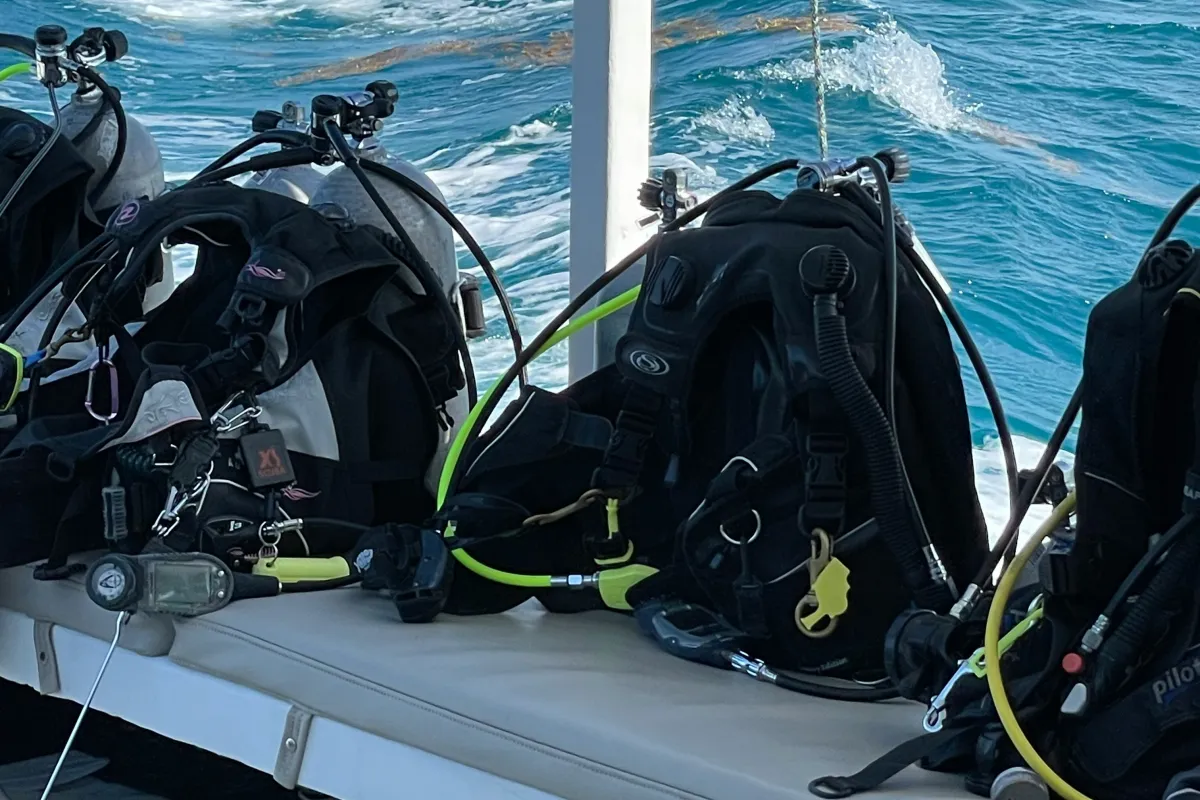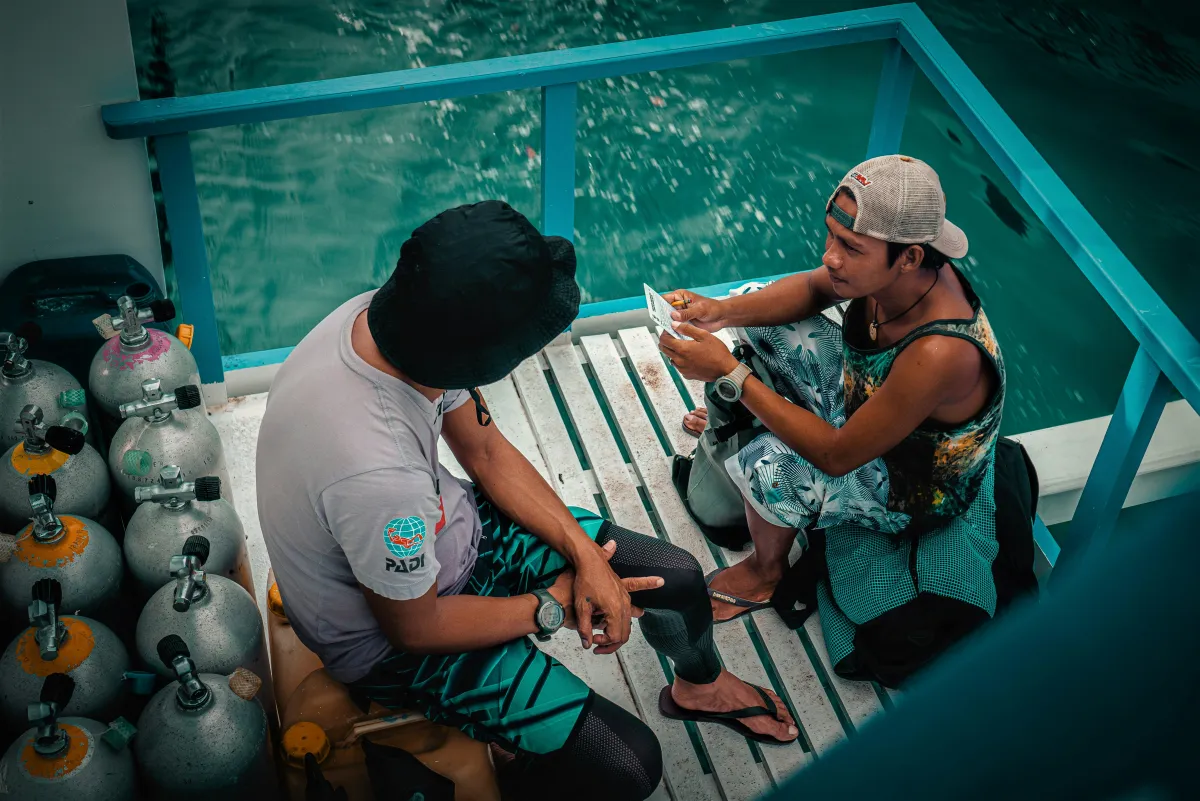
A briefing is a few minutes of talking before a dive, and it is the cheapest safety tool a dive shop has. It costs nothing, needs no equipment, and when it is done well, divers get into the water knowing what the next hour looks like.
The trouble is not that guides forget how to brief. It is that a briefing given on the thirtieth day in a row drifts. A part gets shortened, then skipped. The fix is an order that never changes, so that nothing has to be remembered.
A note first. This is general good practice written by a software team. It is not training, and it is not medical or legal advice. Your dive agency’s standards, your operator’s procedures and the local rules come first. Where they differ from this post, follow them.
The site and the plan
Start with where you are and what you are about to do. Divers listen better when they can picture the dive.
The site
Name the site and say what is special about it: a wall, a sloping reef, a wreck, a sandy patch before the reef begins. Draw it on a board or show it on a screen if you can. A simple sketch of the shape of the dive is worth more than a minute of description.
Entry and exit
Say how divers get in and where they come back. Giant stride from the boat, back roll from a small banca, a shore entry over rocks. Then say how you get out: the ladder, the line, a pick-up by the boat after a drift. Divers should never have to guess how the dive ends.
Depth and time
Give the maximum depth, the planned bottom time and the turn pressure, in the units your divers use. Say what happens when someone reaches the limit first. The dive ends for the group when the first diver reaches it, not when the guide does.
The group
Next, how the divers move together.
- Buddies. Confirm every diver has one, by name. Pair up the diver who arrived alone before the boat leaves, not in the water.
- Group size. Say who leads, who follows at the back, and where each buddy team swims in relation to them.
- Signals. Check the signals you will use: up, down, okay, low on air, stay close. Do not assume a diver from another country uses the same ones.
Conditions and hazards
This is the part divers remember when it matters, so keep it concrete.
- Current: direction, strength, and where it changes.
- Surge, visibility and temperature at depth.
- Boat traffic and the surfacing plan, including how to signal the boat.
- Anything specific to the site, such as a fishing line or a ledge.
Say the same thing in the same words each time. Short phrases are easier to follow than clever ones.
If you get separated
Every briefing should include this, and none should skip it. The usual practice is simple: look around for about a minute, and if you cannot find your buddy, surface slowly, safely and wait. Your agency or operator may teach a different version. Say yours out loud, and ask the group to repeat it back.
A good briefing is one a diver can repeat to a stranger in thirty seconds.
Marine life rules
Finish with how divers behave around the reef. Do not touch, chase, feed or stand on anything. Keep fins up and off the bottom, stay a respectful distance from turtles and sharks, and take nothing with you. Say it kindly and once. People follow rules more readily when they hear the reason: the reef is slow to recover, and animals that are crowded move away or change their behaviour.
Making it stick
A fixed order helps the guide as much as the diver. Write the eight parts on a card, a whiteboard or a screen, and run through them in the same sequence each time. Ask a question at the end, such as “what is our turn pressure?”, to see whether the message arrived.
In DiveHive, the briefing steps for each site sit on the Board in the briefing area, and the guide moves through them from their phone while facing the group. The Board never needs touching. That is one way to keep the order fixed, and a laminated card does the same job. More on how we handle safety features is on the trust and safety page.
The habit matters more than the tool. Use the same order, say the same words, and ask one question at the end.