You are in a new place, you have four days, and there are thirty dive shops on the same street. Photos and star ratings tell you something, but not much about what matters on the boat: how the shop briefs, how it looks after its kit, and what it does on a day the weather turns.
This post is a short list of things to look at and questions to ask. It is not a ranking, and it will not tell you which shop is best. It will help you notice which ones are careful.
A note first. This is general advice from a software team, not training, medical or legal advice. Your dive agency’s standards and the rules where you dive come first, and so does your own judgement about whether a dive is right for you today.
Before you book
Write to the shop with a few plain questions. How quickly and clearly they answer says something already.
- Group size and guides. Ask how many divers go with one guide on the dive you want. Ask whether that changes for a new diver or a night dive. We will not give you a number here, because the right one depends on the site, the conditions and your agency’s standards. Ask what theirs is, and why.
- Your level. Tell them honestly how many dives you have done and how recently. A good shop will ask about it unprompted and may suggest a check dive.
- Paperwork. Ask what you need to bring and sign. A medical questionnaire and a waiver are normal. A shop that can send them to you before you arrive saves you a queue at the desk, and gives you time to read them.
At the shop
Look around before you pay.
The kit
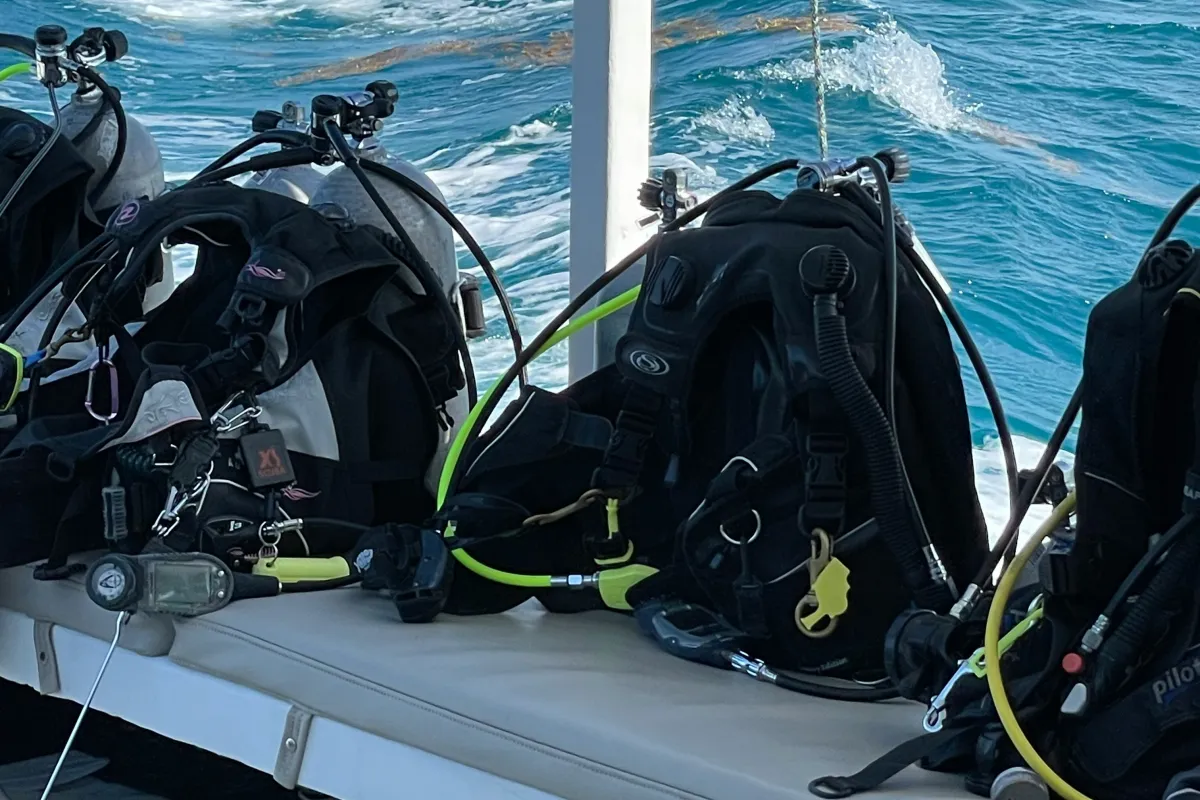
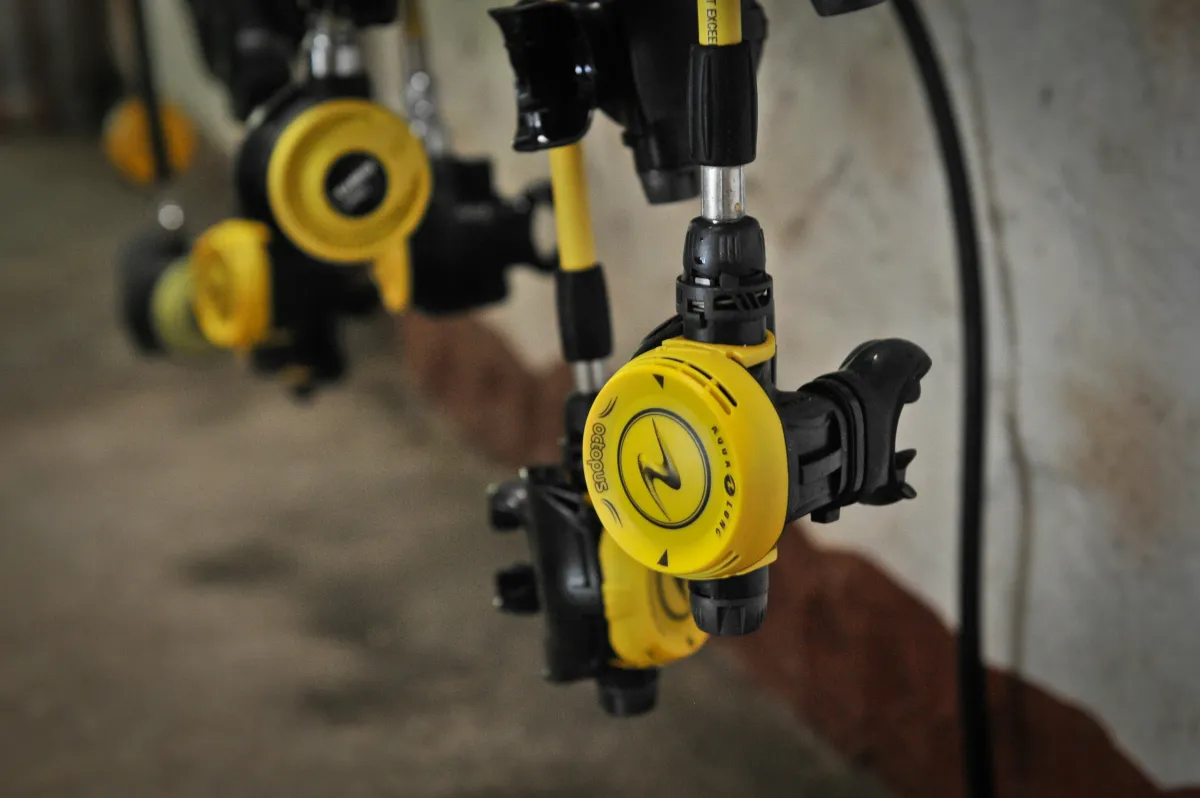
Rental equipment tells you about the whole shop. Look at the regulators, the BCDs and the tanks. Are they clean, labelled and stored properly, or piled in the sun? Ask when the tanks were last inspected and what gas is in them, and ask to see the gauge before you dive. A shop should not mind any of this.
The briefing
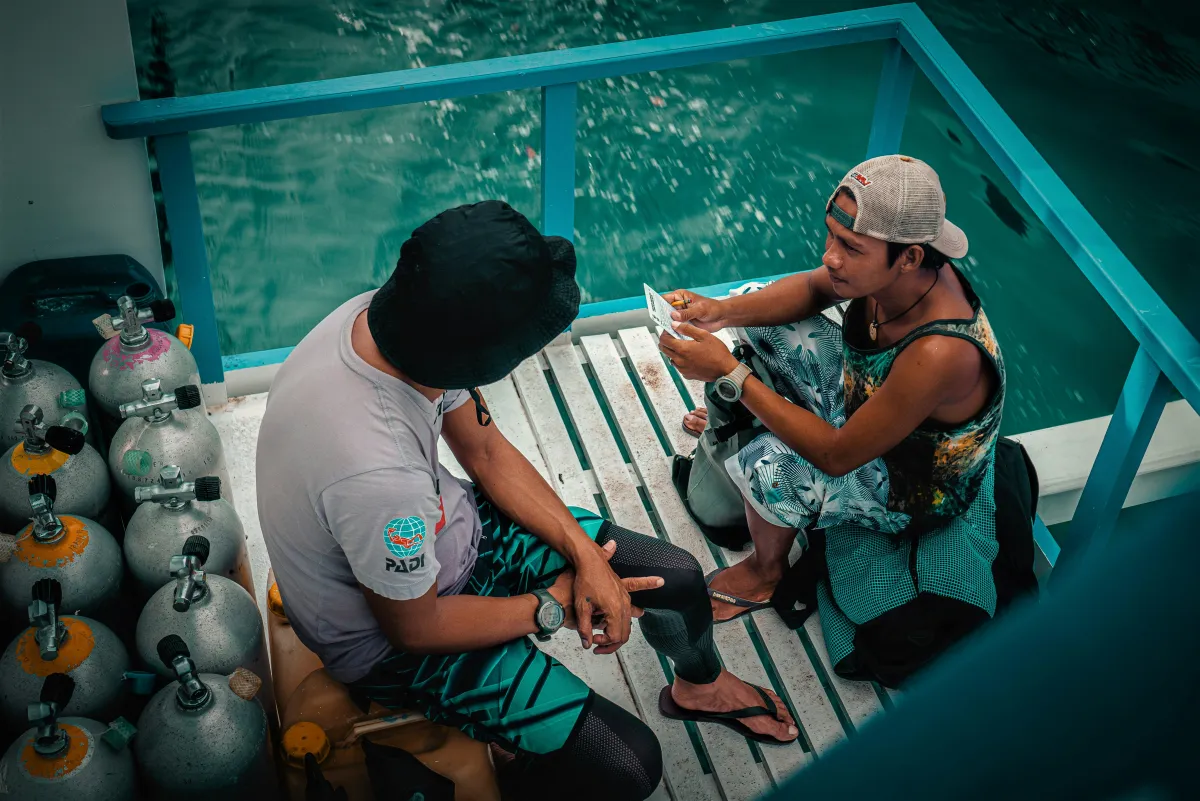
Ask how the shop briefs. A good one covers the site, the plan, signals, what to do if you get separated and how divers behave around marine life. You can read what we think a good briefing includes in what a good dive briefing covers. If a shop skips it because you look experienced, that is worth noticing.
Safety gear
On the boat you should be able to see that oxygen and first-aid equipment are on board, and ask where. Ask how the boat communicates with the shop and with a nearby emergency service if something goes wrong.
How they handle weather
Ask what happens on a day with a storm warning. A careful shop has a plain answer: who decides, by what time, how divers are told, and what happens to your booking. If the answer is vague, plan for a day of waiting. If it is clear, you can plan around it. Our post on planning dive trips around storm season covers the same ground from the shop’s side.
A good shop tells you early, and tells you plainly.
How they treat the reef
Watch what the guides do, not what the brochure says. Do they brief the no-touch rule and keep to it? Do they let anyone stand on coral, chase turtles or feed fish? Do they anchor on sand or use a mooring? A shop that looks after its reef is likely to look after its divers.
Where DiveHive fits
If a shop uses DiveHive, you sign its waiver and medical form on your own phone before you arrive, once for that shop. You check in with a personal code, and after the dive the guide’s verified log lands in your logbook, with every other shop you dive with in the same place. DiveHive is free for divers, and you do not need the app to dive with a DiveHive shop: a booking link works in any browser. See for travellers for more. If the shop does not use it, the same checklist applies.
A short list to take with you
- Ask about group size and guide ratio. Expect a clear answer.
- Look at the kit and ask about tank inspection.
- Get the waiver and medical form before you arrive.
- Ask who decides on a weather day, and how you will be told.
- Watch how the guides treat the reef.
None of this takes long, and shops that answer easily are usually the shops you want to dive with.