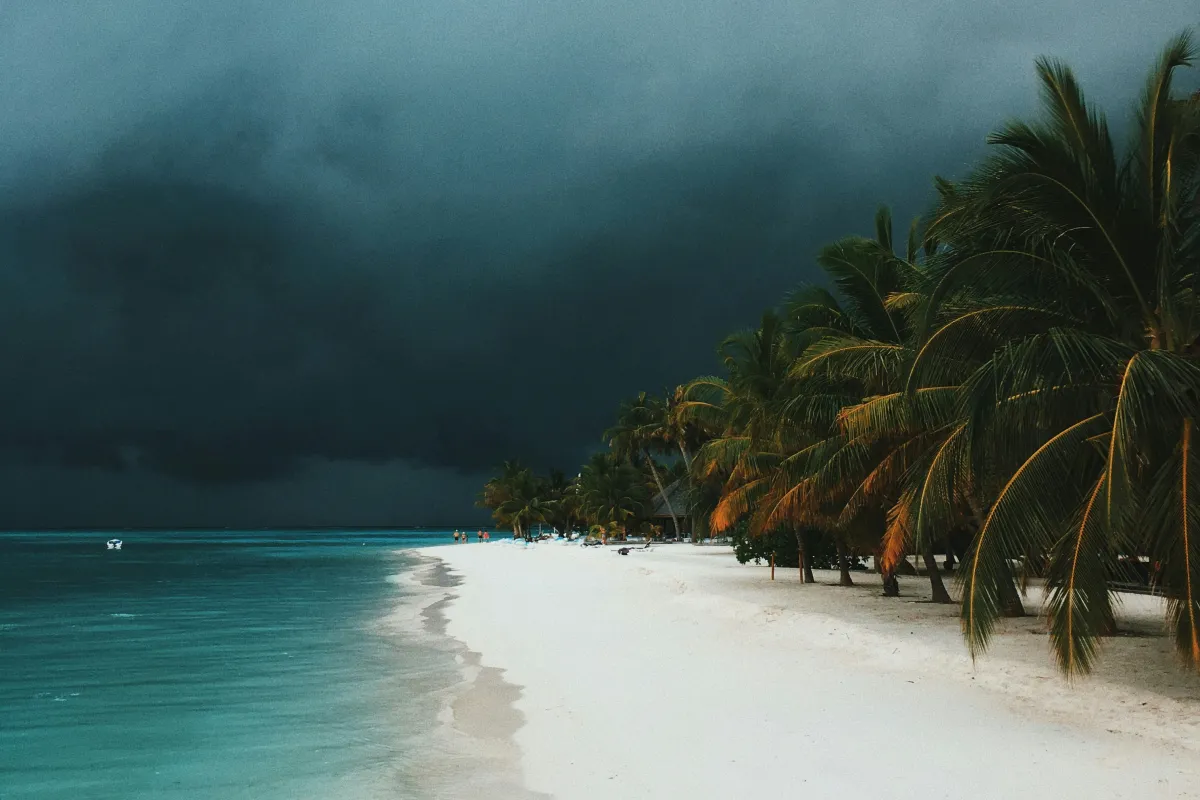
Every dive destination has a season when the weather is less kind. In some places it is a monsoon, in others it is hurricanes, typhoons or a winter swell that closes the exposed side of the coast. The names change. The problem is the same: a plan made on Monday may not survive Wednesday.
Shops that handle this well do not have better luck. They have a routine for it, which they use before the weather turns, and a way of telling people early.
A note first. This is general good practice written by a software team, not training, and not medical or legal advice. Your dive agency’s standards, your operator’s procedures and the rules where you dive come first.
Know your own season
Start by writing down when your weather is likely to be difficult, using what you and the other operators near you have seen over the years. Seasons differ widely by region, and a calendar from one country says nothing about another. Ask local boat captains, harbour offices and longer-established shops what months and wind directions cause trouble at which sites.
Some sites are sheltered when the wind blows from one side and unusable when it comes from the other. If you know that, you can shift trips between sites before anyone has to be cancelled.
Watch the official warnings
Check the national weather service for the area where you dive, every day in season. In the Philippines, for instance, that is PAGASA, which issues the storm and typhoon bulletins. In another country it is a different agency, with different names for its warnings. Learn who it is, what the levels mean, and where a boat captain or port authority can order boats to stay in.
A few habits help:
- Look at the forecast the evening before and again in the morning.
- Read the official bulletin itself, not a screenshot someone forwarded.
- Look at the sea from the shore. A forecast tells you what may happen, and the water shows what is happening.
- Treat a missing warning as no information, not as good news.
Plan with a buffer
A plan with no slack breaks at the first delay. In storm season it helps to hold something back.
Leave room in the schedule
Keep the afternoon free or lightly booked, so a morning that is delayed can be moved. Avoid scheduling the last boat of the day so late that a short delay puts the return in the dark.
Know your fallback
Pick a second site for each main one, with a different exposure. Decide in advance what you would do with a morning that is too rough for the open sea but fine for a sheltered bay, or for a pool session or a briefing on the marine life.
Decide early and say it clearly
The hardest part of a weather call is not the decision. It is the delay in making it, because everyone hopes for improvement. Agree a time for the decision, and agree who makes it. Then tell divers in plain words, with a time for the next update.
If we cannot be sure by a set time, we decide.
A message that works says what is happening, when you will know more, and what to do now. It is short.
All boats stay in until 12:00. We’ll message you by 11:30.
Avoid long explanations and avoid hedging. Divers can plan around a clear answer. They cannot plan around “maybe”.
Where software fits
Software can watch more bulletins than a person can, and that is where it helps. DiveHive flags trips when an official storm warning applies, so the Board and the app mark affected trips with a warning and link to the official bulletin. It does not cancel anything by itself. The shop decides, and if the decision is to cancel, one action cancels the day’s trips and tells the divers and staff on them. That is a rule we hold to: software flags, people decide.
You can read more under planning and on the Board page, where conditions and storm flags show in the briefing area.
The routine matters more than any tool. Know your season, watch the official source, keep a buffer, decide at a set time, and say it in one clear sentence.