

Giant damselfish
Microspathodon dorsalis
- Usual depth4–16 m
- Water temperature24–29 °C
- Best monthsJanuary, July, and December
- How commonOccasional
Photo credit: (c) A H, some rights reserved (CC BY), uploaded by A H · CC BY · iNaturalist
About this species
The giant damselfish is a species of fish that inhabits rocky reefs below the surf zone at depths of 1–25 m. It mainly feeds on low-profile, attached algae. Giant damselfish defend both feeding and reproductive territories by driving off other fishes and divers who come too close. They are oviparous, and form distinct pairings during breeding. The eggs are demersal and adhere to the substrate. Males guard and aerate the eggs.
Text from the Wikipedia article “Giant damselfish”, licensed CC BY-SA 4.0. Read the article
Where and when
Where it has been recorded
Worldwide
Best months
Worldwide (open data)
- January: 294 records
- February: 291 records
- March: 282 records
- April: 276 records
- May: 174 records
- June: 135 records
- July: 292 records
- August: 197 records
- September: 92 records
- October: 142 records
- November: 194 records
- December: 321 records
Depth and water temperature
Depth
Mostly recorded at 4–16 m · Deepest record: 15.5 m
Water temperature
Recorded in surface water of 24–29 °C
Photos
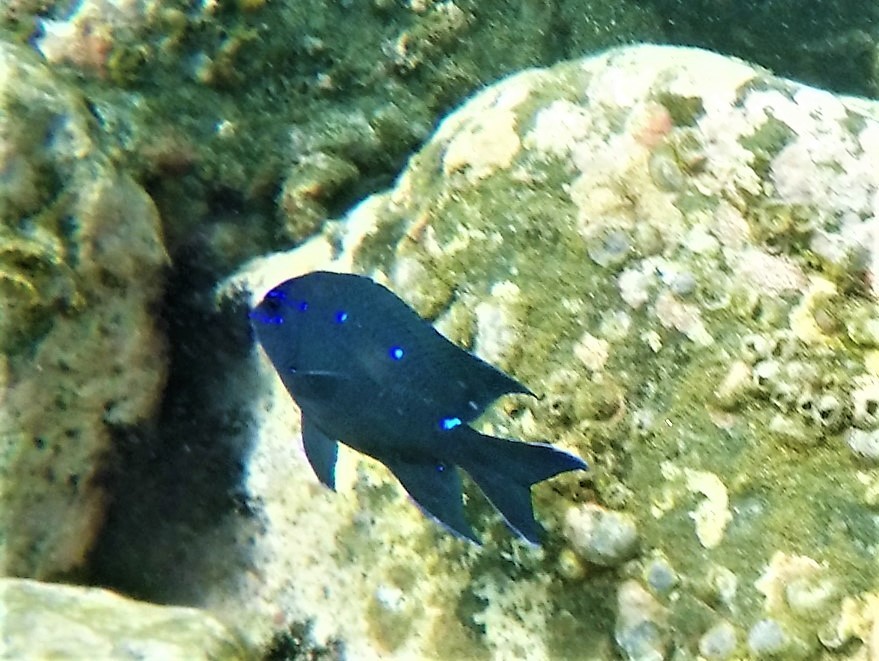
(c) Alberto Alcalá, some rights reserved (CC BY), uploaded by Alberto Alcalá · CC BY · iNaturalist 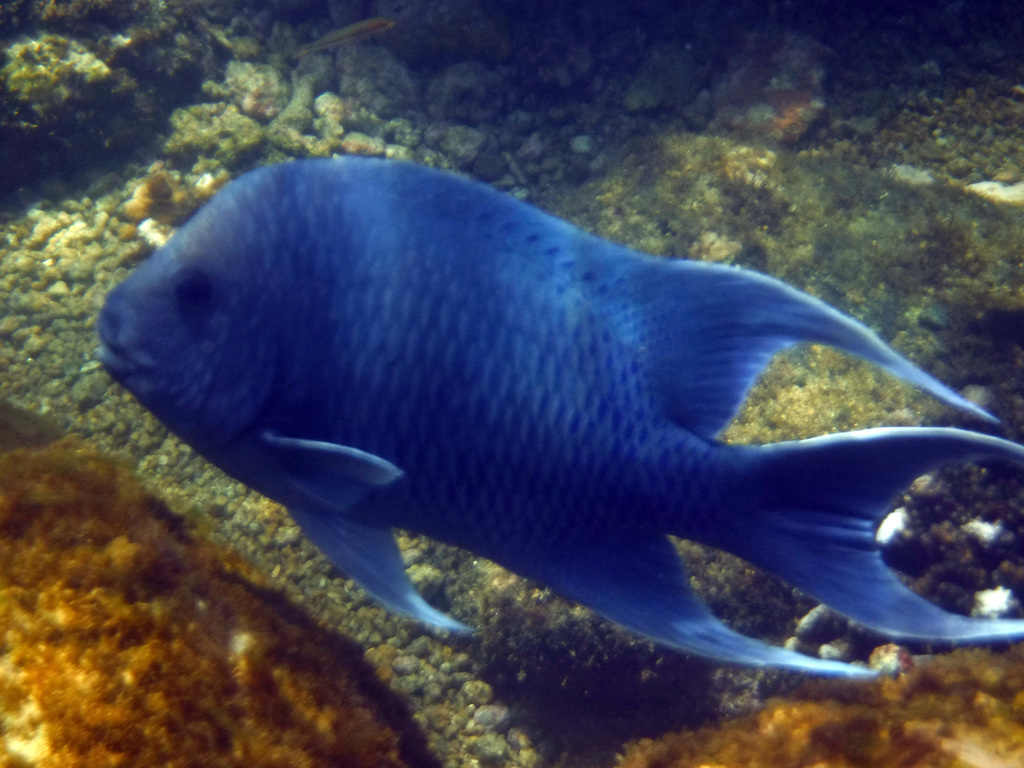
(c) Louis Imbeau, some rights reserved (CC BY), uploaded by Louis Imbeau · CC BY · iNaturalist 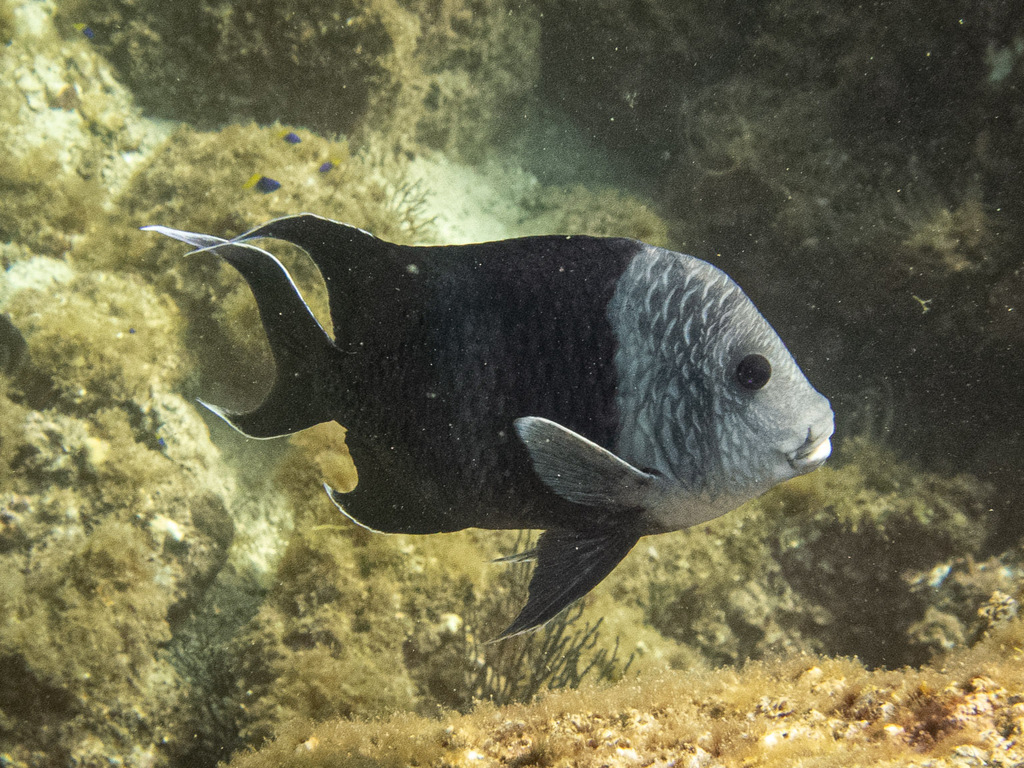
(c) Andrew McKinlay, some rights reserved (CC BY) · CC BY · iNaturalist 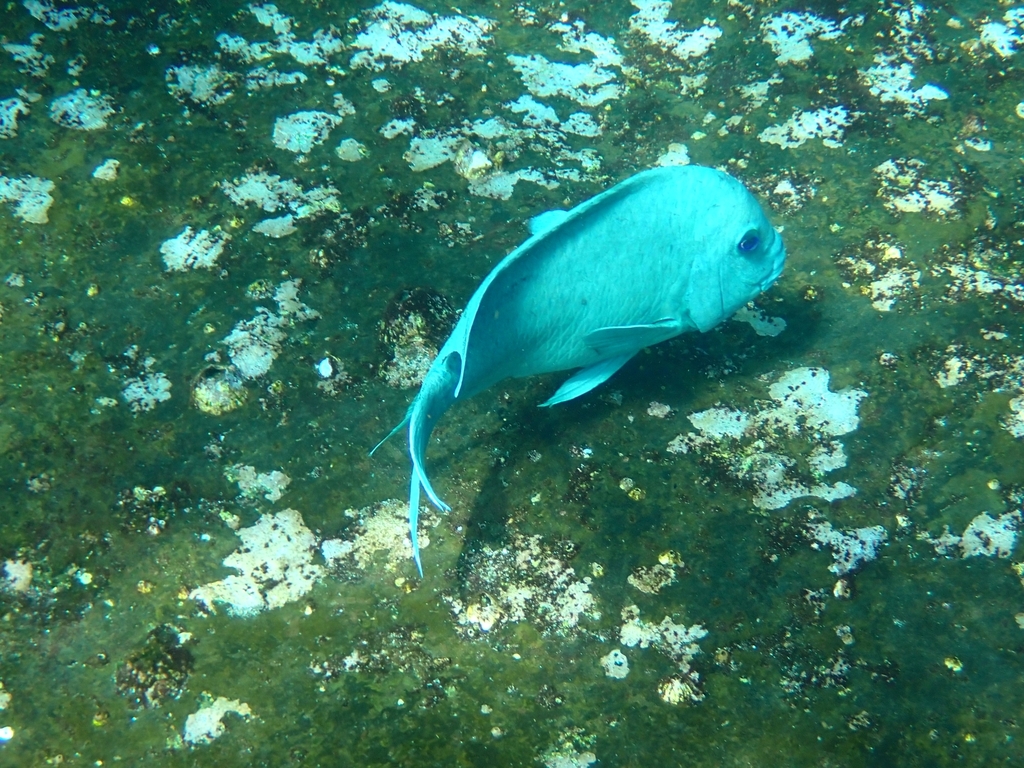
no rights reserved · CC0 1.0 · iNaturalist 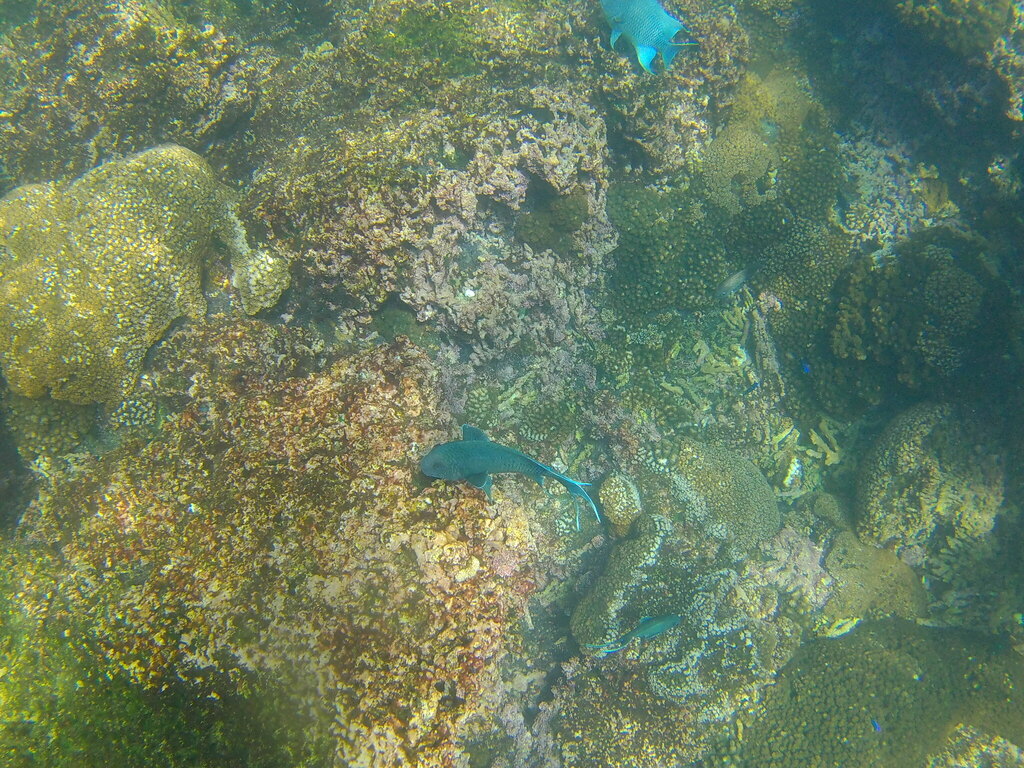
(c) Carlos Domínguez-Rodríguez, some rights reserved (CC BY) · CC BY · iNaturalist 
(c) Carlos Domínguez-Rodríguez, some rights reserved (CC BY) · CC BY · iNaturalist 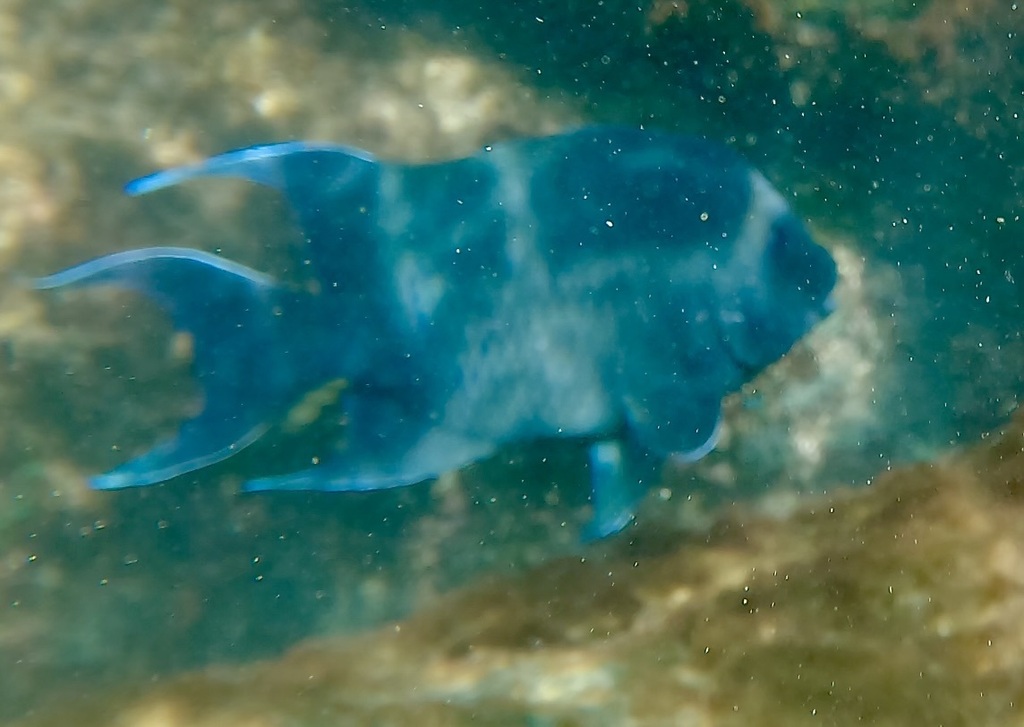
(c) Bill Levine, some rights reserved (CC BY) · CC BY · iNaturalist
Names and classification
- English
- Giant damselfish, giant damselfish
Names in 2 more languages
- German
- Riesenriffbarsch
- Spanish
- Ayanque, Castañuela gigante, damisela dominó, jaqueta gigante, Posonga
Other scientific names: Hypsypops dorsalis, Microspathodon azurissimus, Microspathodon cinereus, Pomacentrus quadrigutta
Similar species
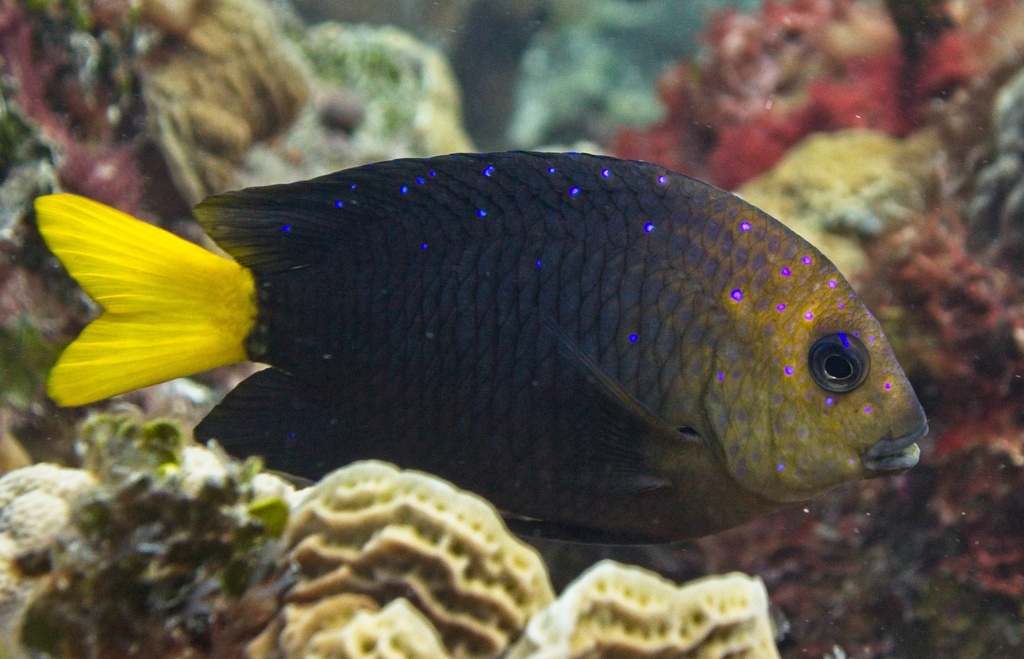 Jewelfish
Microspathodon chrysurus
 Bumphead damselfish
Microspathodon bairdii
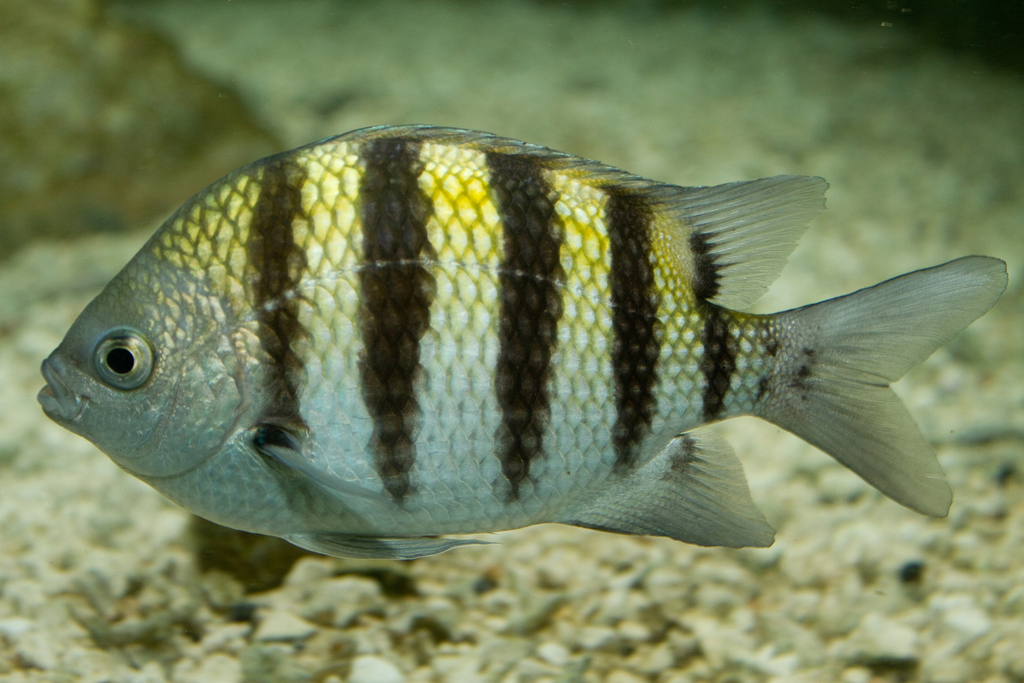 Cow pilot
Abudefduf saxatilis
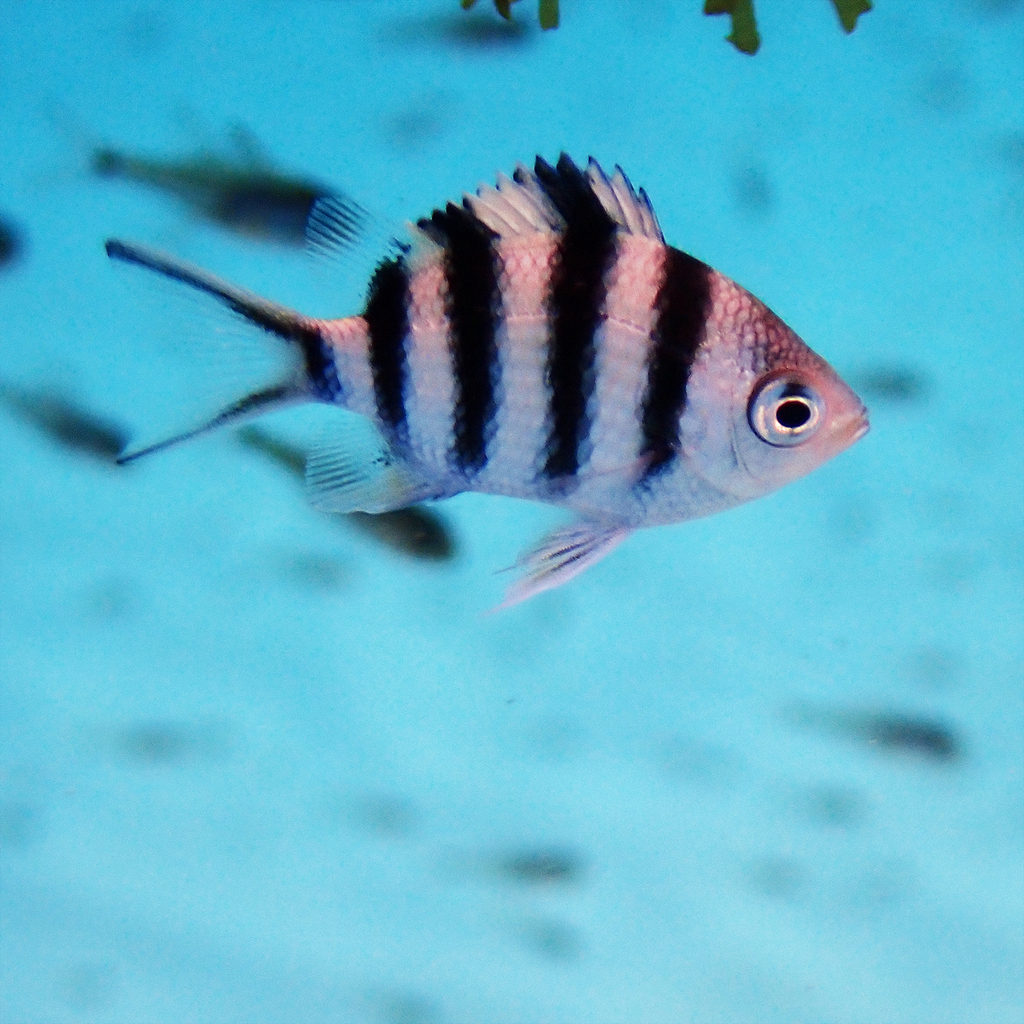 Scissortail sergeant
Abudefduf sexfasciatus
 Indo-Pacific sergeant
Abudefduf vaigiensis
 Spiny chromis
Acanthochromis polyacanthus
Sources and credits
Names and taxonomy: WoRMS (CC BY 4.0) and the GBIF Backbone (CC BY 4.0). Photos: iNaturalist observers, each under the licence shown (CC0, CC BY or CC BY-SA).
- Depth, temperature, months and maps: records from OBIS and GBIF under CC0 or CC BY.
- Descriptions: Wikipedia, licensed CC BY-SA, each linked to its article.
- Conservation status as published by GBIF (IUCN Red List).
- 1,624 open-data records from 1895 to 2024.
- Species data updated November 12, 2026.
Log what you see on your next dive
The free DiveHive diver app keeps your logbook with every sighting and shows what lives at the site you dive next.