
DiscoverSpeciesOther invertebrates
Luidia sarsii
- Usual depth15–128 m
- Water temperature7–27 °C
- Best monthsAugust
- How commonCommon
About this species
Luidia sarsii is a species of starfish. Sand colored with a velvety texture, the species expresses pentamerism or pentaradial symmetry as adults. The five gently tapering arms have conspicuous bands of long white marginal spines in groups of three. Luidia sarsi grow to approximately 20 cm across and are found in deeper water (20 m+) from Norway to the Mediterranean but in deep colder water in the south. They are usually found on muddy sediment and are most active at night, burying themselves under the sand during the day. Luidia sarsii larva develop from a fertilized egg and are unique in a number of respects. The larva of the species attains an unusual size and a juvenile starfish develops inside the larva. During metamorphosis the juvenile migrates to the outside and detaches from the swimming larval bipinnaria stage. The larva continues to live separately for several months.
Text from the Wikipedia article “Luidia sarsii”, licensed CC BY-SA 4.0. Read the article
Where and when
Where it has been recorded
Worldwide
Best months
Worldwide (open data)
- January: 180 records
- February: 137 records
- March: 471 records
- April: 171 records
- May: 126 records
- June: 77 records
- July: 53 records
- August: 1,601 records
- September: 955 records
- October: 30 records
- November: 39 records
- December: 13 records
Depth and water temperature
Depth
Mostly recorded at 15–128 m · Deepest record: 807 m
Water temperature
Recorded in surface water of 7–27 °C
Names and classification
Other scientific names: Astrella simplex, Luidia paucispina, Luidia sarsi
Similar species
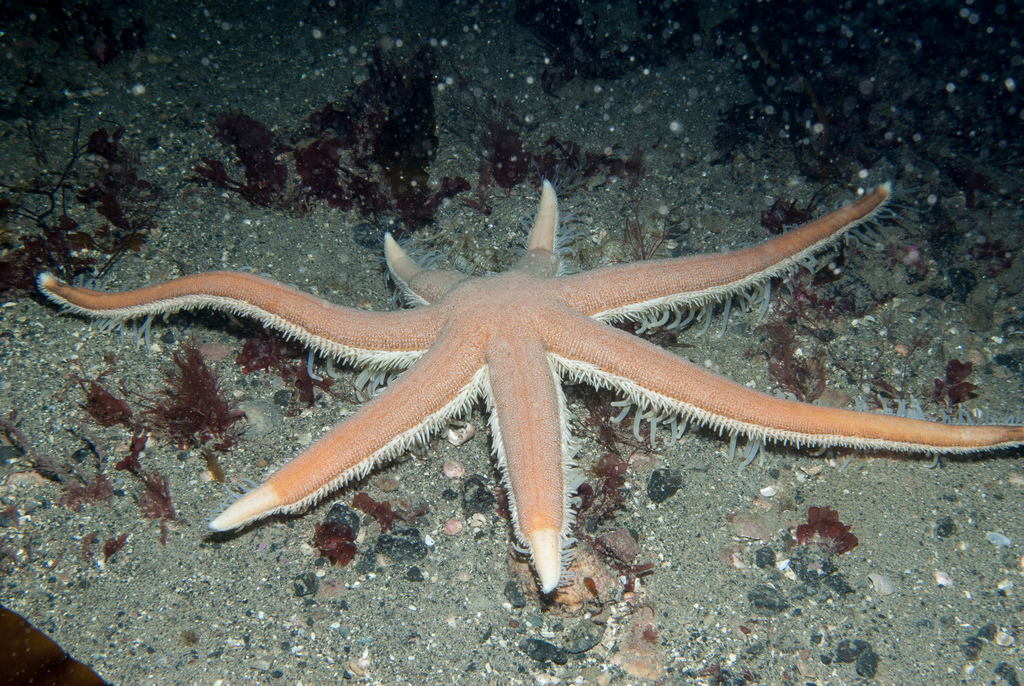 Seven Armed Sea Star
Luidia ciliaris
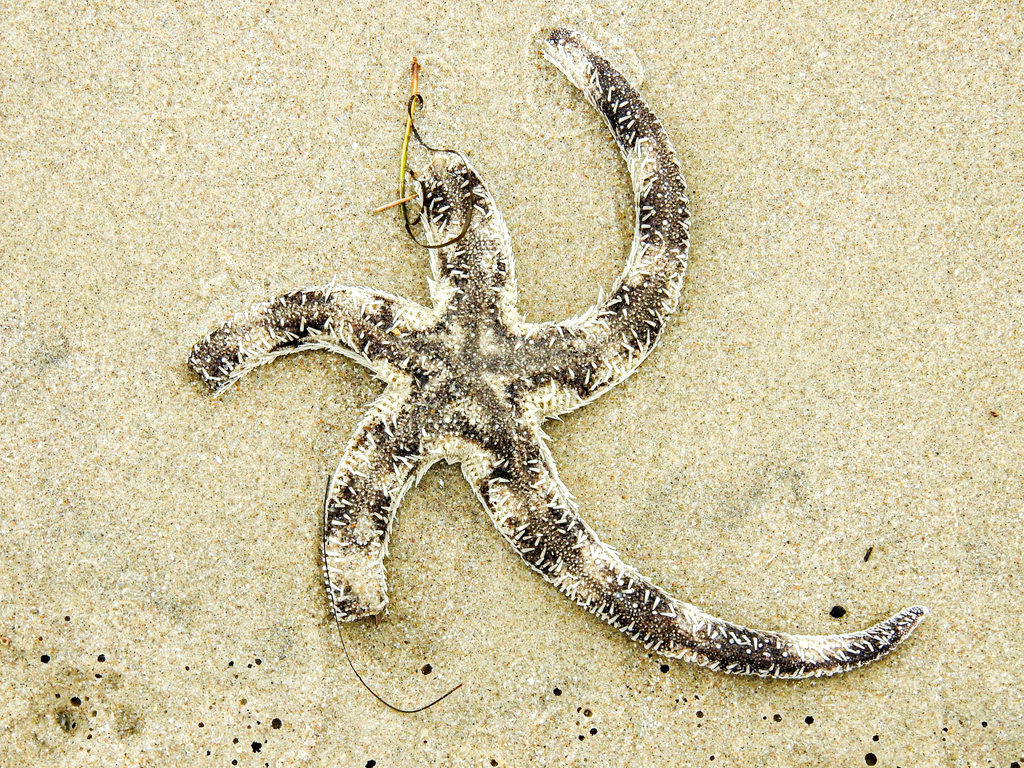 Banded Sea Star
Luidia alternata
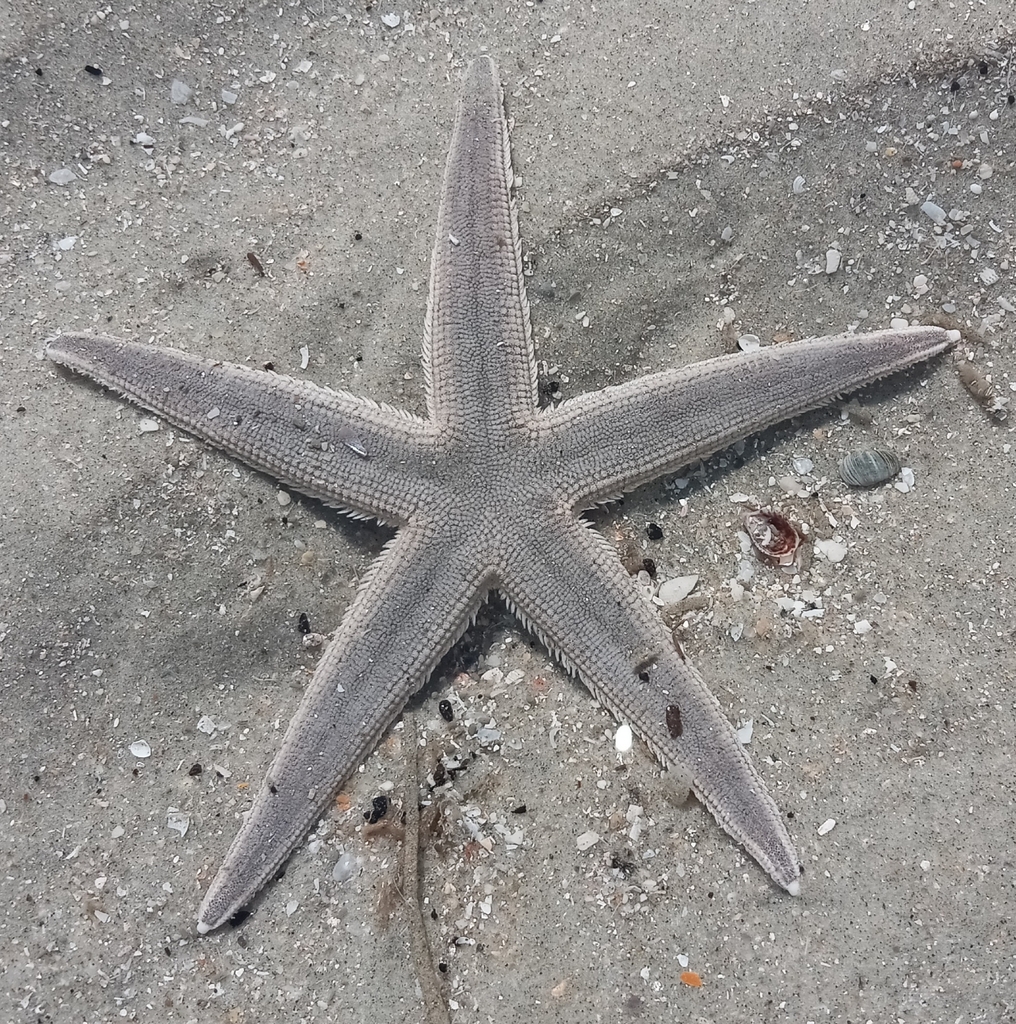 Gray Sea Star
Luidia clathrata
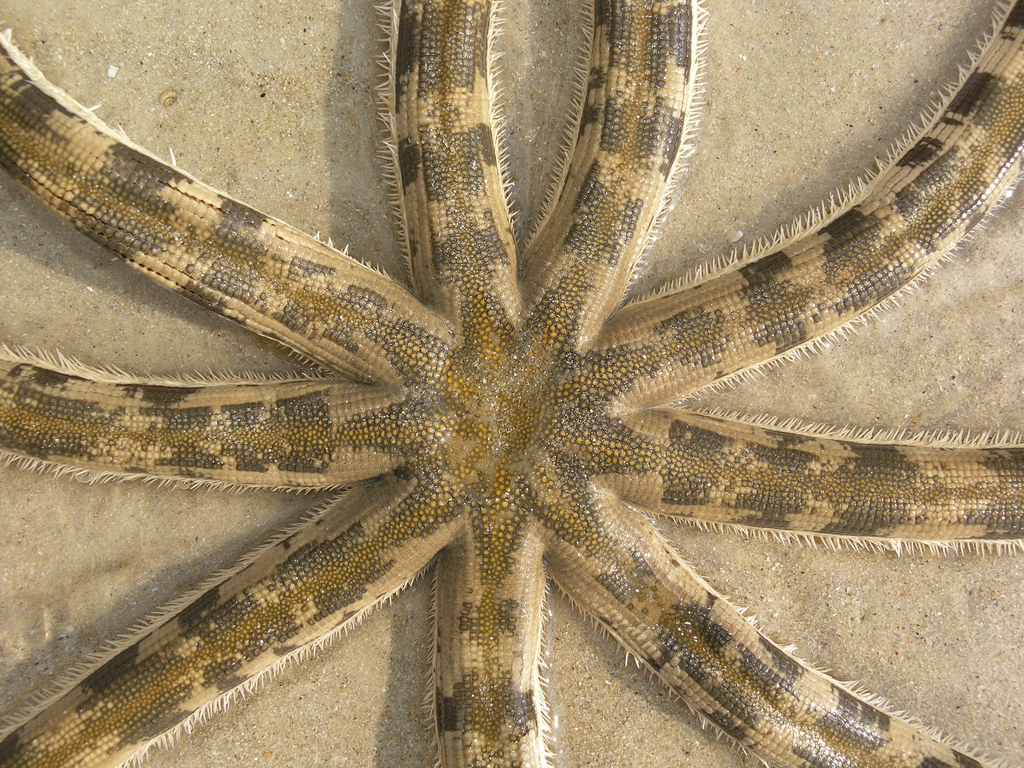 Eight-armed Luidia
Luidia maculata
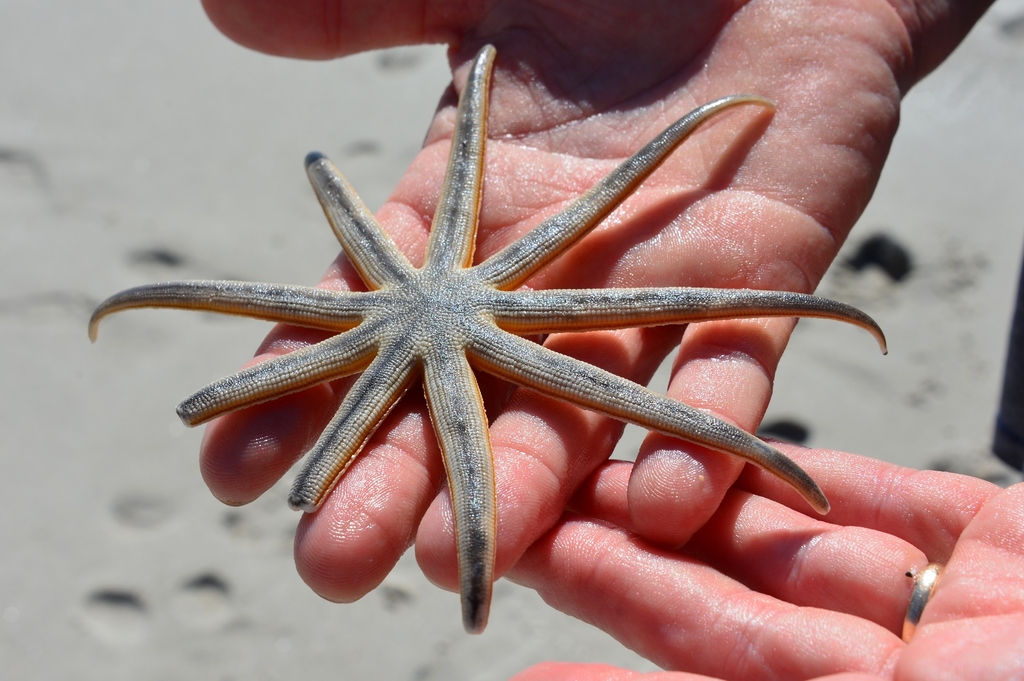 nine-armed sea star
Luidia senegalensis
- Sand Star
Luidia foliolata
Sources and credits
Names and taxonomy: WoRMS (CC BY 4.0) and the GBIF Backbone (CC BY 4.0). Photos: iNaturalist observers, each under the licence shown (CC0, CC BY or CC BY-SA).
- Depth, temperature, months and maps: records from OBIS and GBIF under CC0 or CC BY.
- Descriptions: Wikipedia, licensed CC BY-SA, each linked to its article.
- Conservation status as published by GBIF (IUCN Red List).
- 5,233 open-data records from 1880 to 2025.
- Species data updated November 11, 2026.
Log what you see on your next dive
The free DiveHive diver app keeps your logbook with every sighting and shows what lives at the site you dive next.