
Devil anglerfish
Lophius vomerinus
- Usual depth118–410 m
- Water temperature15–21 °C
- Best monthsJanuary
- How commonCommon
About this species
Lophius vomerinus, the devil anglerfish, Cape monk or Cape monkfish, is a species of marine ray-finned fish belonging to the family Lophiidae. It is endemic to the waters of the southeastern Atlantic and the southwestern Indian Ocean, around Southern Africa.
Text from the Wikipedia article “Lophius vomerinus”, licensed CC BY-SA 4.0. Read the article
Where and when
Where it has been recorded
Worldwide
Best months
Worldwide (open data)
- January: 2,167 records
- February: 865 records
- March: 22 records
- April: 432 records
- May: 396 records
- June: 258 records
- July: 603 records
- August: 270 records
- September: 386 records
- October: 174 records
- November: 0 records
- December: 0 records
Depth and water temperature
Depth
Mostly recorded at 118–410 m · Deepest record: 814 m
Water temperature
Recorded in surface water of 15–21 °C
Names and classification
- English
- Devil anglerfish, Cape Monk, devil anglerfish, Monk
Names in 3 more languages
- German
- Westafrikanischer Anglerfisch
- Spanish
- Rape del Cabo, rape diablo
- French
- baudroie diable, baudroie diableé, Baudroie du Cap
Other scientific names: Lophius upsicephalus
Similar species
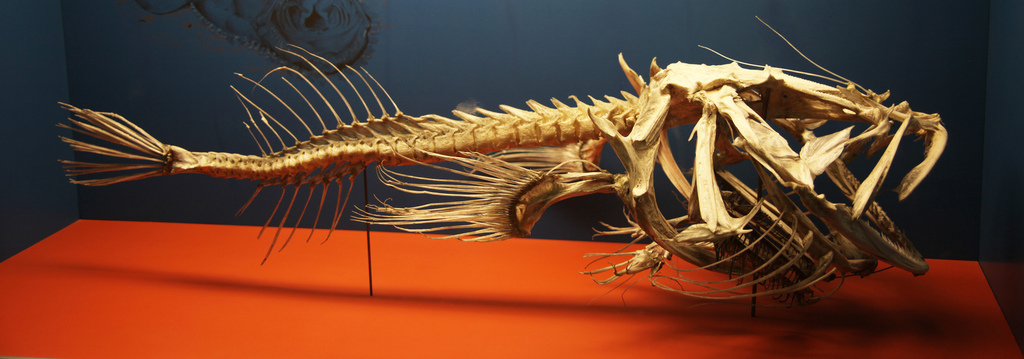 American angler
Lophius americanus
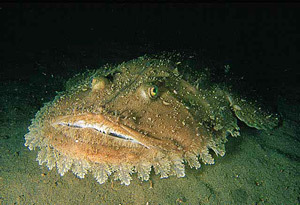 Blackbellied angler
Lophius budegassa
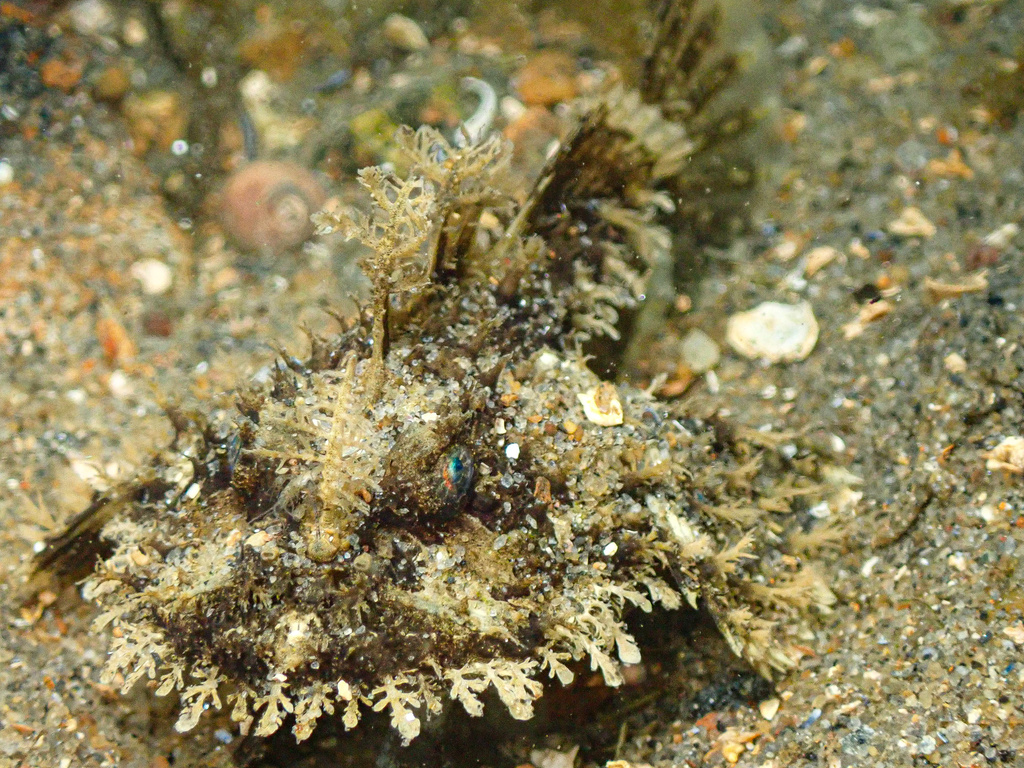 Angler
Lophius piscatorius
- Blackfin goosefish
Lophius gastrophysus
- Yellow goosefish
Lophius litulon
- Shortspine African angler
Lophius vaillanti
Sources and credits
Names and taxonomy: WoRMS (CC BY 4.0) and the GBIF Backbone (CC BY 4.0). Photos: iNaturalist observers, each under the licence shown (CC0, CC BY or CC BY-SA).
- Depth, temperature, months and maps: records from OBIS and GBIF under CC0 or CC BY.
- Descriptions: Wikipedia, licensed CC BY-SA, each linked to its article.
- Conservation status as published by GBIF (IUCN Red List).
- 5,581 open-data records from 1837 to 2009.
- Species data updated November 11, 2026.
Log what you see on your next dive
The free DiveHive diver app keeps your logbook with every sighting and shows what lives at the site you dive next.