
DiscoverSpeciesCorals and anemones
mushroom coral
Lithophyllon repanda
- Usual depth2–43 m
- Water temperature19–29 °C
- Best monthsFebruary, August, and September
- How commonOccasional
About this species
Lithophyllon repanda is a species of mushroom or disc coral in the family Fungiidae. This species is able to move to another location on occasion. The International Union for Conservation of Nature (IUCN) rated it as a least-concern species, and it was originally described by James Dwight Dana in 1846. It occurs at depths of 1 to 30 metres.
Text from the Wikipedia article “Lithophyllon repanda”, licensed CC BY-SA 4.0. Read the article
Where and when
Where it has been recorded
Worldwide
Best months
Worldwide (open data)
- January: 1 record
- February: 16 records
- March: 13 records
- April: 1 record
- May: 2 records
- June: 2 records
- July: 7 records
- August: 18 records
- September: 18 records
- October: 5 records
- November: 5 records
- December: 2 records
Depth and water temperature
Depth
Mostly recorded at 2–43 m · Deepest record: 47.5 m
Water temperature
Recorded in surface water of 19–29 °C
Names and classification
- English
- mushroom coral
Names in 2 more languages
- Japanese
- マルクサビライシ
- Simplified Chinese
- 盤形石葉珊瑚(彎石葉珊瑚)
Other scientific names: Fungia (Verrillofungia) repanda, Fungia (Verrillofungia) samboangensis, Fungia discus, Fungia integra, Fungia linnaei, Fungia repanda, Fungia samboangensis, Verrillofungia repanda
Similar species
 mushroom coral
Lithophyllon concinna
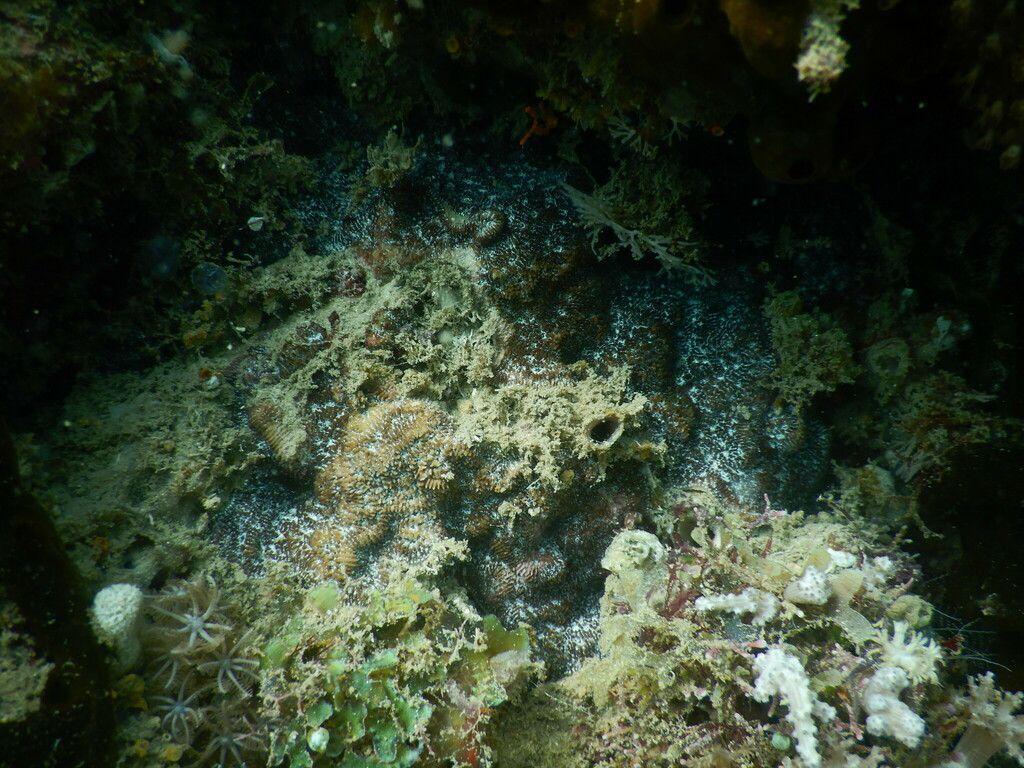 Stone-leaf coral
Lithophyllon undulatum
- mushroom coral
Lithophyllon scabra
- mushroom coral
Lithophyllon spinifer
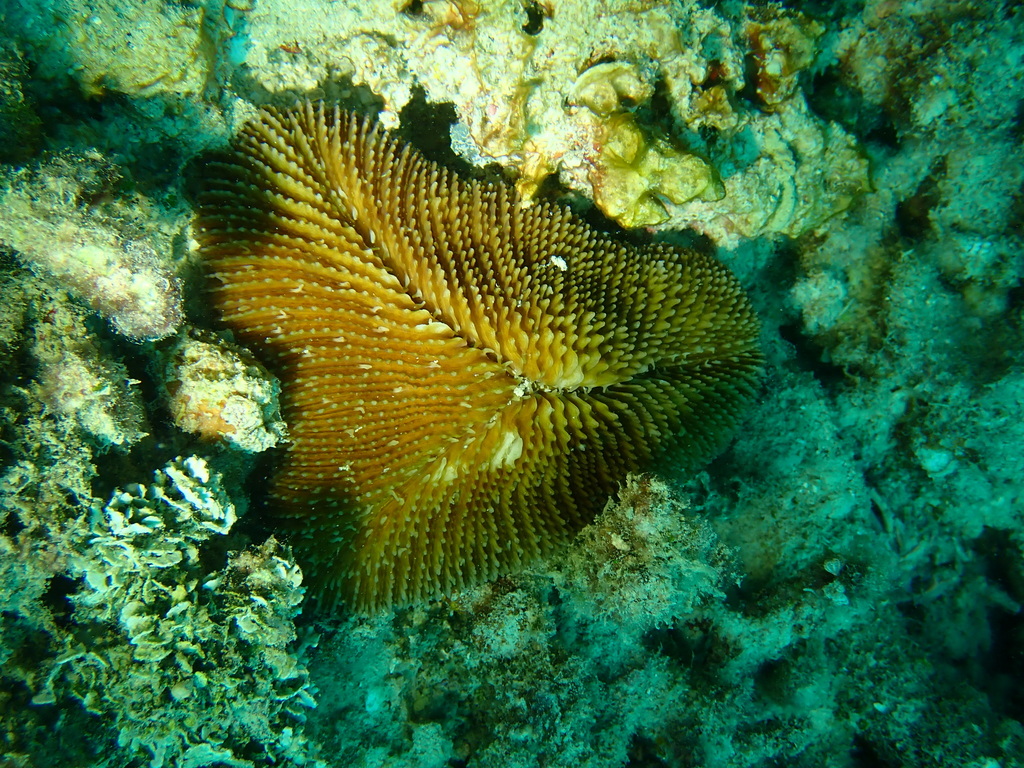 Rough feather coral
Ctenactis echinata
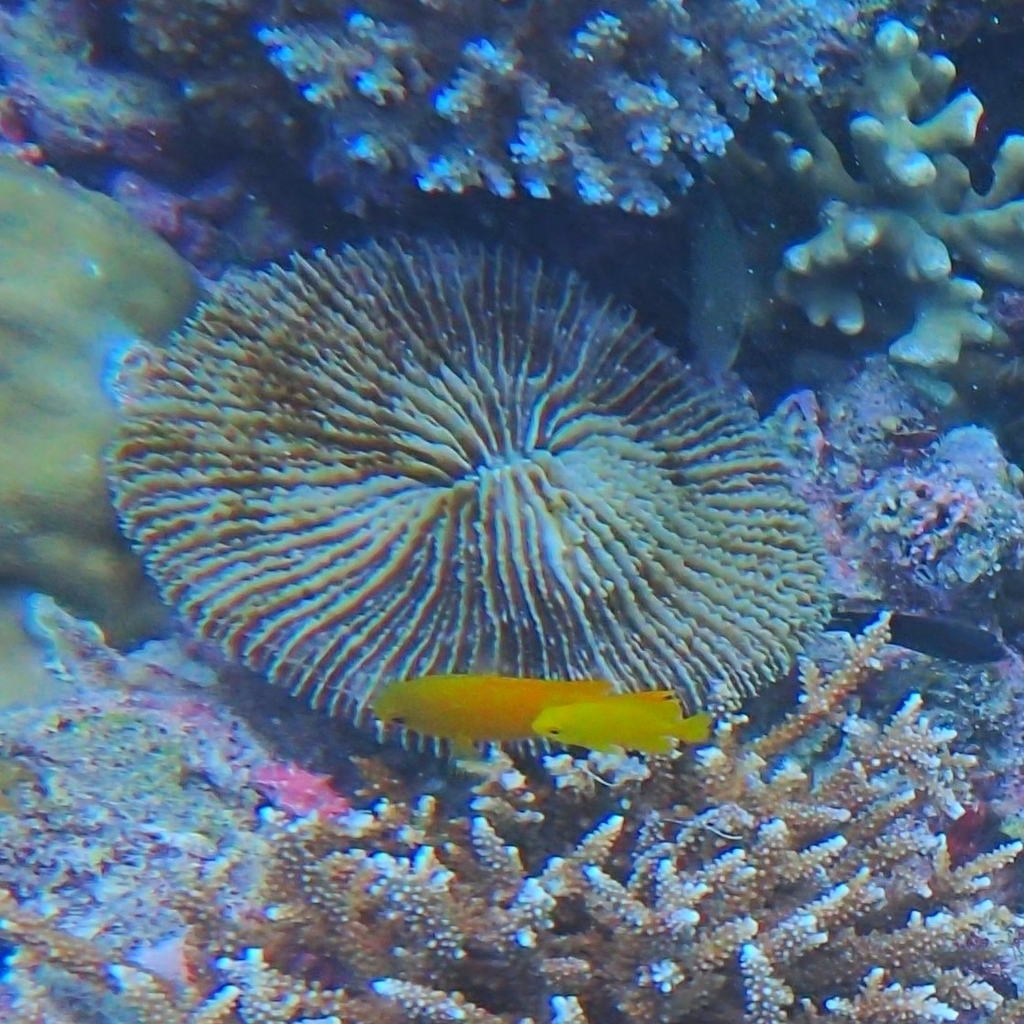 mushroom coral
Danafungia horrida
Sources and credits
Names and taxonomy: WoRMS (CC BY 4.0) and the GBIF Backbone (CC BY 4.0). Photos: iNaturalist observers, each under the licence shown (CC0, CC BY or CC BY-SA).
- Depth, temperature, months and maps: records from OBIS and GBIF under CC0 or CC BY.
- Descriptions: Wikipedia, licensed CC BY-SA, each linked to its article.
- Conservation status as published by GBIF (IUCN Red List).
- 354 open-data records from 1846 to 2012.
- Species data updated October 30, 2026.
Log what you see on your next dive
The free DiveHive diver app keeps your logbook with every sighting and shows what lives at the site you dive next.