
DiscoverSpeciesOther invertebrates
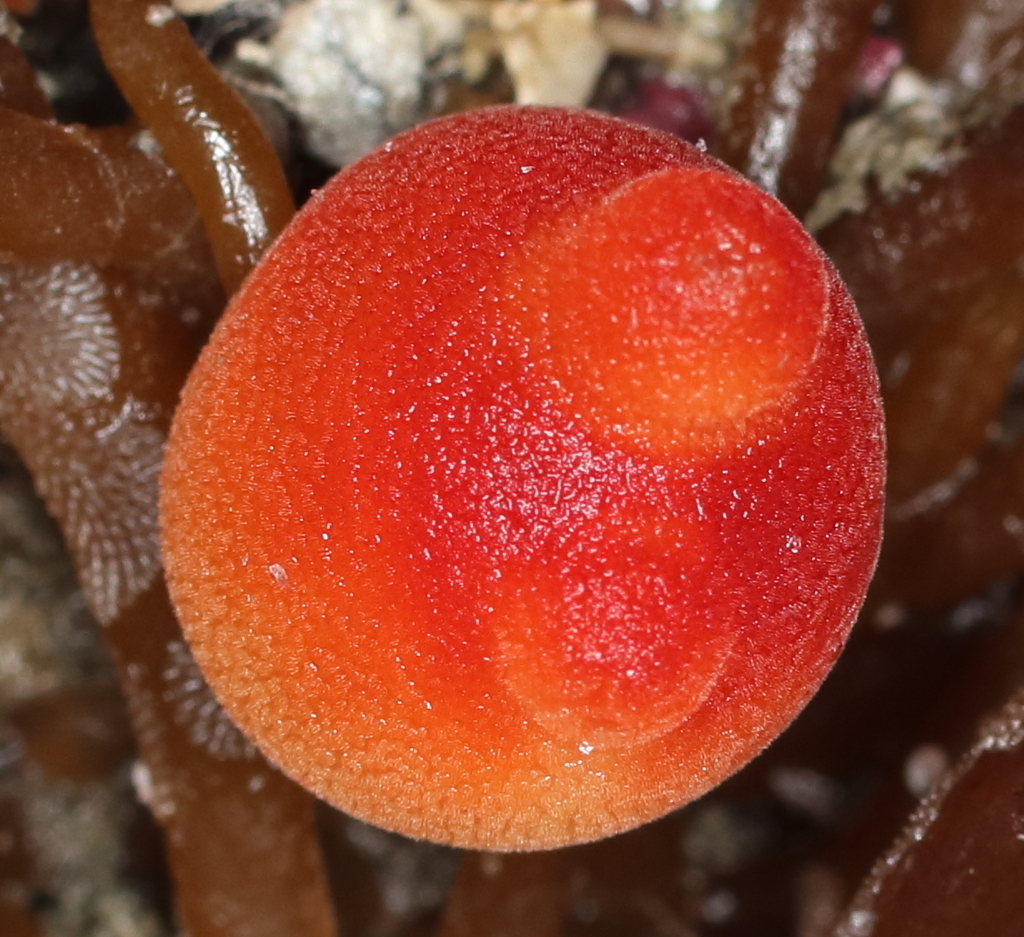
Sea peach
Halocynthia aurantium
- Usual depth15–71 m
- Water temperature-1–12 °C
- Best monthsMay, July, and August
- How commonOccasional
Photo credit: (c) Erin McKittrick, some rights reserved (CC BY), uploaded by Erin McKittrick · CC BY · iNaturalist
About this species
Halocynthia aurantium, commonly known as the sea peach, is a species of tunicate in the order Stolidobranchia. Sea peaches are commonly found in the northern Pacific Ocean, ranging from the Arctic Sea south to Puget Sound, and most common in the Bering Sea at a depth of 40 to 100 metres. The sea peach is typically barrel shaped, growing to a height of 18 centimetres, and its body is attached directly to the substrate. It is usually red or orange with a smooth or wrinkled tunic. There are two siphons at the top. The sea peach is preyed upon by crabs and sea stars.
Text from the Wikipedia article “Halocynthia aurantium”, licensed CC BY-SA 4.0. Read the article
Where and when
Where it has been recorded
Worldwide
Best months
Worldwide (open data)
- January: 77 records
- February: 105 records
- March: 102 records
- April: 86 records
- May: 138 records
- June: 127 records
- July: 133 records
- August: 200 records
- September: 120 records
- October: 118 records
- November: 66 records
- December: 51 records
Depth and water temperature
Depth
Mostly recorded at 15–71 m · Deepest record: 1,500 m
Water temperature
Recorded in surface water of -1–12 °C
Photos
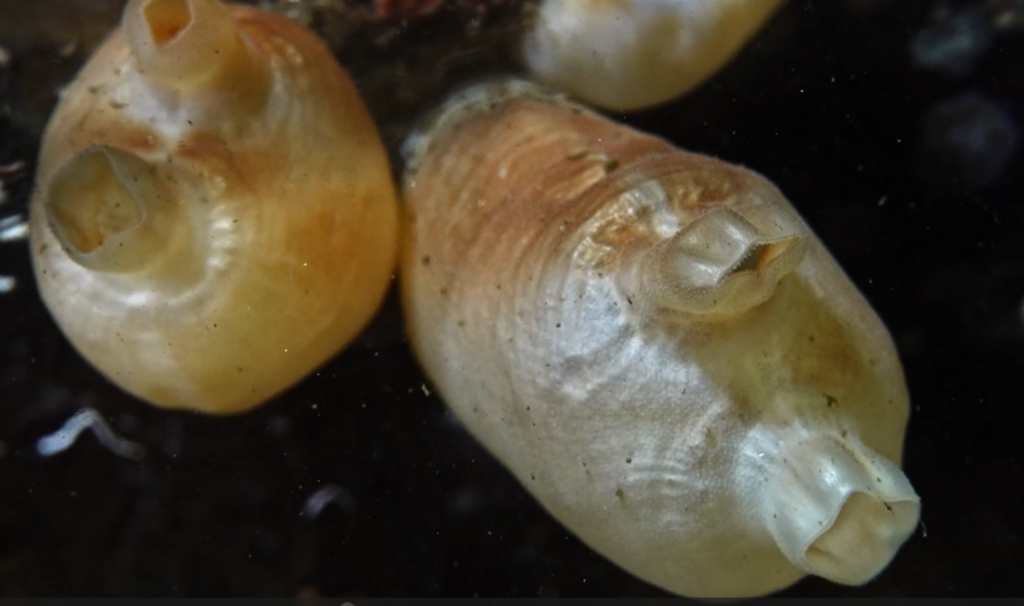
(c) Rachel Crane, some rights reserved (CC BY) · CC BY · iNaturalist 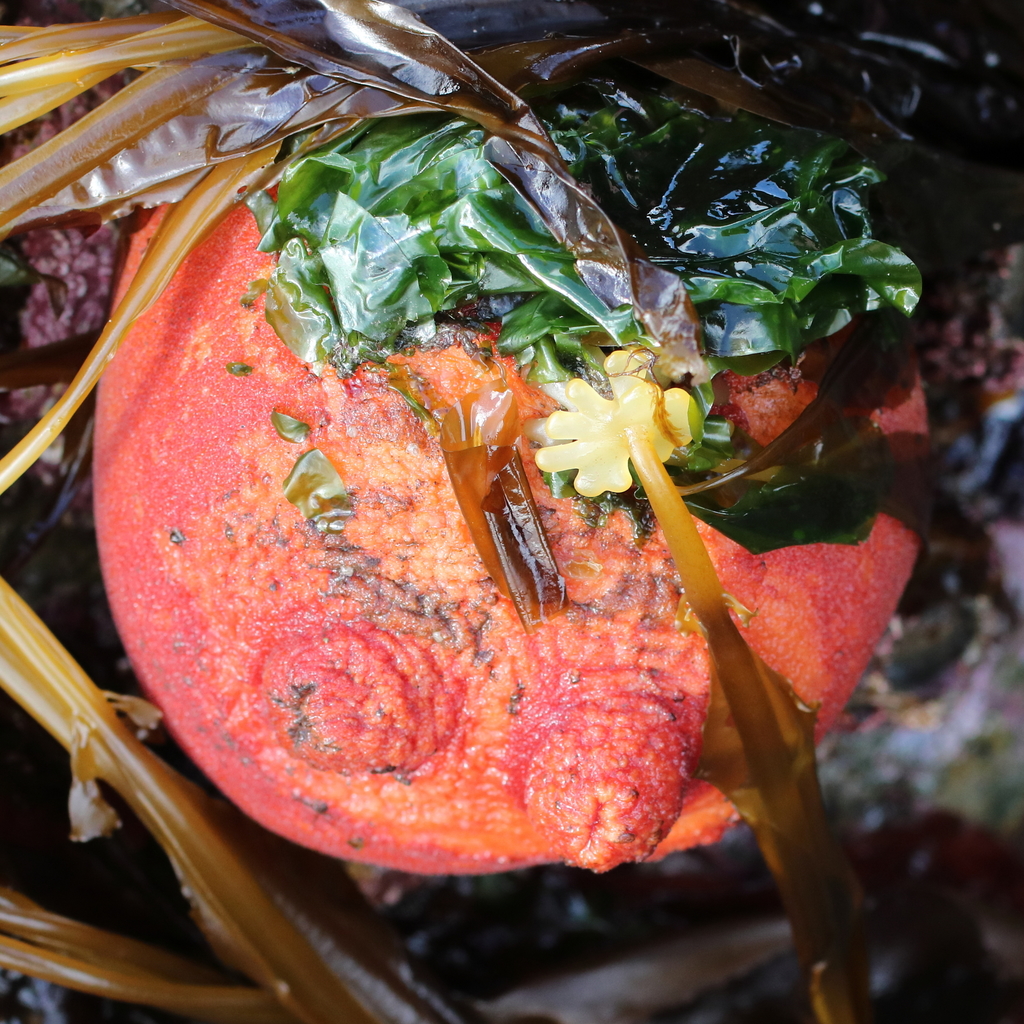
(c) Erin McKittrick, some rights reserved (CC BY) · CC BY · iNaturalist 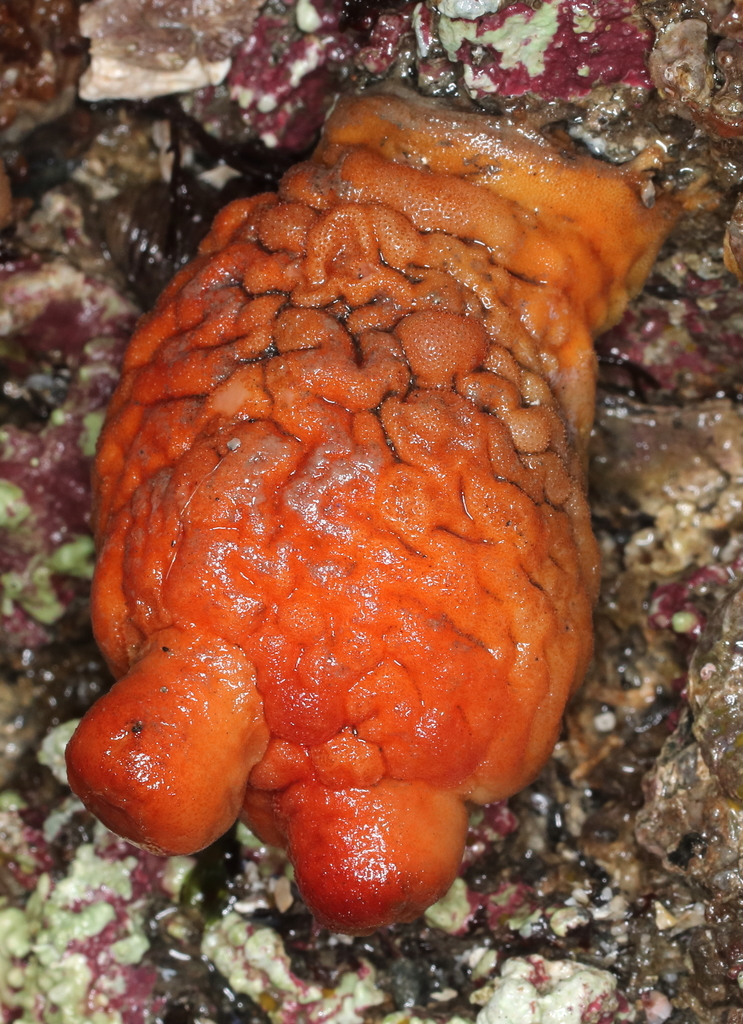
(c) Erin McKittrick, some rights reserved (CC BY) · CC BY · iNaturalist 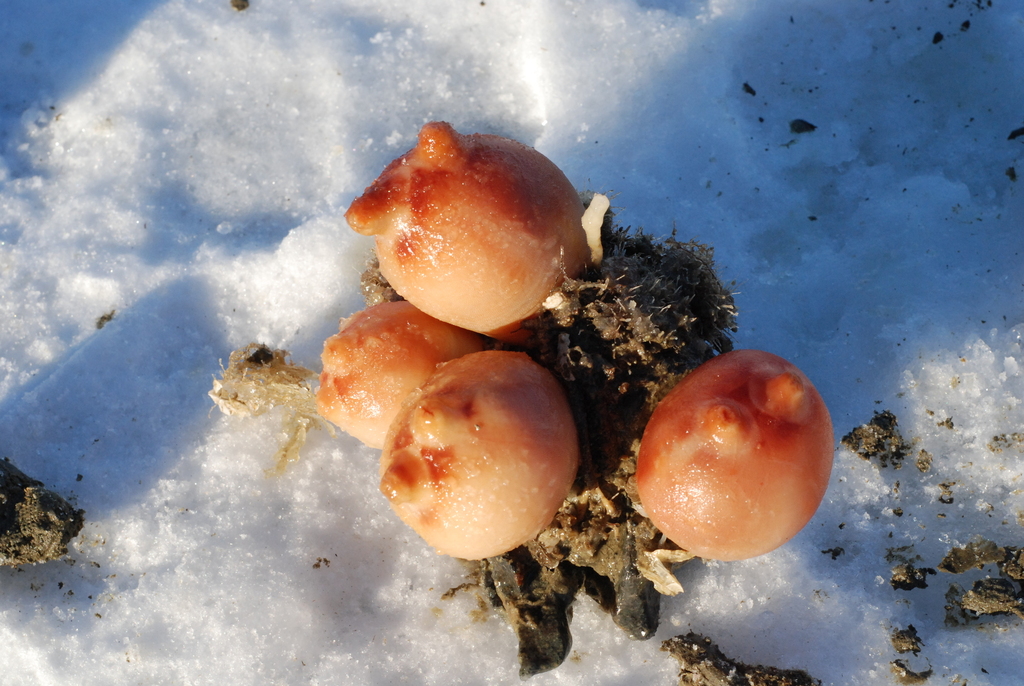
no rights reserved · CC0 1.0 · iNaturalist 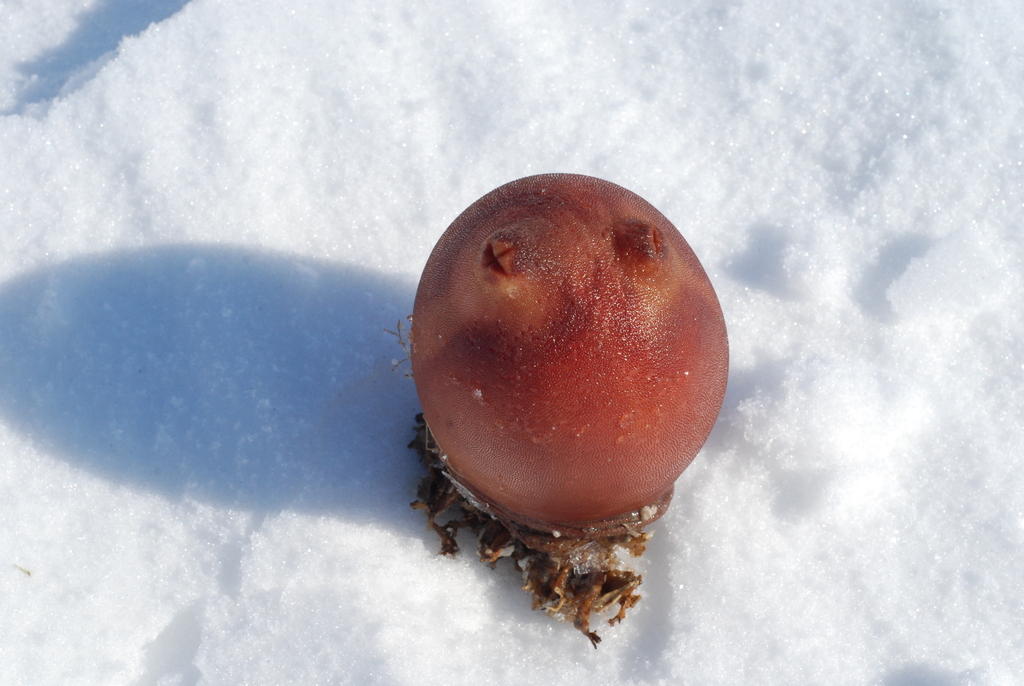
no rights reserved · CC0 1.0 · iNaturalist 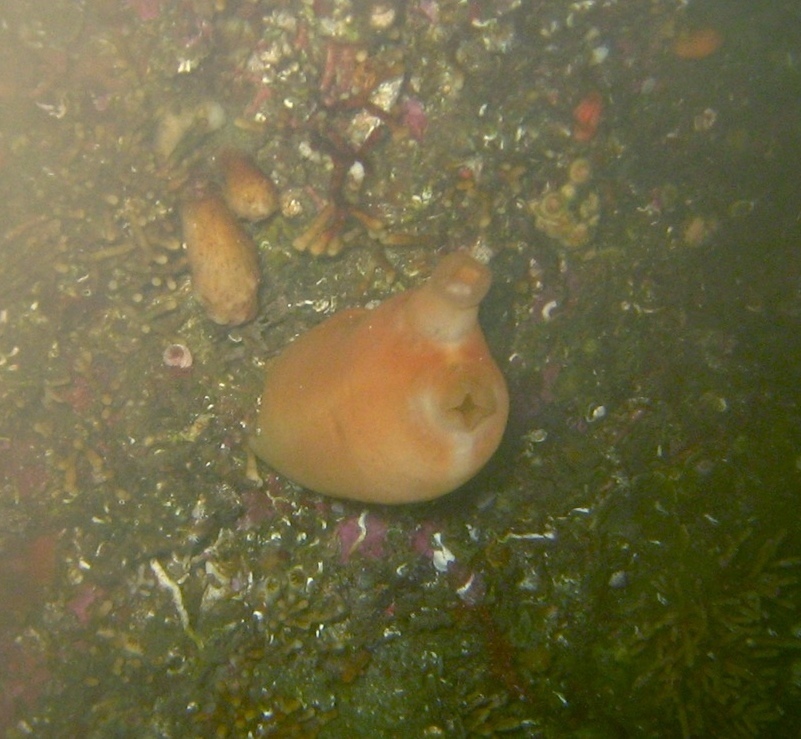
(c) Robert Webster, some rights reserved (CC BY-SA) · CC BY-SA · iNaturalist 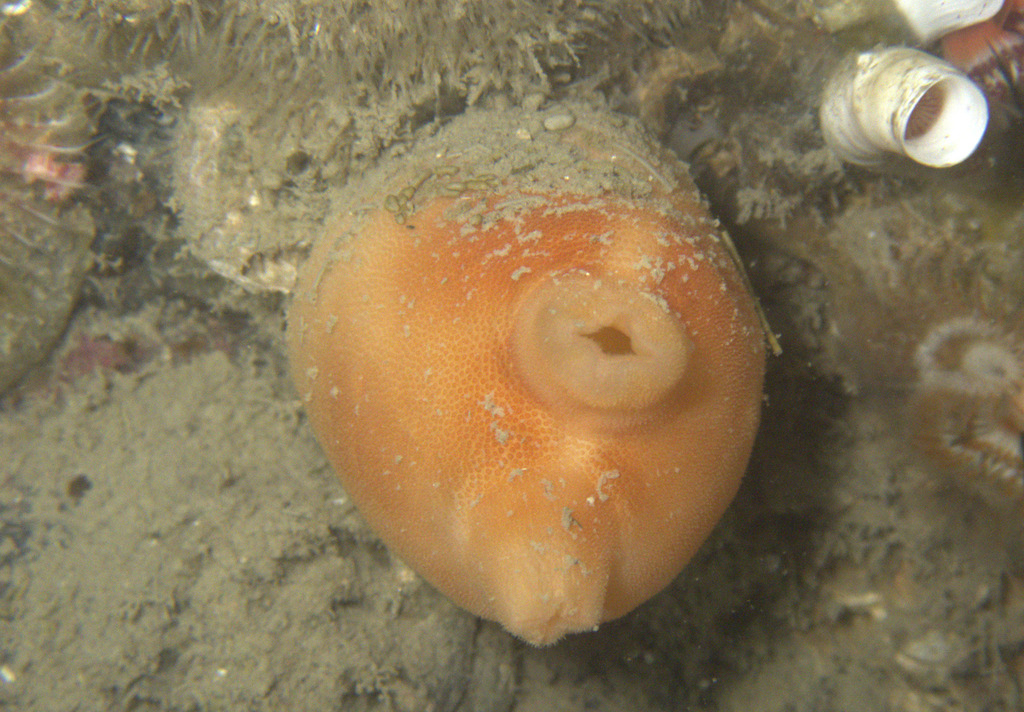
(c) Rachel Crane, some rights reserved (CC BY) · CC BY · iNaturalist
Names and classification
- English
- Sea peach, Pacific Sea Peach
Other scientific names: Ascidia aurantium, Cynthia deani, Cynthia superba, Halocynthia deani, Halocynthia superba, Pyura aurantium, Tethyum aurantium
Similar species
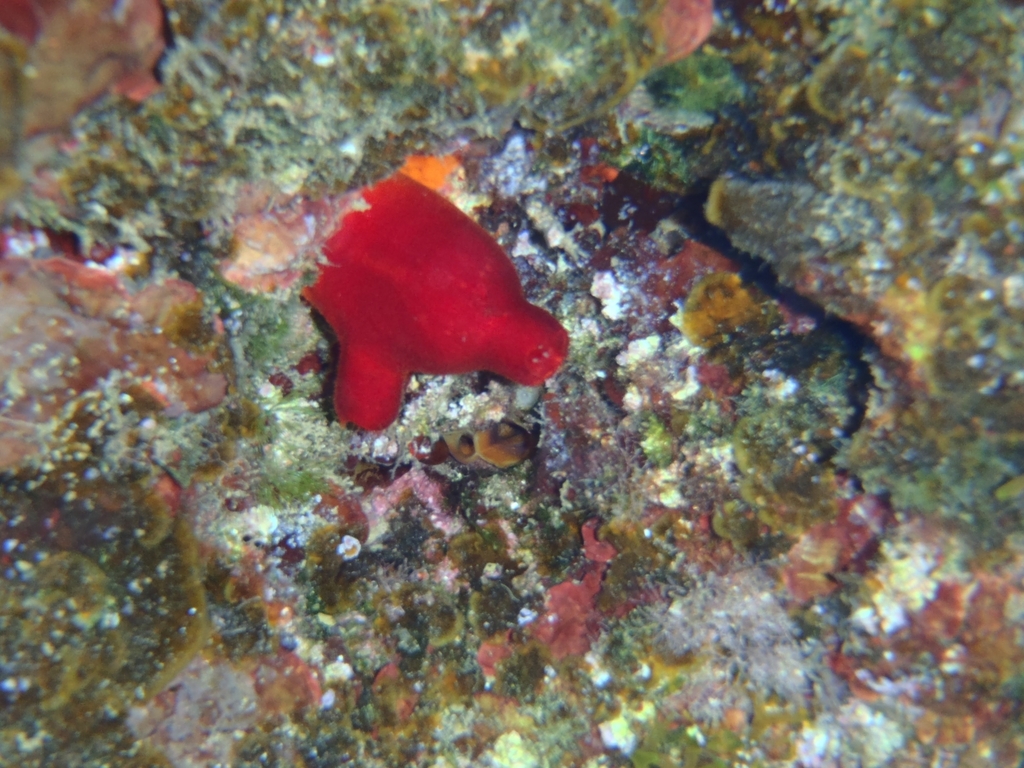 Red sea-squirt
Halocynthia papillosa
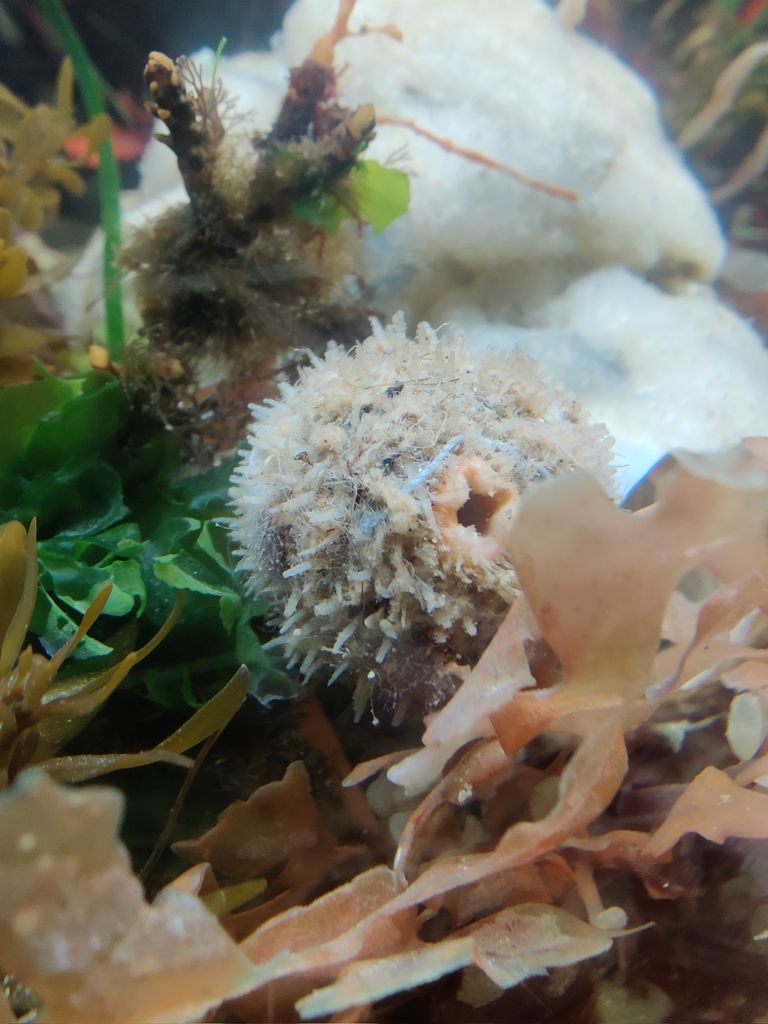 Bristly Tunicate
Halocynthia igaboja
 Sea peach
Halocynthia pyriformis
- Spiny sea squirt
Halocynthia dumosa
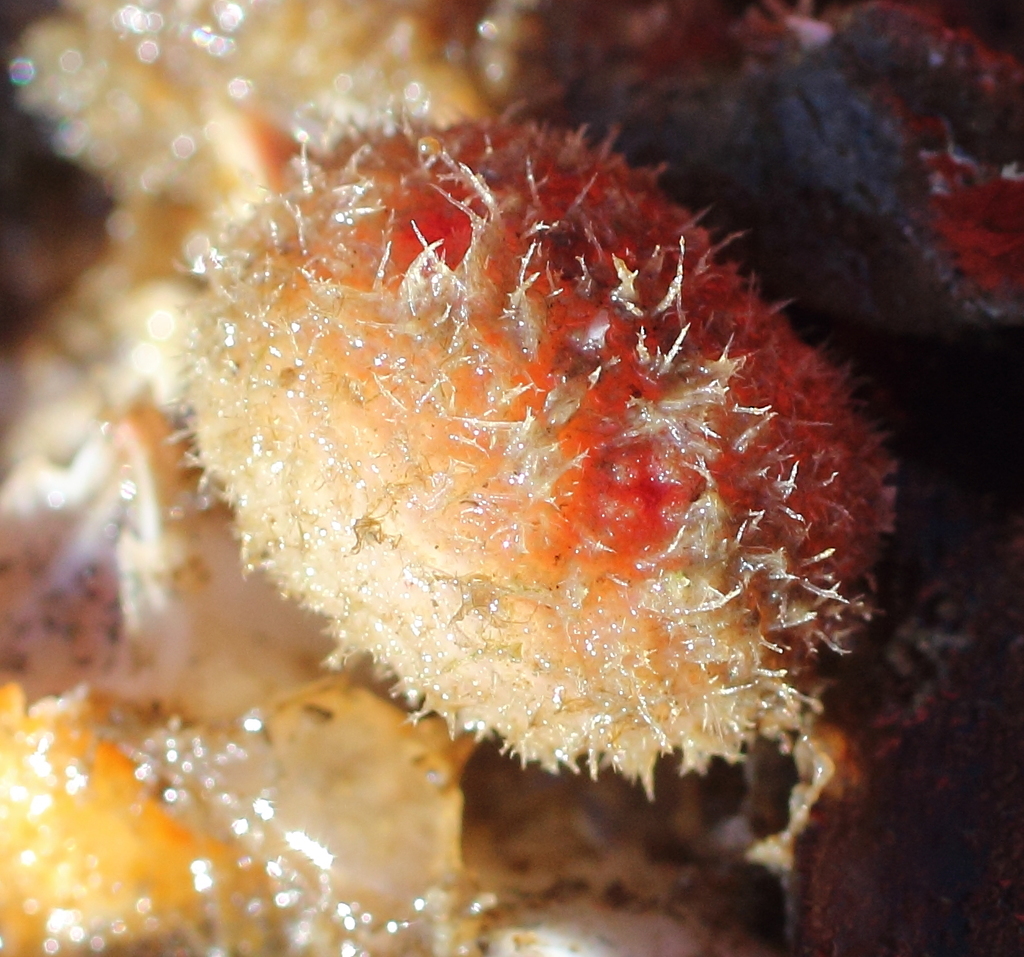 Cactus sea squirt
Boltenia echinata
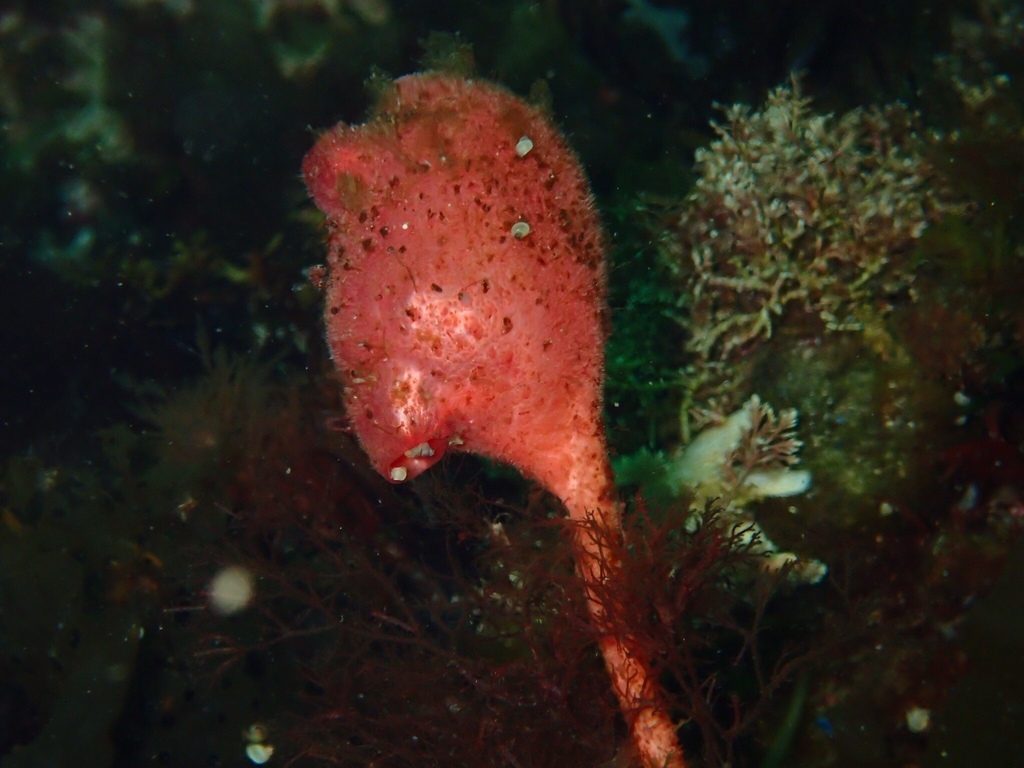 Stalked sea squirt
Boltenia ovifera
Sources and credits
Names and taxonomy: WoRMS (CC BY 4.0) and the GBIF Backbone (CC BY 4.0). Photos: iNaturalist observers, each under the licence shown (CC0, CC BY or CC BY-SA).
- Depth, temperature, months and maps: records from OBIS and GBIF under CC0 or CC BY.
- Descriptions: Wikipedia, licensed CC BY-SA, each linked to its article.
- Conservation status as published by GBIF (IUCN Red List).
- 1,140 open-data records from 1878 to 2024.
- Species data updated November 11, 2026.
Log what you see on your next dive
The free DiveHive diver app keeps your logbook with every sighting and shows what lives at the site you dive next.