
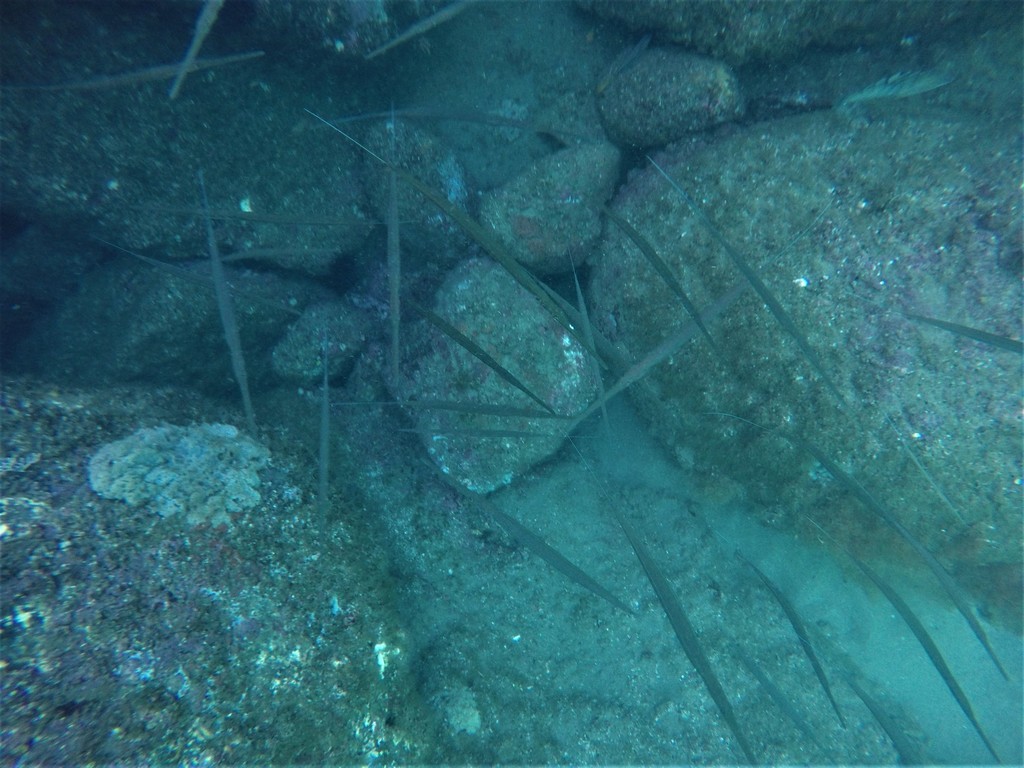
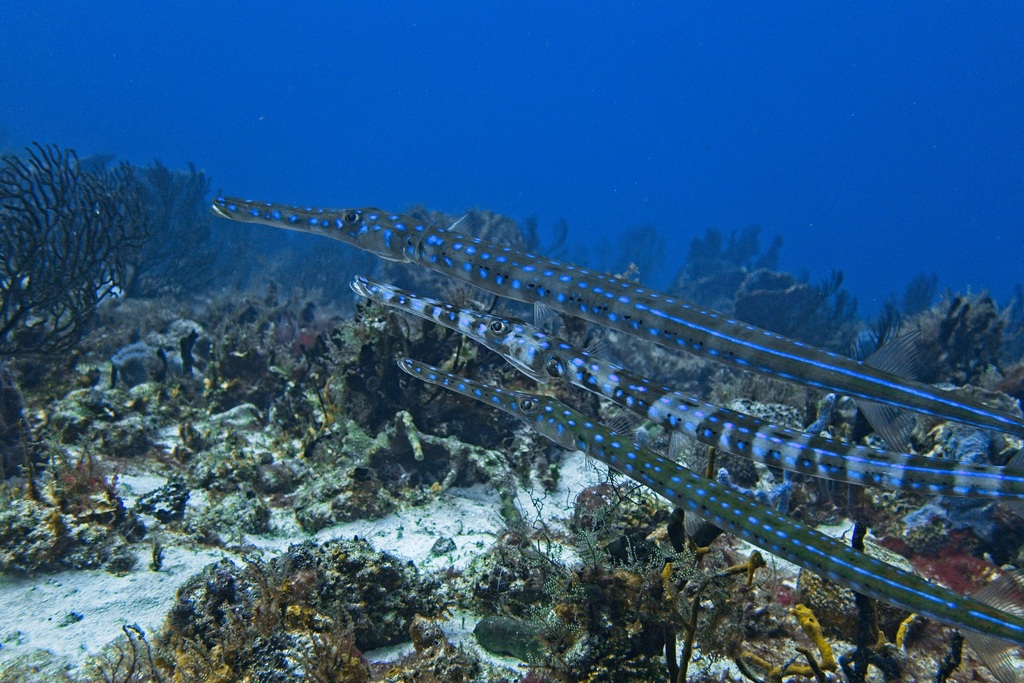
Deepwater cornetfish
Fistularia corneta
- Usual depth3–33 m
- Water temperature18–29 °C
- Best monthsMarch, April, and December
- How commonRare
Photo credit: (c) Alberto Alcalá, some rights reserved (CC BY) · CC BY · iNaturalist
About this species
Fistularia corneta, commonly known as the Pacific cornetfish or the deepwater cornetfish, is a marine fish in the family Fistulariidae. It is endemic to the eastern Pacific Ocean, being found from California to Peru, including many offshore islands. Adult fish are found deeper than 30 metres (98 ft) and have been observed to grow longer than 1 metre (3.3 ft), but are more commonly around 20 centimetres (7.9 in) long. F. corneta feeds on small fishes, and itself is most commonly used by humans as processed fishmeal, which can be marketed as fresh, salted or dried. It is an oviparous species.
Text from the Wikipedia article “Fistularia corneta”, licensed CC BY-SA 4.0. Read the article
Where and when
Where it has been recorded
Worldwide
Best months
Worldwide (open data)
- January: 1 record
- February: 2 records
- March: 5 records
- April: 6 records
- May: 5 records
- June: 0 records
- July: 1 record
- August: 1 record
- September: 0 records
- October: 3 records
- November: 2 records
- December: 7 records
Depth and water temperature
Depth
Mostly recorded at 3–33 m · Deepest record: 32.9 m
Water temperature
Recorded in surface water of 18–29 °C
Photos
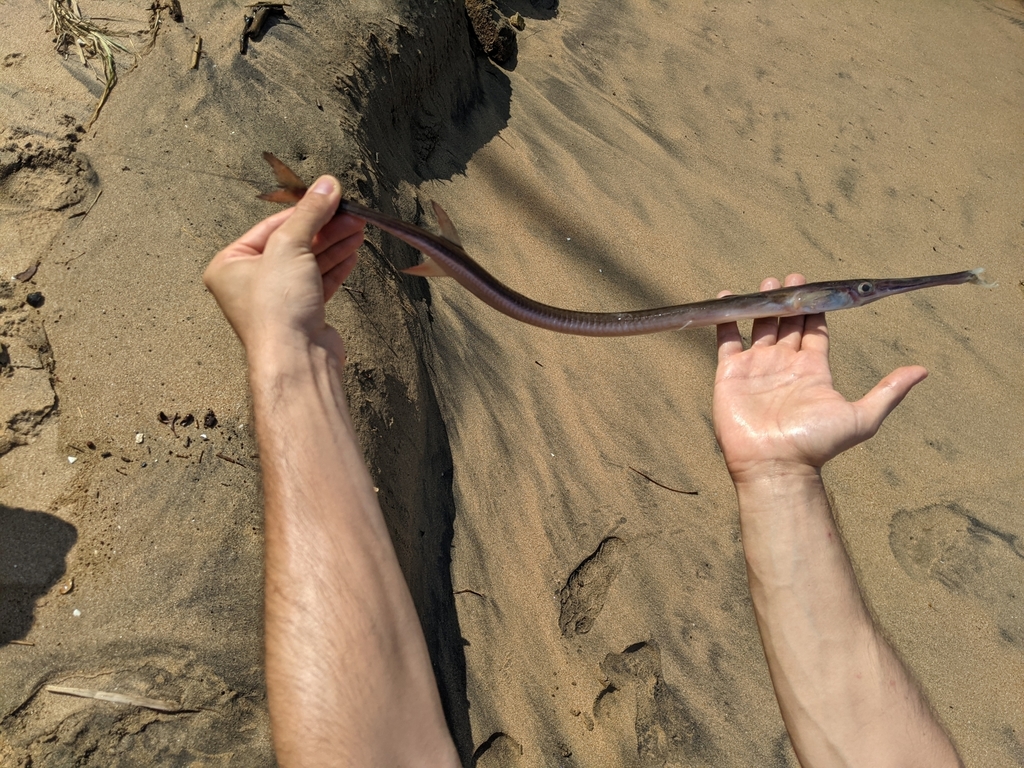
(c) DiegoH, some rights reserved (CC BY) · CC BY · iNaturalist 
(c) Alberto Alcalá, some rights reserved (CC BY) · CC BY · iNaturalist
Names and classification
- English
- Deepwater cornetfish, deepwater cornetfish, Pacific Cornetfish
Names in 3 more languages
- Spanish
- corneta flautera, Pez corneta, Trompeta lisa
- French
- Cornette fluteau
- Simplified Chinese
- 角烟管鱼, 角煙管魚
Similar species
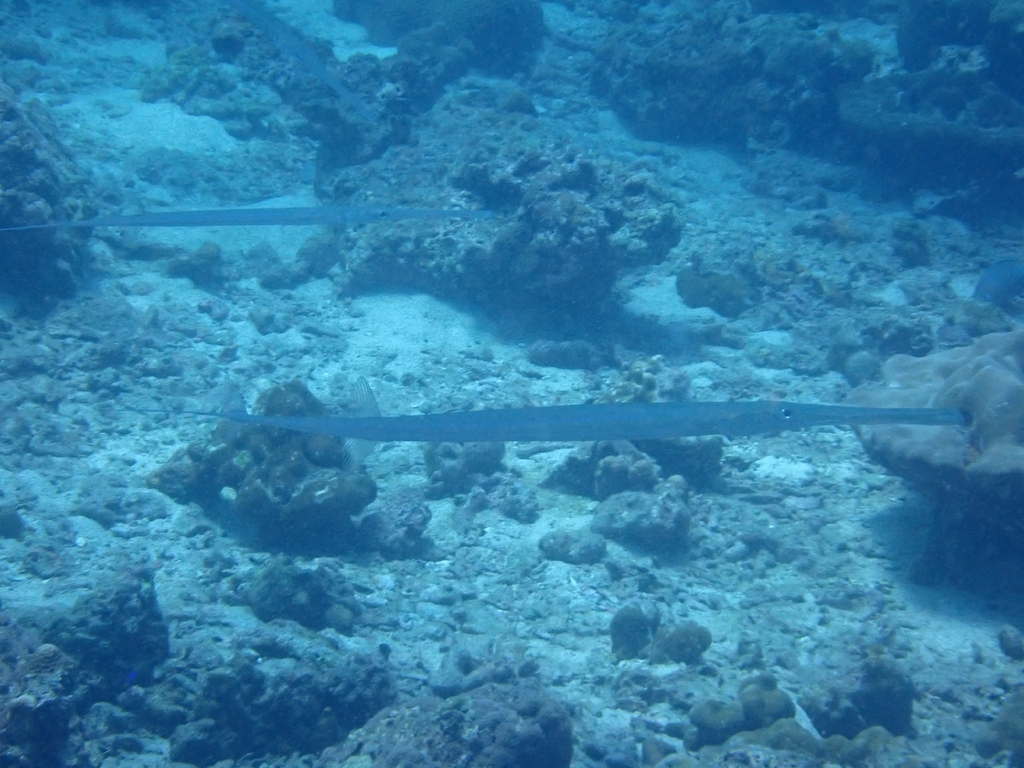 Bluespotted cornetfish
Fistularia commersonii
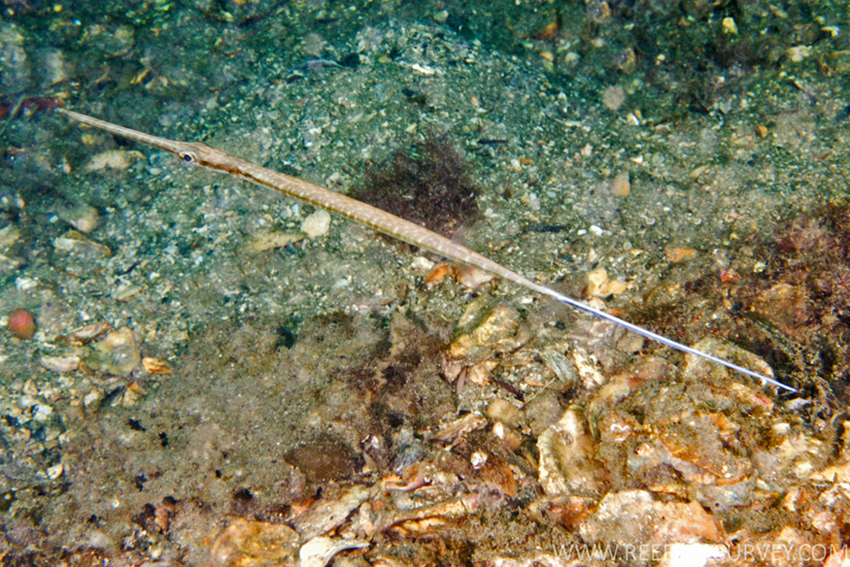 Red cornetfish
Fistularia petimba
 Bluespotted cometfish
Fistularia tabacaria
Sources and credits
Names and taxonomy: WoRMS (CC BY 4.0) and the GBIF Backbone (CC BY 4.0). Photos: iNaturalist observers, each under the licence shown (CC0, CC BY or CC BY-SA).
- Depth, temperature, months and maps: records from OBIS and GBIF under CC0 or CC BY.
- Descriptions: Wikipedia, licensed CC BY-SA, each linked to its article.
- Conservation status as published by GBIF (IUCN Red List).
- 201 open-data records from 1896 to 2024.
- Species data updated November 10, 2026.
Log what you see on your next dive
The free DiveHive diver app keeps your logbook with every sighting and shows what lives at the site you dive next.