
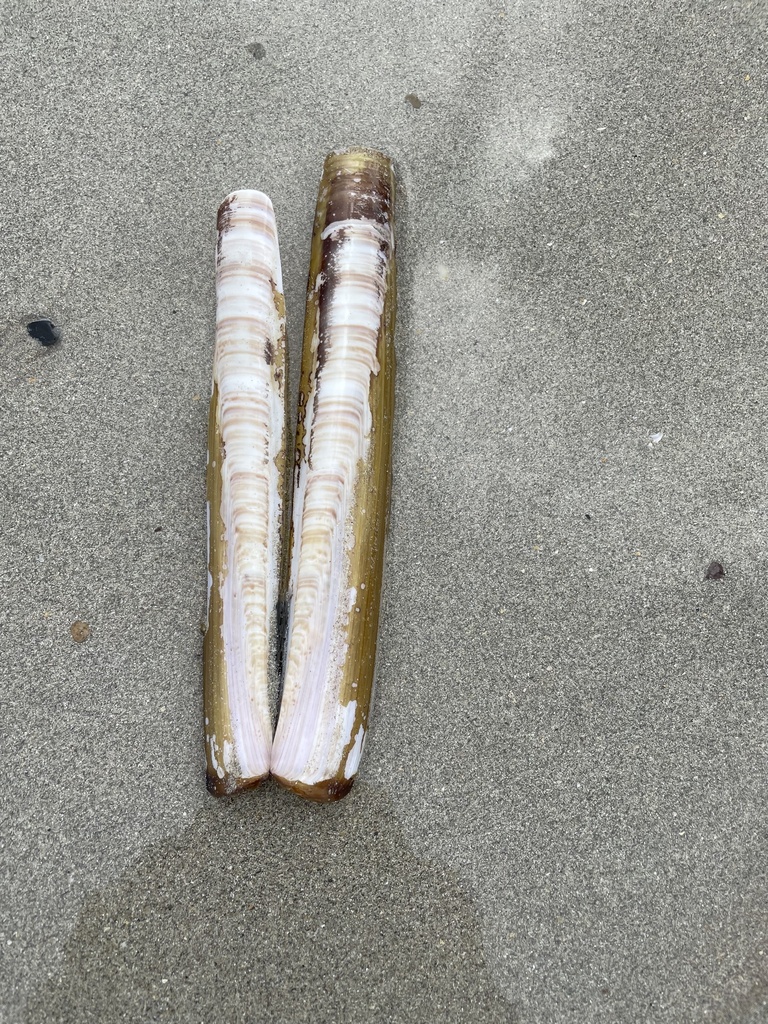
Giant razor clam
Ensis siliqua
- Usual depth2–27 m
- Water temperature9–18 °C
- Best monthsMarch, April, and May
- How commonOccasional
Photo credit: (c) B Jaeger-Stanley, some rights reserved (CC BY) · CC BY · iNaturalist
About this species
The pod razor is a coastal bivalve of European waters. It is edible and has been fished commercially, especially in Portugal, Spain, Ireland and Scotland.
Text from the Wikipedia article “Pod razor”, licensed CC BY-SA 4.0. Read the article
Where and when
Where it has been recorded
Worldwide
Best months
Worldwide (open data)
- January: 50 records
- February: 99 records
- March: 234 records
- April: 145 records
- May: 144 records
- June: 108 records
- July: 115 records
- August: 141 records
- September: 107 records
- October: 81 records
- November: 46 records
- December: 41 records
Depth and water temperature
Depth
Mostly recorded at 2–27 m · Deepest record: 71 m
Water temperature
Recorded in surface water of 9–18 °C
Photos
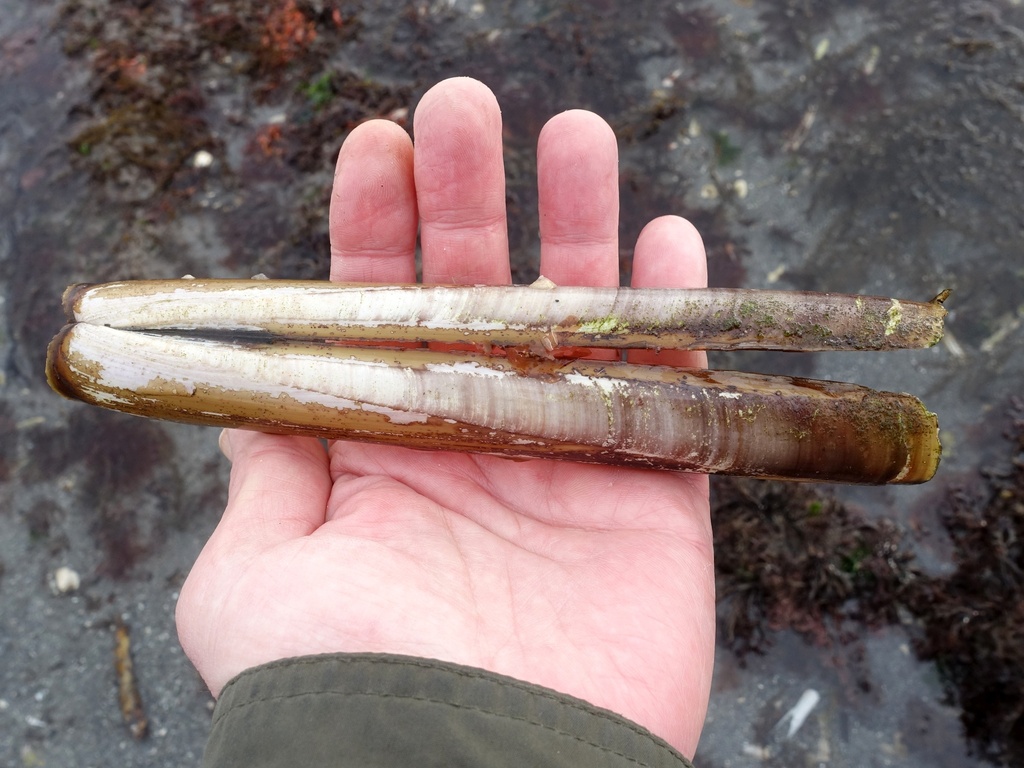
(c) Jamie O'Neill, some rights reserved (CC BY) · CC BY · iNaturalist 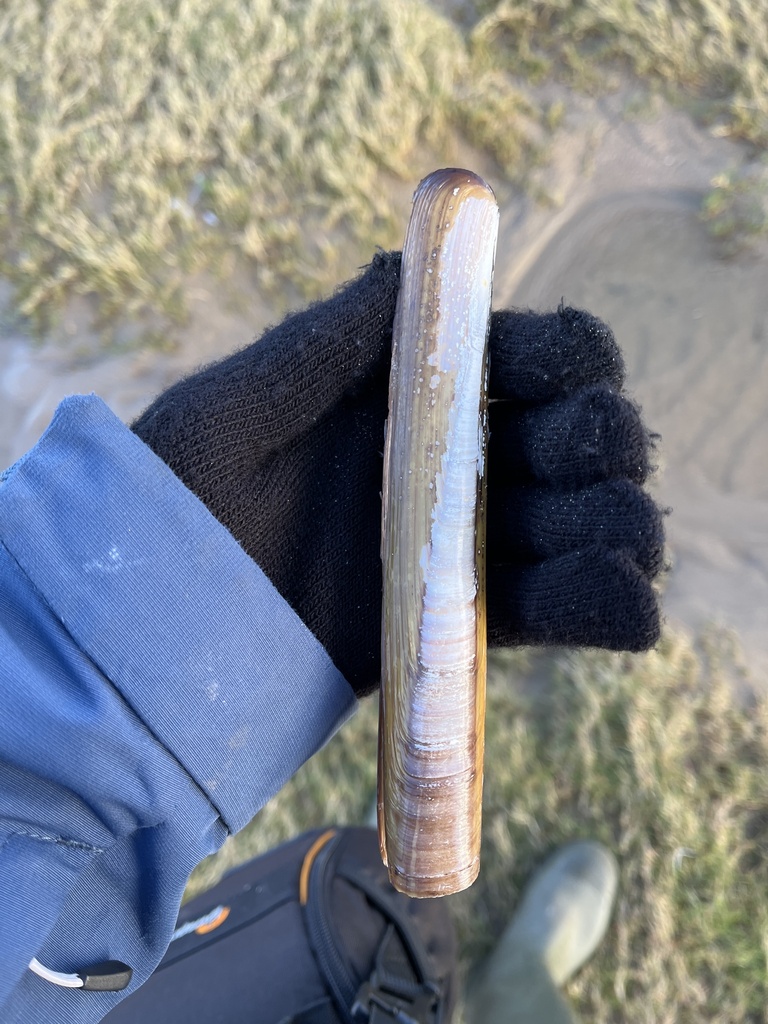
(c) Sean Hartnett, some rights reserved (CC BY) · CC BY · iNaturalist 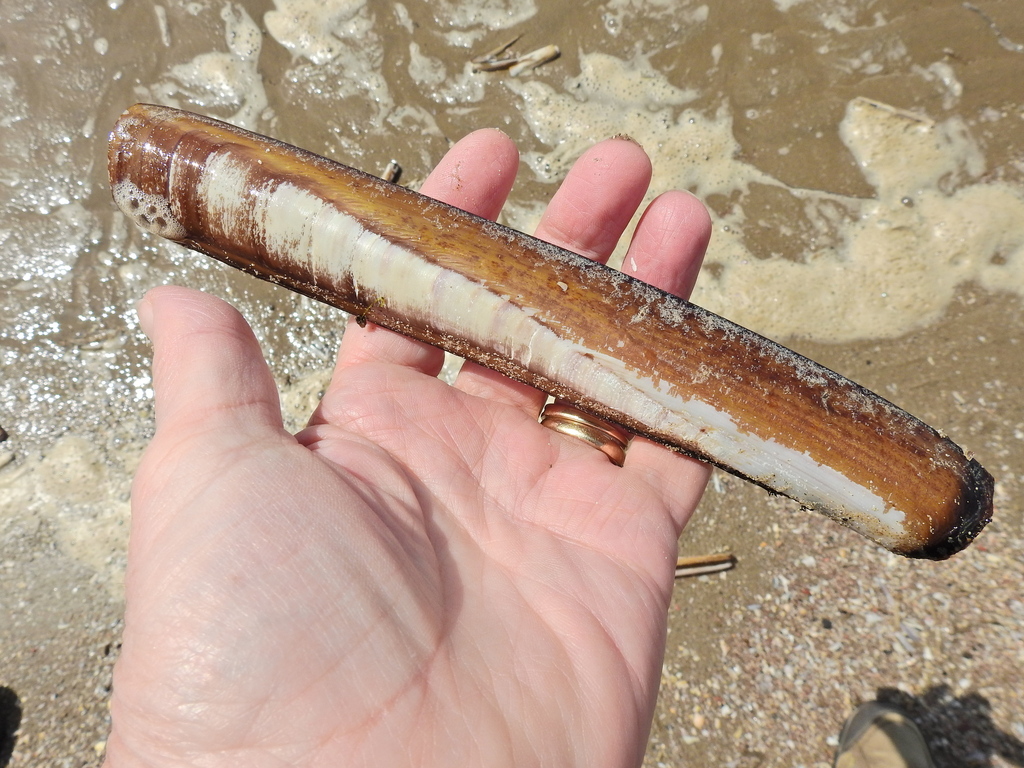
(c) Susan Marley, some rights reserved (CC BY) · CC BY · iNaturalist 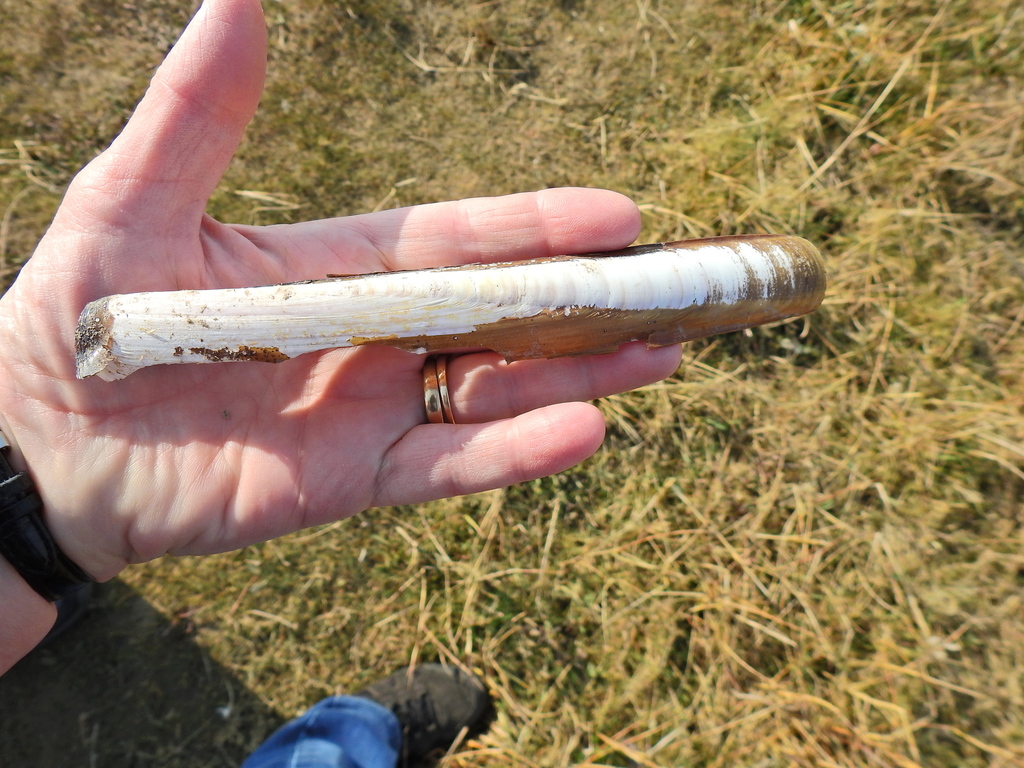
(c) Susan Marley, some rights reserved (CC BY) · CC BY · iNaturalist 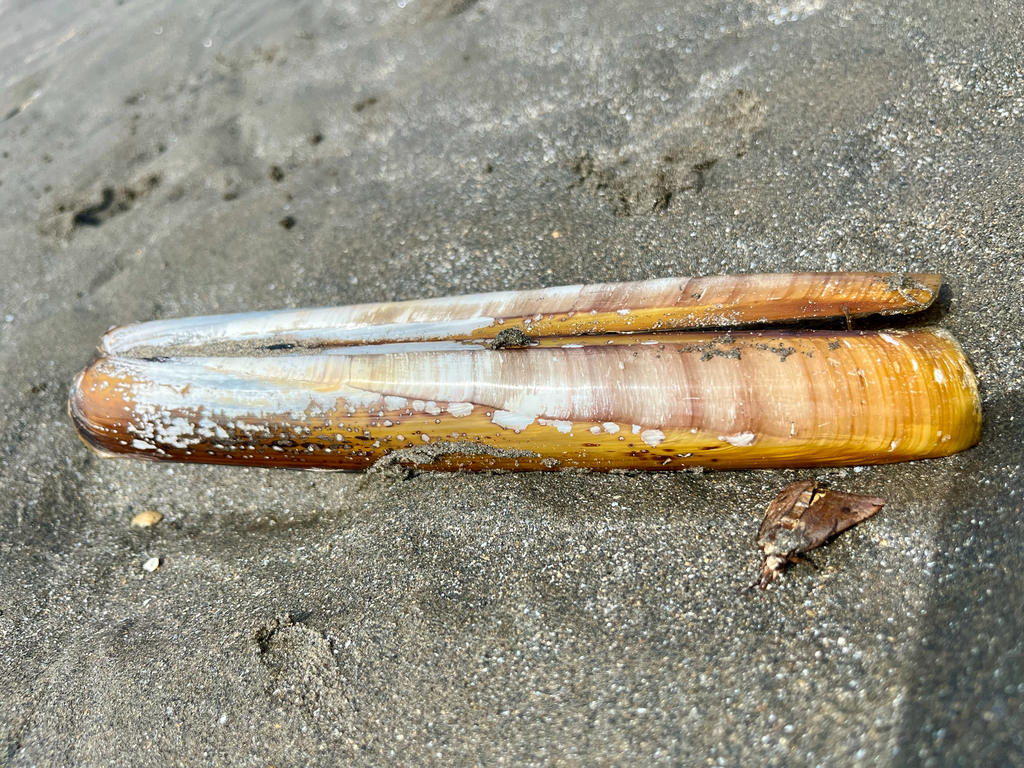
(c) Kieran Roy Powell, some rights reserved (CC BY) · CC BY · iNaturalist 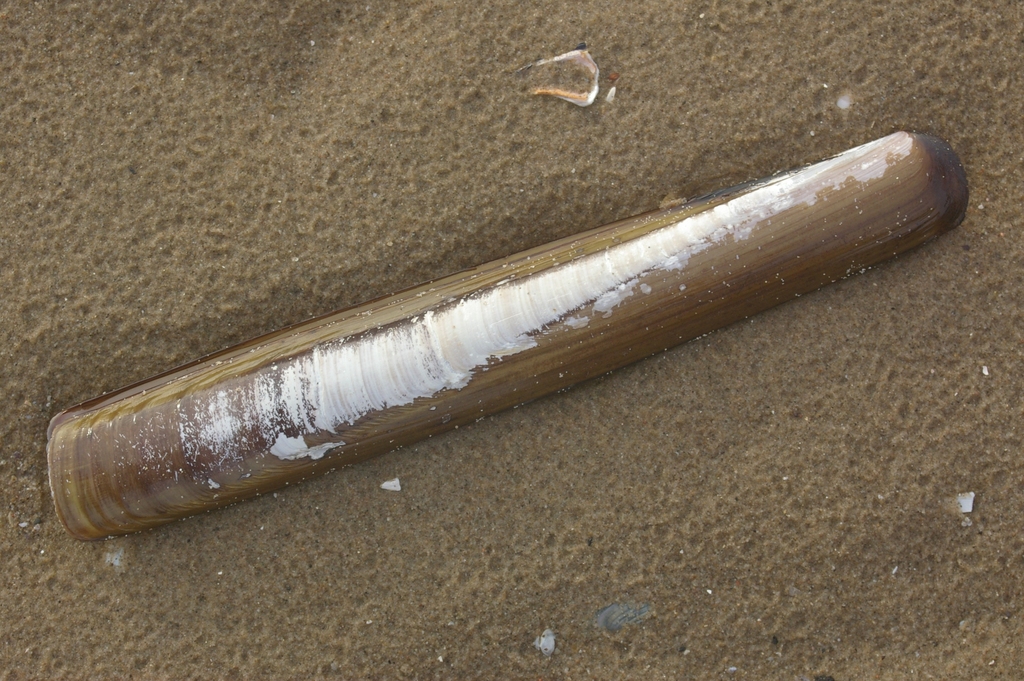
no rights reserved · CC0 1.0 · iNaturalist 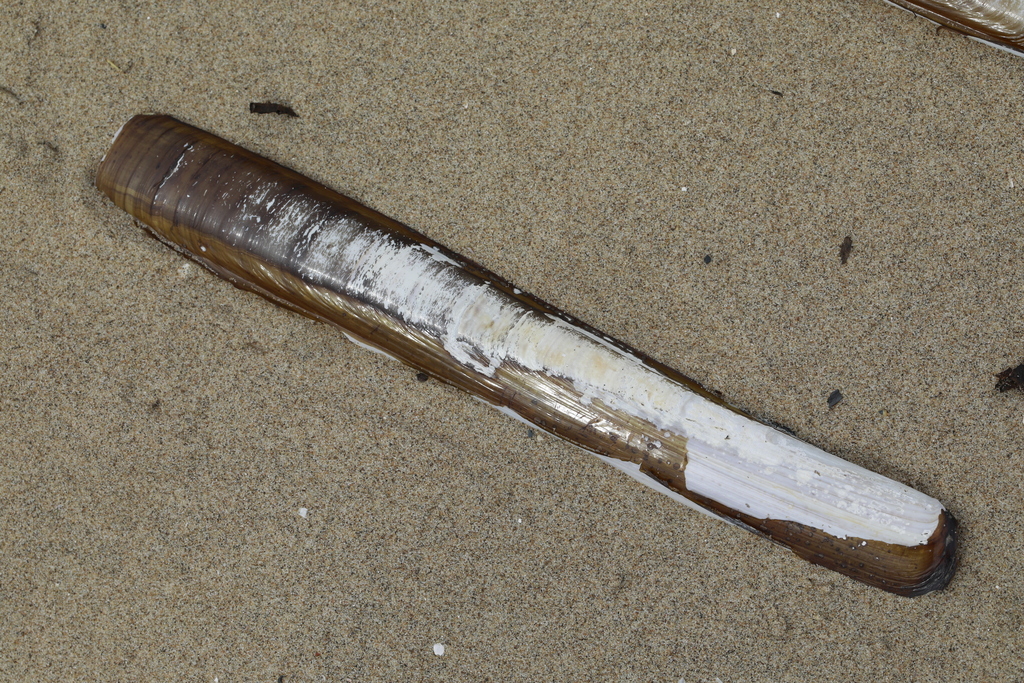
no rights reserved · CC0 1.0 · iNaturalist
Names and classification
- English
- Giant razor clam, Pod razor clam, Pod razor shell, Sword razor shell, giant razor clam, Pod Razor, pod razor clam, pod razor shell, sword razor shell
Names in 3 more languages
- German
- Gerade Schwertmuschel, Messermuschel, Scheidenmuschel, Schotenförmige Messerscheide, schotenförmige Scheidenmuschel, Schotenförmige Schwertmuschel, Schotenmuschel, Taschenmesser-Muschel
- French
- couteau, Couteau commun, couteau-silique
- Simplified Chinese
- 大刀蟶
Other scientific names: Solen ligulus, Solen novacula, Solen siliqua, Solen siliquosa
Similar species
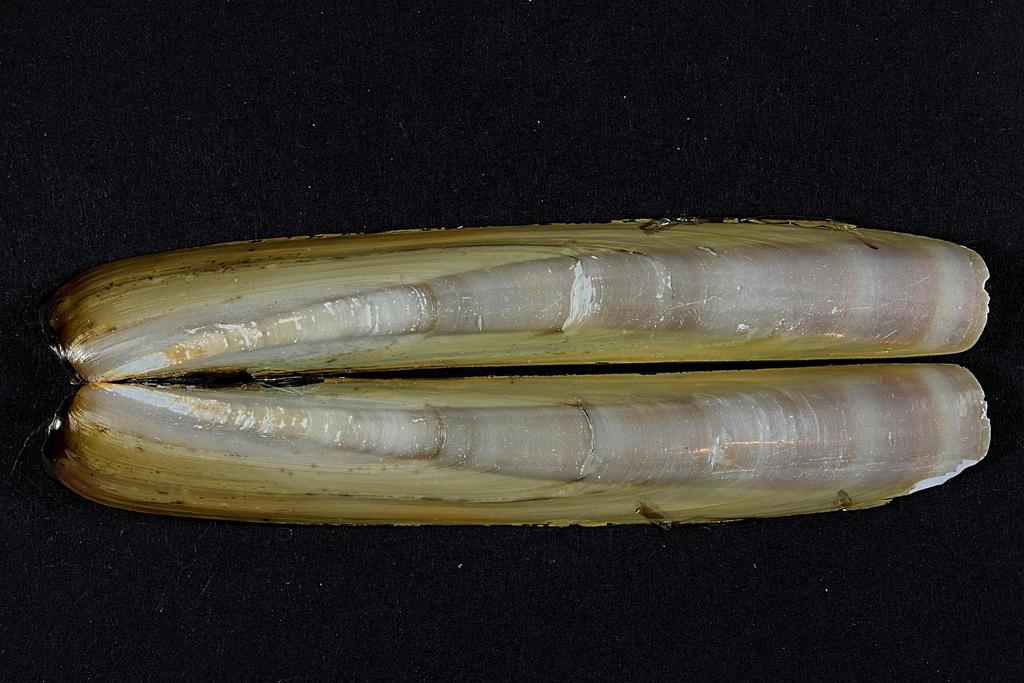 American/Atlantic jack knife clam
Ensis leei
- Atlantic jackknife clam
Ensis directus
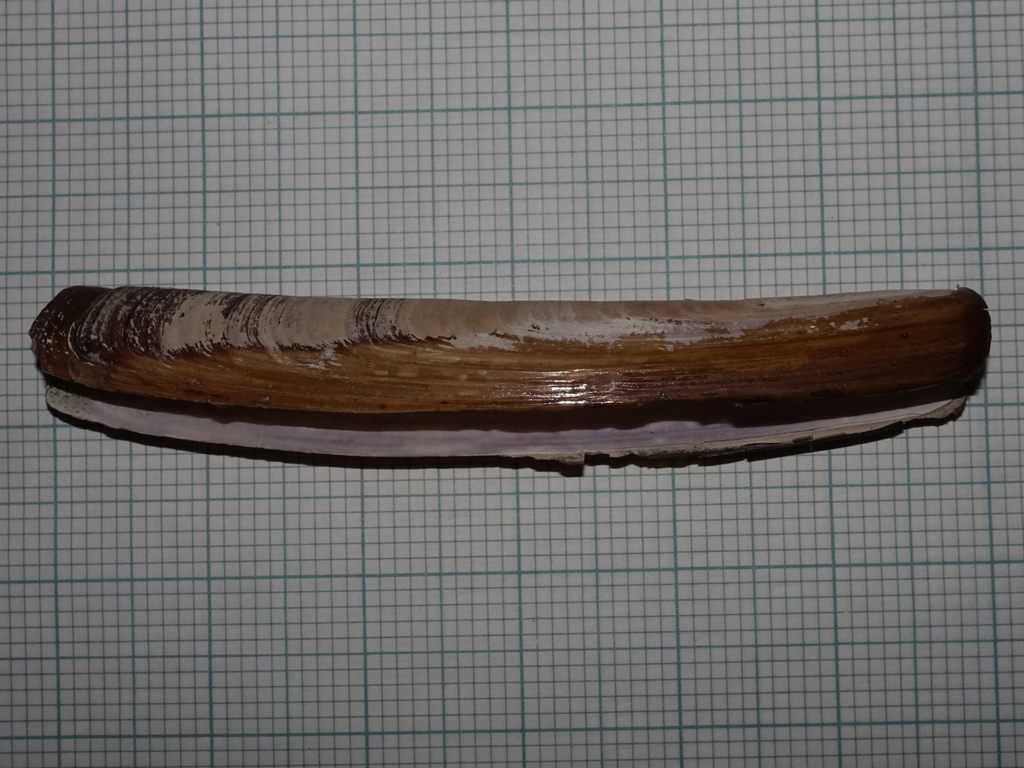 Arched Razor Shell
Ensis magnus
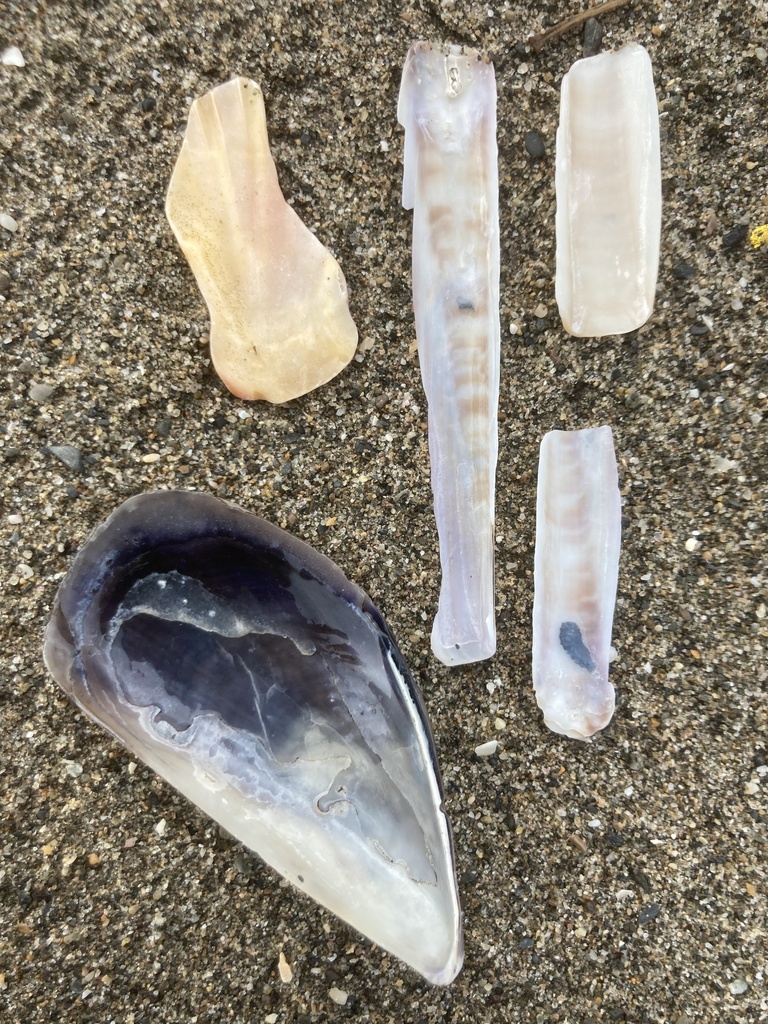 Minor jackknife clam
Ensis minor
- Common razor clam
Ensis ensis
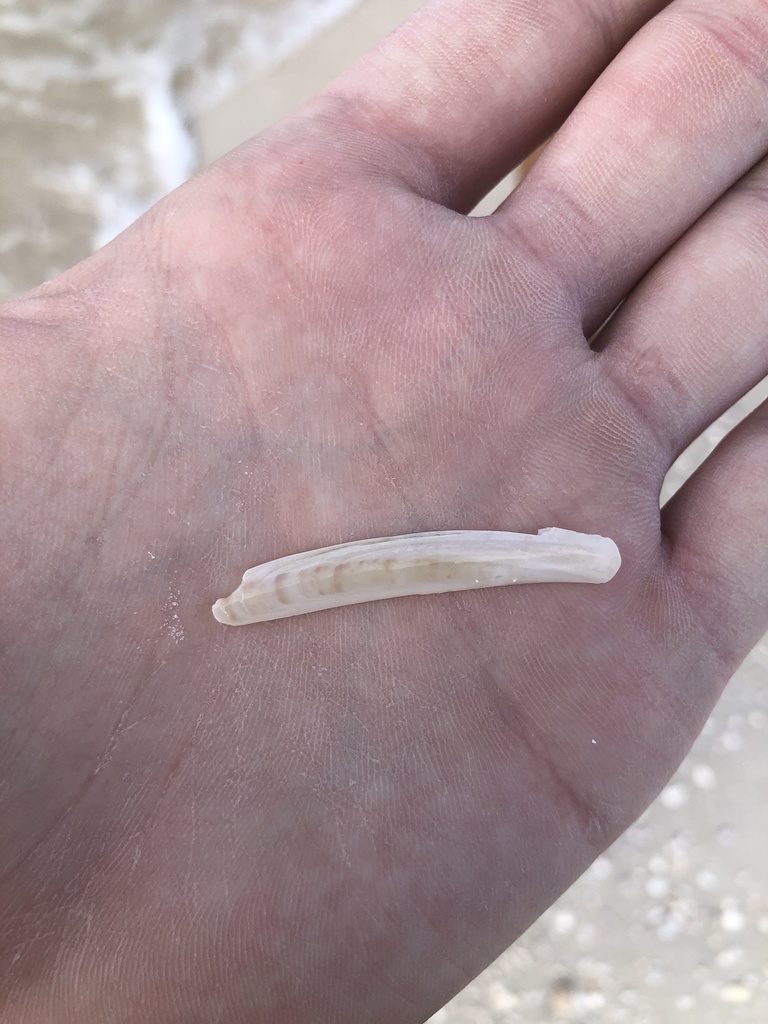 Minor Jacknife
Ensis megistus
Sources and credits
Names and taxonomy: WoRMS (CC BY 4.0) and the GBIF Backbone (CC BY 4.0). Photos: iNaturalist observers, each under the licence shown (CC0, CC BY or CC BY-SA).
- Depth, temperature, months and maps: records from OBIS and GBIF under CC0 or CC BY.
- Descriptions: Wikipedia, licensed CC BY-SA, each linked to its article.
- Conservation status as published by GBIF (IUCN Red List).
- 1,905 open-data records from 1869 to 2024.
- Species data updated November 10, 2026.
Log what you see on your next dive
The free DiveHive diver app keeps your logbook with every sighting and shows what lives at the site you dive next.