
DiscoverSpeciesSharks and rays
blackspot skate
Dipturus pullopunctatus
- Usual depth88–239 m
- Water temperature15–22 °C
- Best monthsJanuary, April, and September
- How commonOccasional
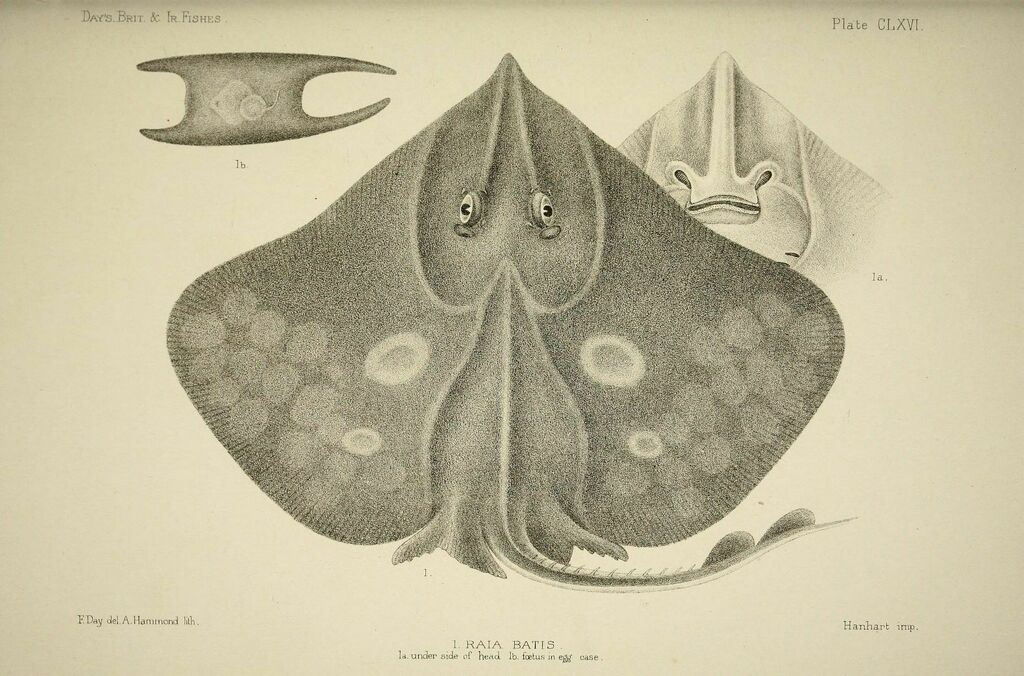
Photo credit: (c) The fishes of Great Britain and Ireland /. Edinburgh :Williams and Norgate,1880-1884, some rights reserved (CC BY) · CC BY · commons.wikimedia.org
About this species
The slimeskate is a species of fish in the family Rajidae. It is found on soft bottoms of the outer shelf and upper slope on the coast of South Africa and Namibia.
Text from the Wikipedia article “Slimeskate”, licensed CC BY-SA 4.0. Read the article
Where and when
Where it has been recorded
Worldwide
Best months
Worldwide (open data)
- January: 403 records
- February: 141 records
- March: 13 records
- April: 310 records
- May: 282 records
- June: 167 records
- July: 144 records
- August: 52 records
- September: 298 records
- October: 92 records
- November: 0 records
- December: 0 records
Depth and water temperature
Depth
Mostly recorded at 88–239 m · Deepest record: 486 m
Water temperature
Recorded in surface water of 15–22 °C
Names and classification
- English
- blackspot skate, Slime Skate
Other scientific names: Dipturus pullopunctata, Raia pullopunctata, Raja pullopunctata
Similar species
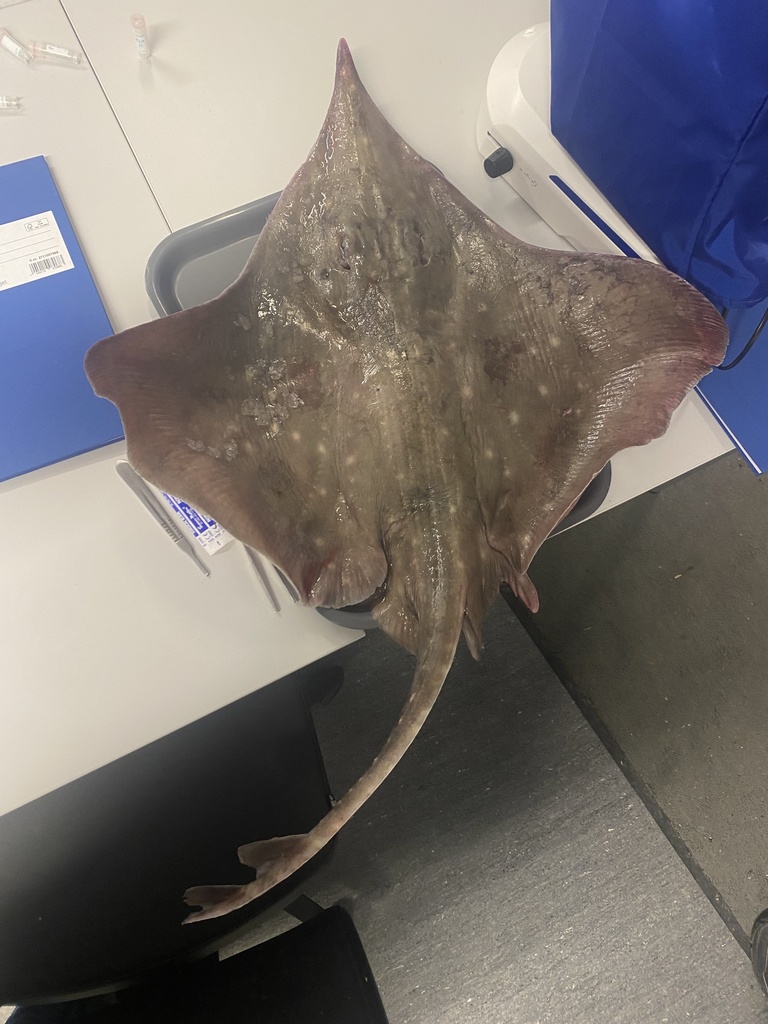 Flapper skate
Dipturus intermedius
- Blue skate
Dipturus batis
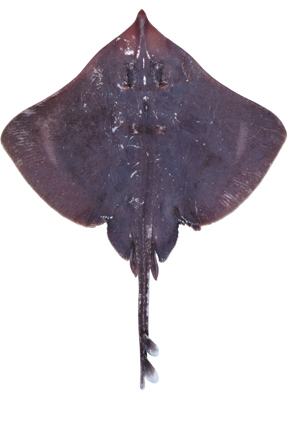 Grey Skate
Dipturus canutus
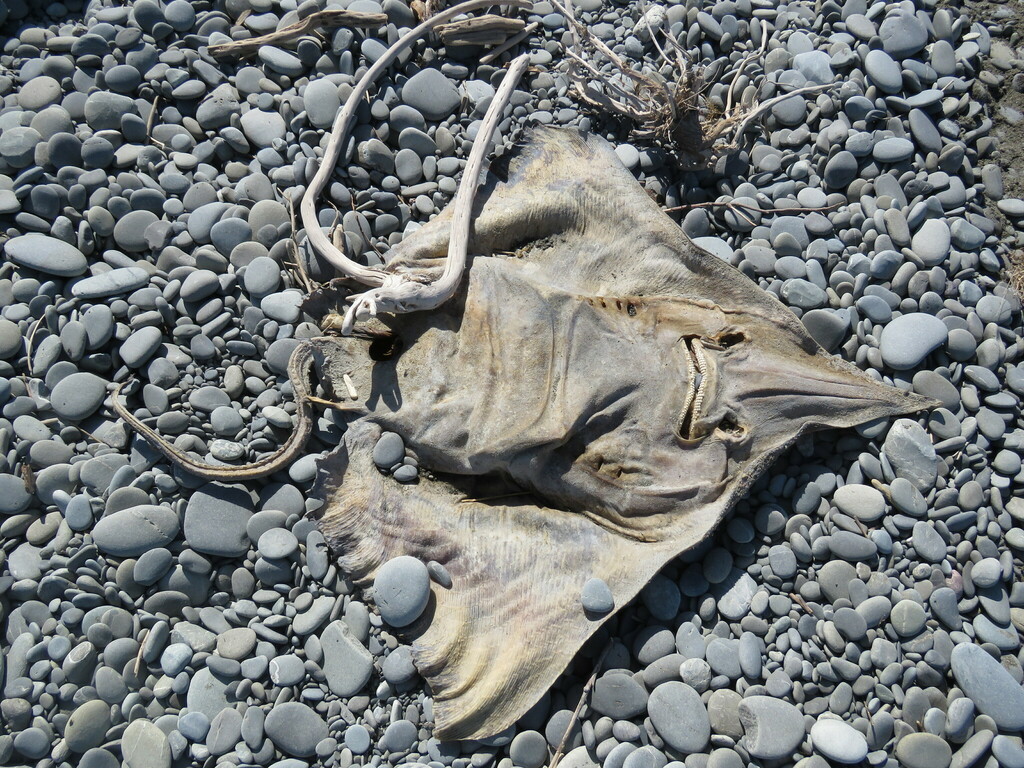 New Zealand Smooth Skate
Dipturus innominatus
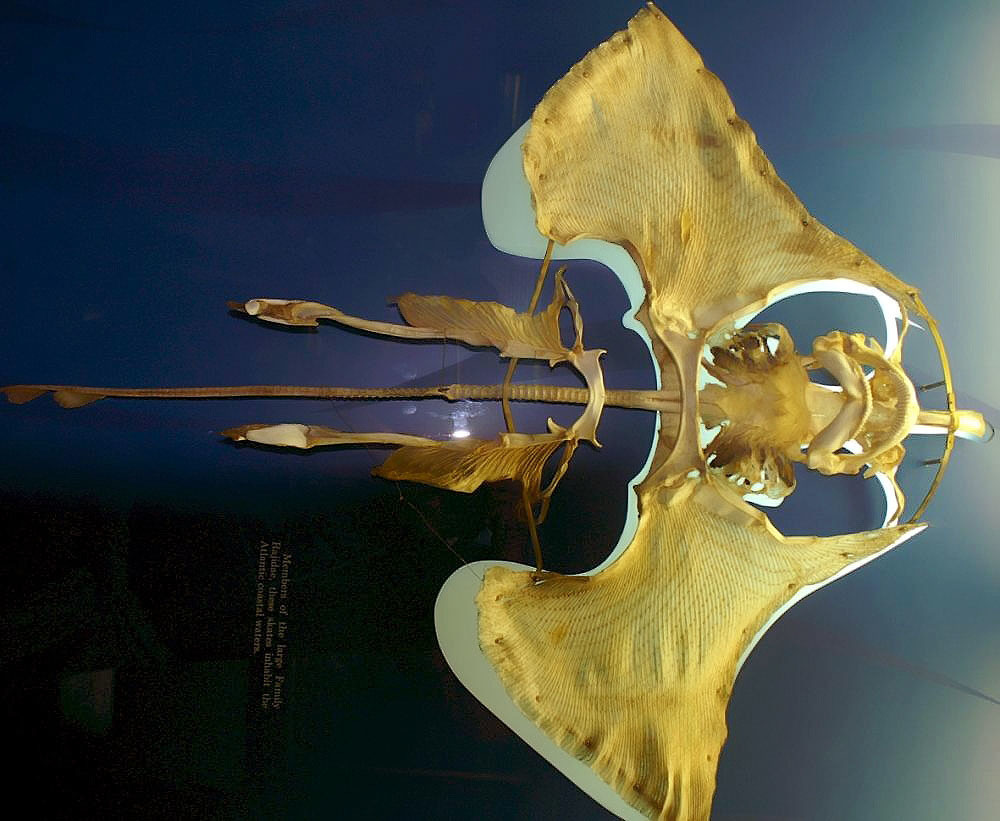 Barndoor skate
Dipturus laevis
Sources and credits
Names and taxonomy: WoRMS (CC BY 4.0) and the GBIF Backbone (CC BY 4.0). Photos: iNaturalist observers, each under the licence shown (CC0, CC BY or CC BY-SA).
- Depth, temperature, months and maps: records from OBIS and GBIF under CC0 or CC BY.
- Descriptions: Wikipedia, licensed CC BY-SA, each linked to its article.
- Conservation status as published by GBIF (IUCN Red List).
- 1,906 open-data records from 1962 to 2008.
- Species data updated November 10, 2026.
Log what you see on your next dive
The free DiveHive diver app keeps your logbook with every sighting and shows what lives at the site you dive next.