
DiscoverSpeciesSharks and rays
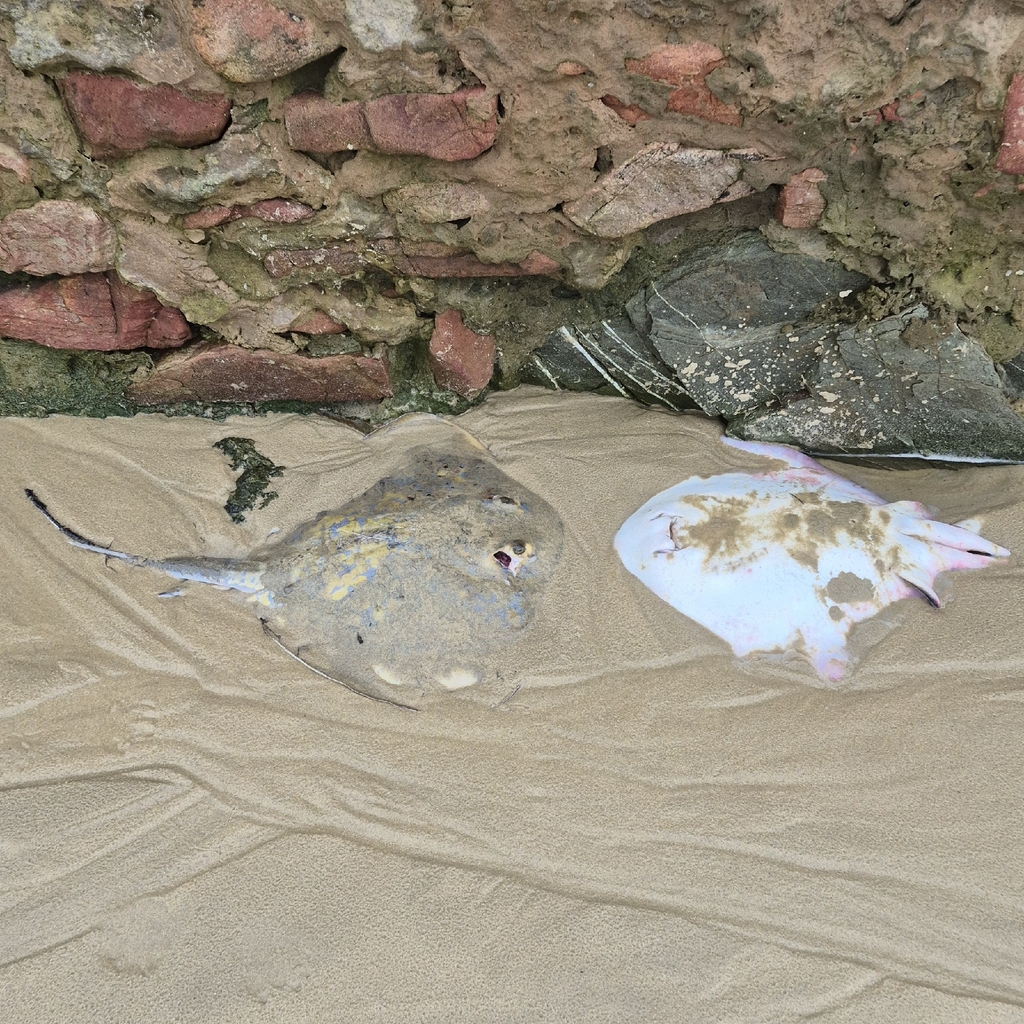
Blue Stingray
Dasyatis chrysonota
- Usual depth35–106 m
- Water temperature18–25 °C
- Best monthsSeptember
- How commonOccasional
Photo credit: (c) Henry de Lange, some rights reserved (CC BY) · CC BY · iNaturalist
About this species
The blue stingray is a species of whiptail stingray of the family Dasyatidae often found in the coastal waters of southern Africa.
Text from the Wikipedia article “Blue stingray”, licensed CC BY-SA 4.0. Read the article
Where and when
Where it has been recorded
Worldwide
Best months
Worldwide (open data)
- January: 13 records
- February: 8 records
- March: 28 records
- April: 56 records
- May: 102 records
- June: 73 records
- July: 1 record
- August: 5 records
- September: 240 records
- October: 45 records
- November: 22 records
- December: 9 records
Depth and water temperature
Depth
Mostly recorded at 35–106 m · Deepest record: 119 m
Water temperature
Recorded in surface water of 18–25 °C
Photos
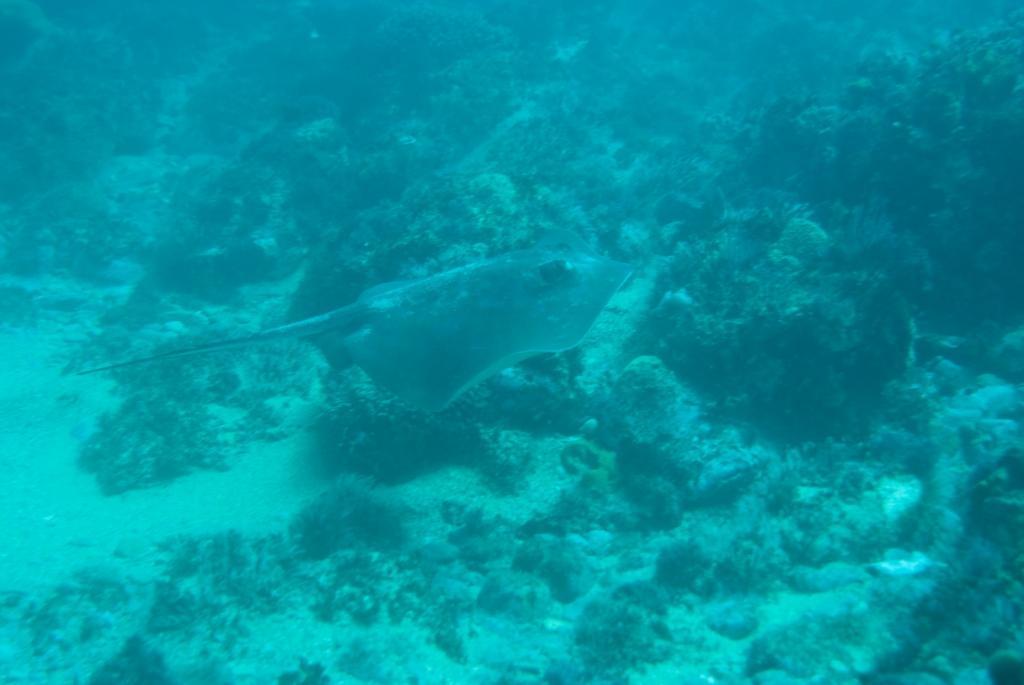
(c) Georgina Jones, some rights reserved (CC BY-SA) · CC BY-SA · iNaturalist 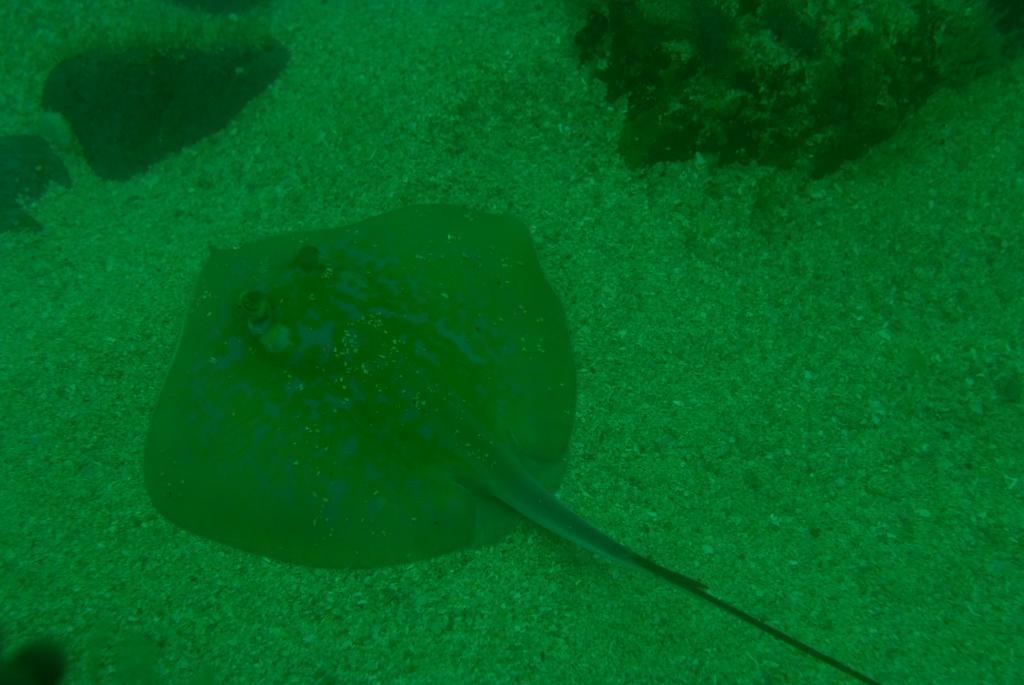
(c) Georgina Jones, some rights reserved (CC BY-SA) · CC BY-SA · iNaturalist 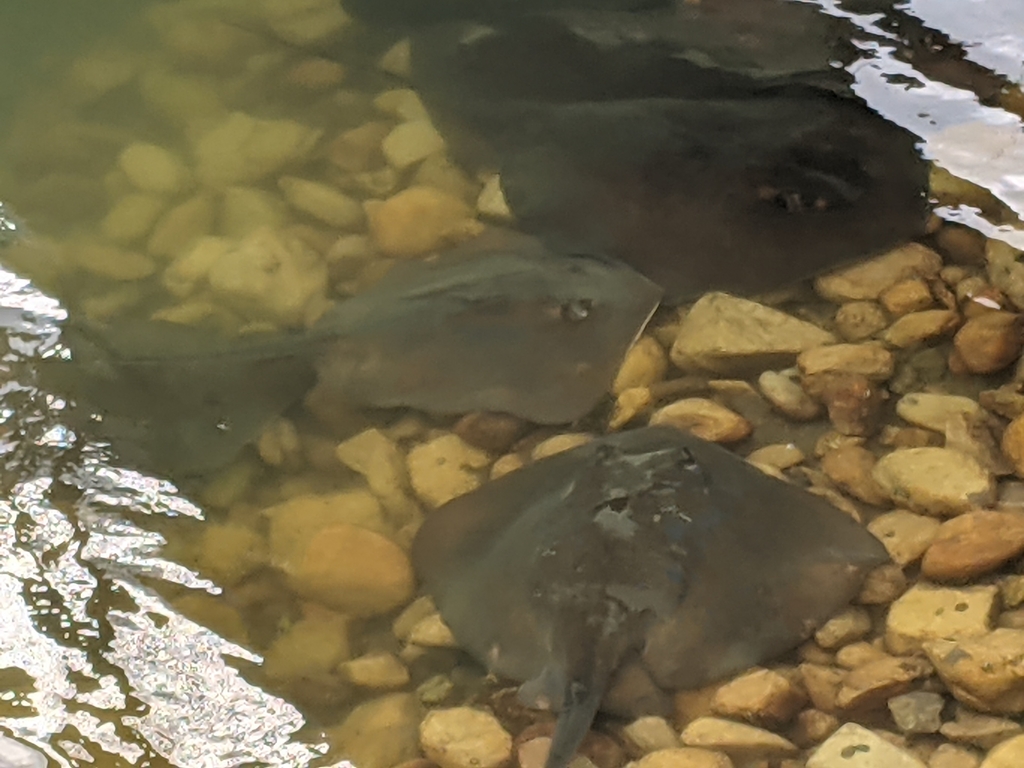
(c) Nicola van Berkel, some rights reserved (CC BY-SA) · CC BY-SA · iNaturalist
Names and classification
- English
- Blue Stingray
Names in 2 more languages
- German
- Blauer Stechrochen
- French
- Pastenague bleue sud-africaine
Other scientific names: Trygon chrysonota
Similar species
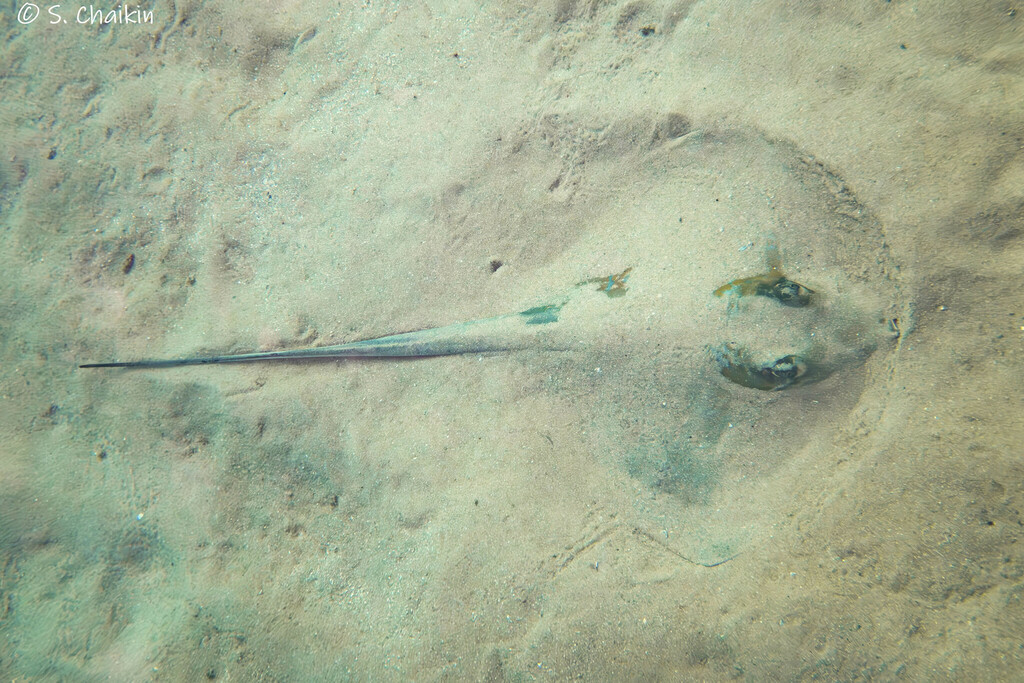 Marbled Stingray
Dasyatis marmorata
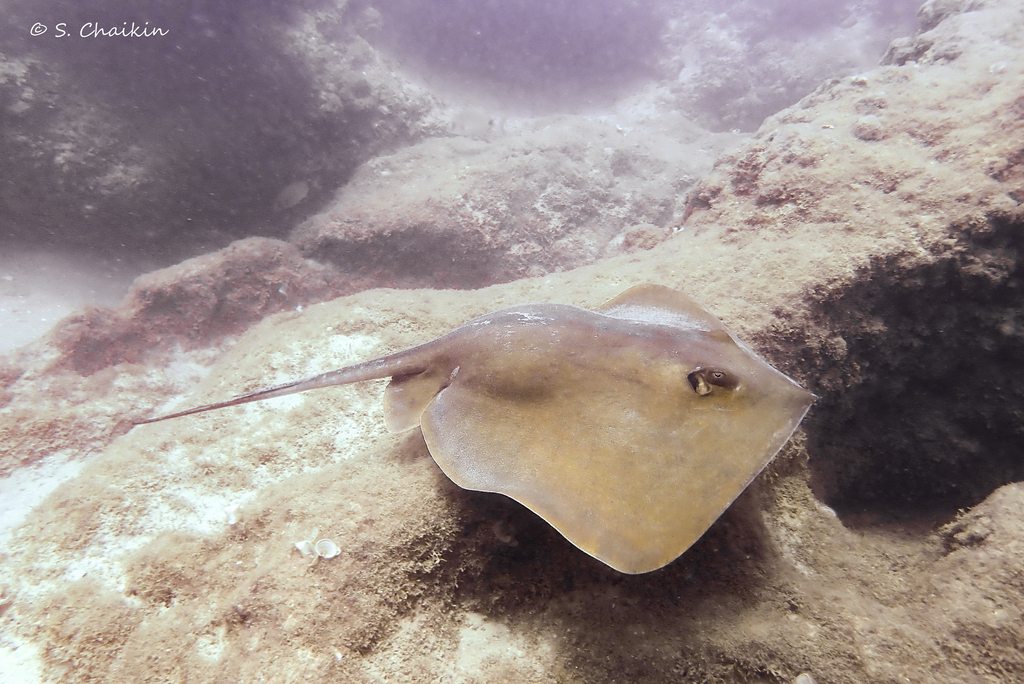 Common stingray
Dasyatis pastinaca
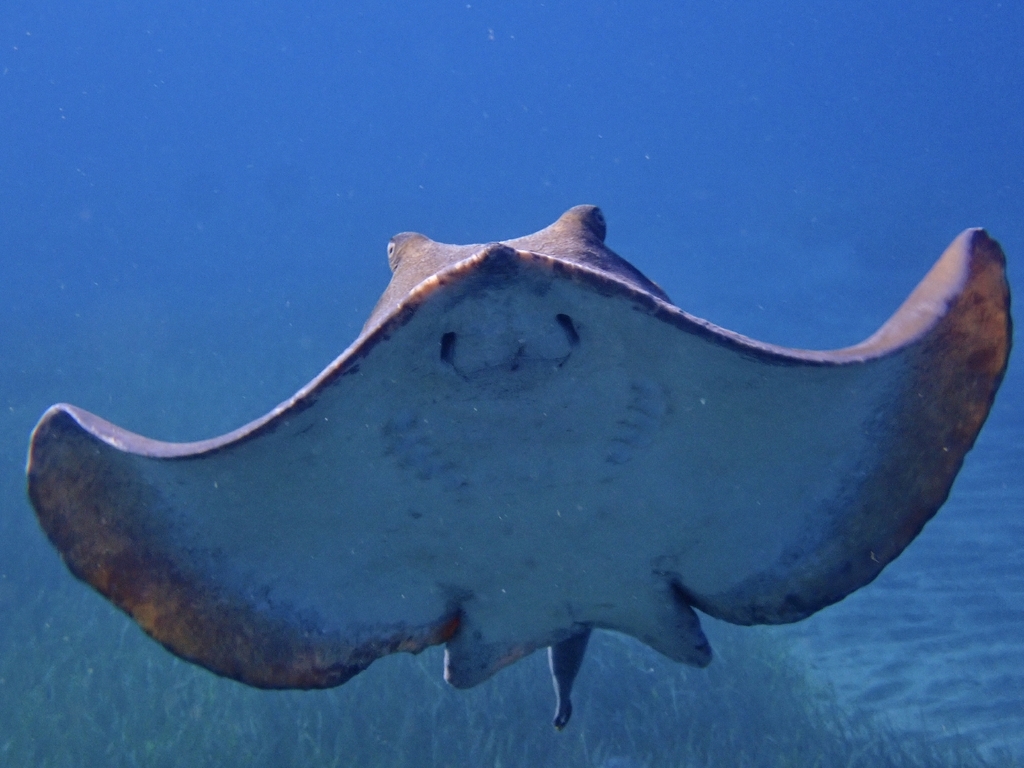 Tortonese’s stingray
Dasyatis tortonesei
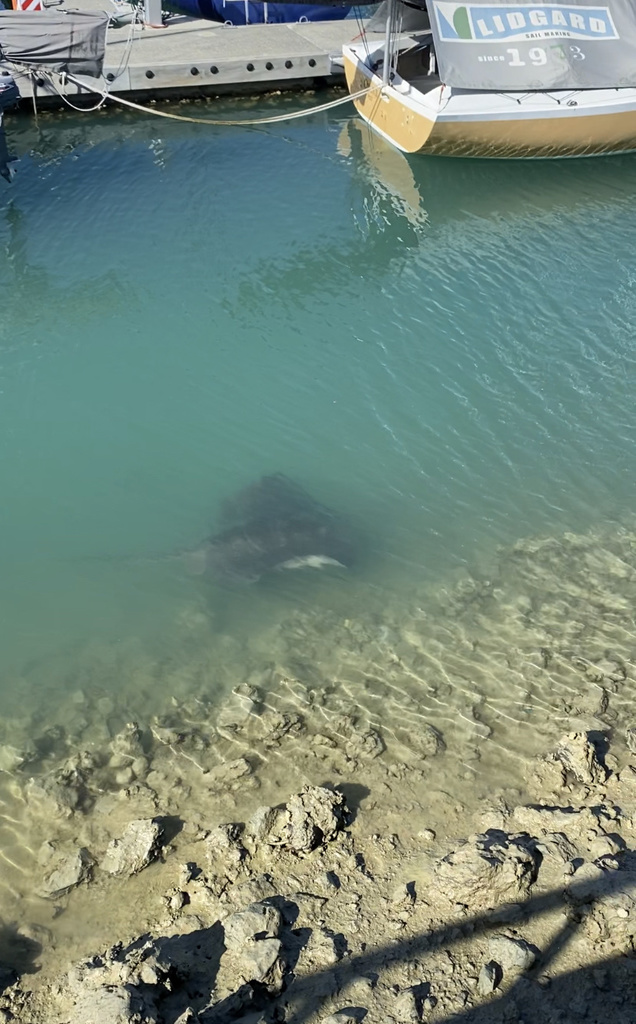 Bathytoshia matsubarai
Bathytoshia brevicaudata
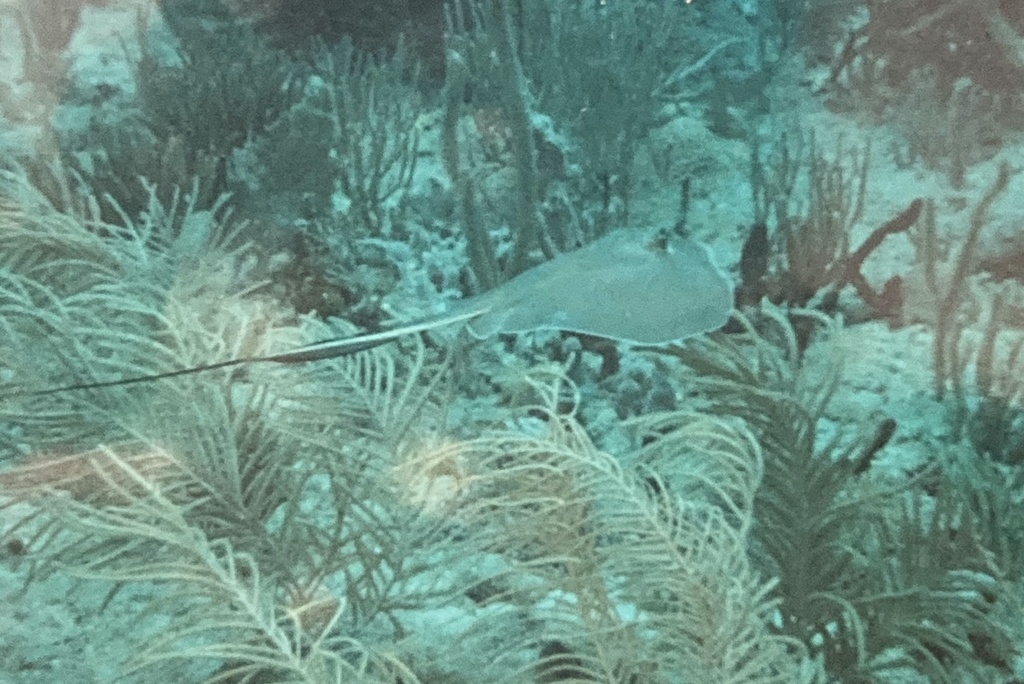 Southern Stingray
Hypanus americanus
Sources and credits
Names and taxonomy: WoRMS (CC BY 4.0) and the GBIF Backbone (CC BY 4.0). Photos: iNaturalist observers, each under the licence shown (CC0, CC BY or CC BY-SA).
- Depth, temperature, months and maps: records from OBIS and GBIF under CC0 or CC BY.
- Descriptions: Wikipedia, licensed CC BY-SA, each linked to its article.
- Conservation status as published by GBIF (IUCN Red List).
- 530 open-data records from 1931 to 2023.
- Species data updated November 10, 2026.
Log what you see on your next dive
The free DiveHive diver app keeps your logbook with every sighting and shows what lives at the site you dive next.