
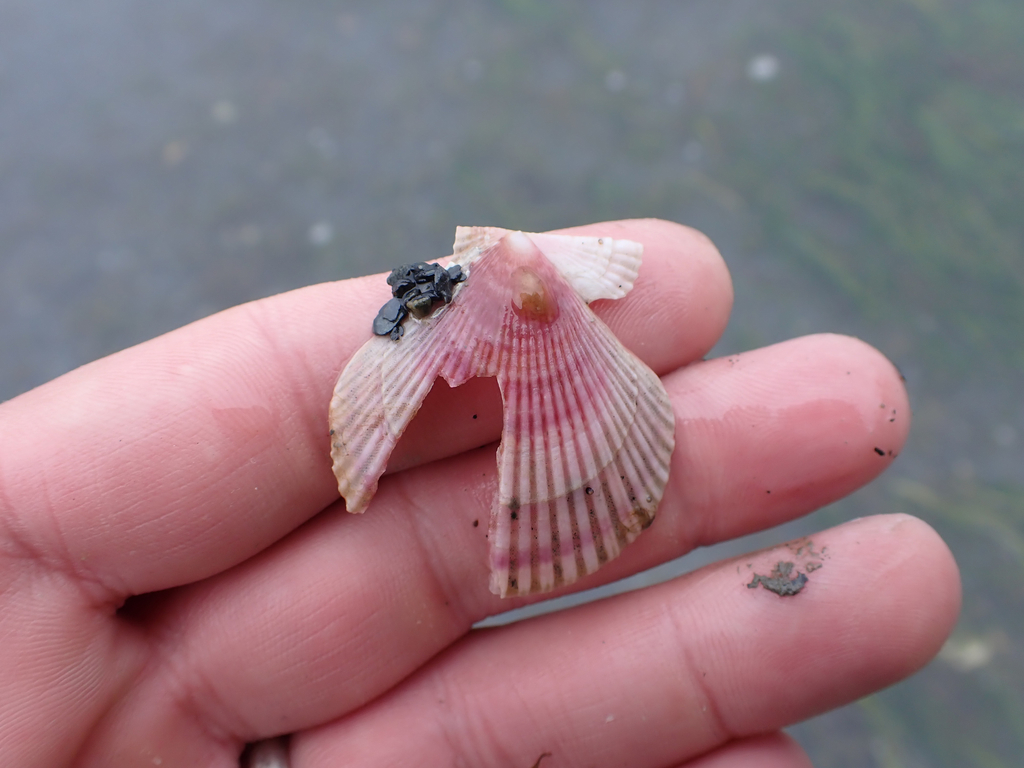
Pacific pink scallop
Chlamys rubida
- Usual depth26–120 m
- Water temperature2–23 °C
- Best monthsJune
- How commonOccasional
Photo credit: (c) Matt Muir, some rights reserved (CC BY) · CC BY · iNaturalist
About this species
Chlamys rubida is a species of bivalve mollusc in the family Pectinidae found on the west coast of North America from the Gulf of Alaska to San Diego, California.
Text from the Wikipedia article “Chlamys rubida”, licensed CC BY-SA 4.0. Read the article
Where and when
Where it has been recorded
Worldwide
Best months
Worldwide (open data)
- January: 19 records
- February: 6 records
- March: 7 records
- April: 18 records
- May: 48 records
- June: 148 records
- July: 64 records
- August: 34 records
- September: 49 records
- October: 13 records
- November: 10 records
- December: 48 records
Depth and water temperature
Depth
Mostly recorded at 26–120 m · Deepest record: 1,503 m
Water temperature
Recorded in surface water of 2–23 °C
Photos
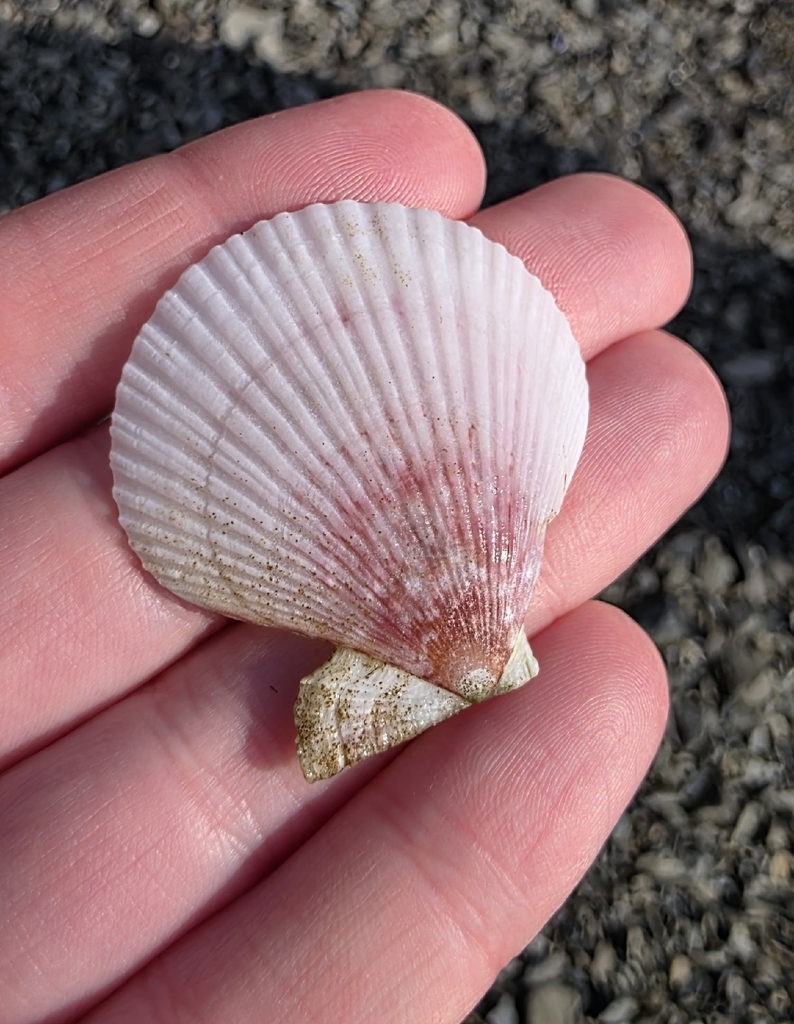
(c) Alexandria 'Alex' Wenninger, some rights reserved (CC BY) · CC BY · iNaturalist
Names and classification
- English
- Pacific pink scallop, Pink scallop, Reddish pink scallop, Smooth pink scallop, pink scallop, reddish scallop
Names in 1 more language
- German
- Pazifische Rosa Kammmuschel
Other scientific names: Chlamys (Chlamys) rubida, Chlamys hindsi, Chlamys jordani, Chlamys picoensis, Pecten (Chlamys) jordani, Pecten (Chlamys) venturaensis, Pecten hindsii, Pecten kincaidi, Pecten rubidus
Similar species
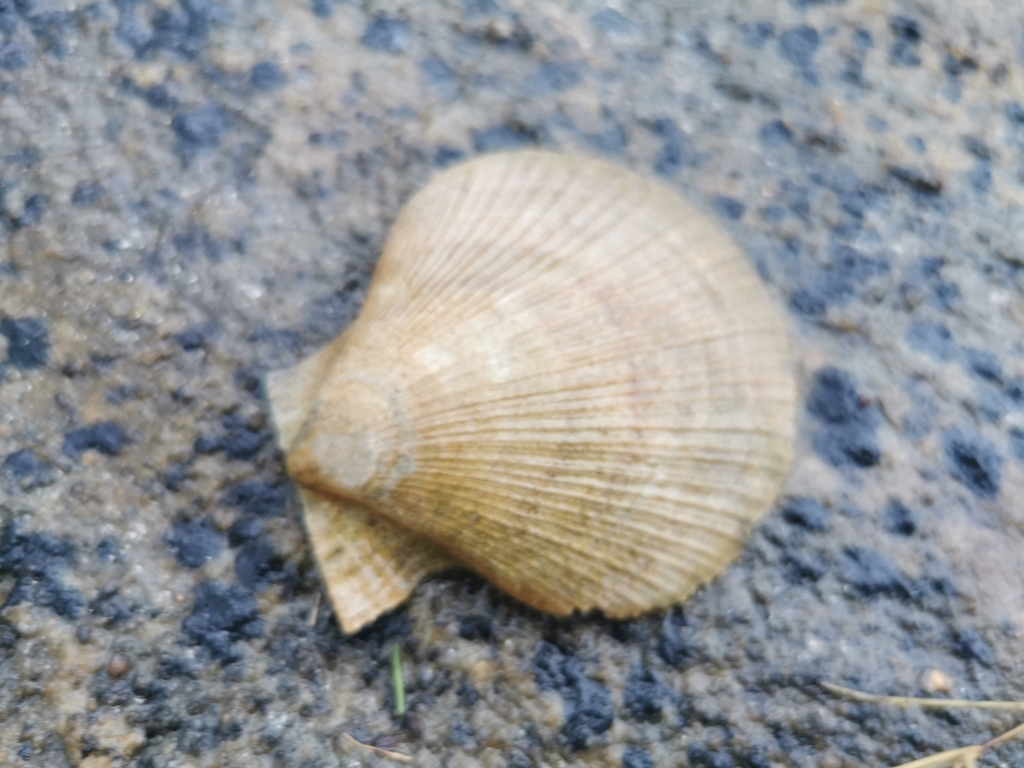 Iceland scallop
Chlamys islandica
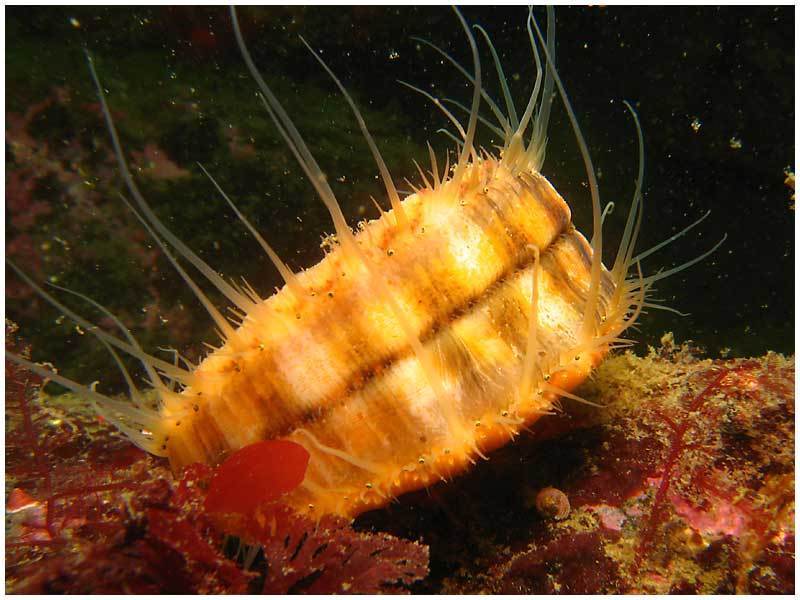 Spear scallop
Chlamys hastata
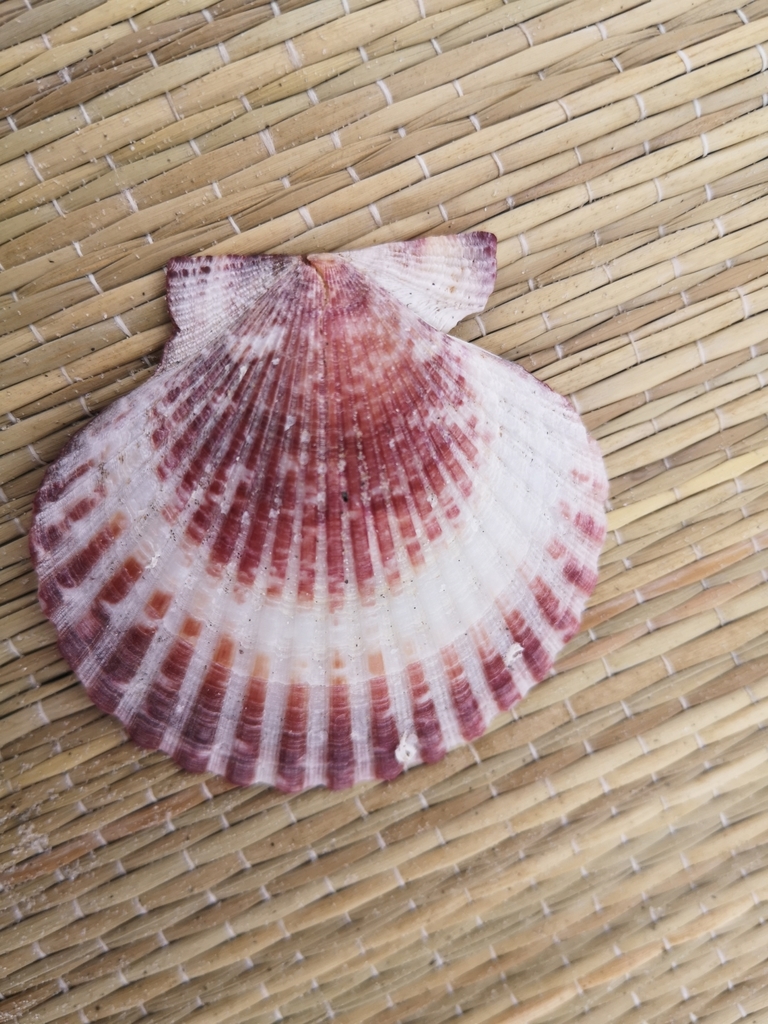 Queen scallop
Aequipecten opercularis
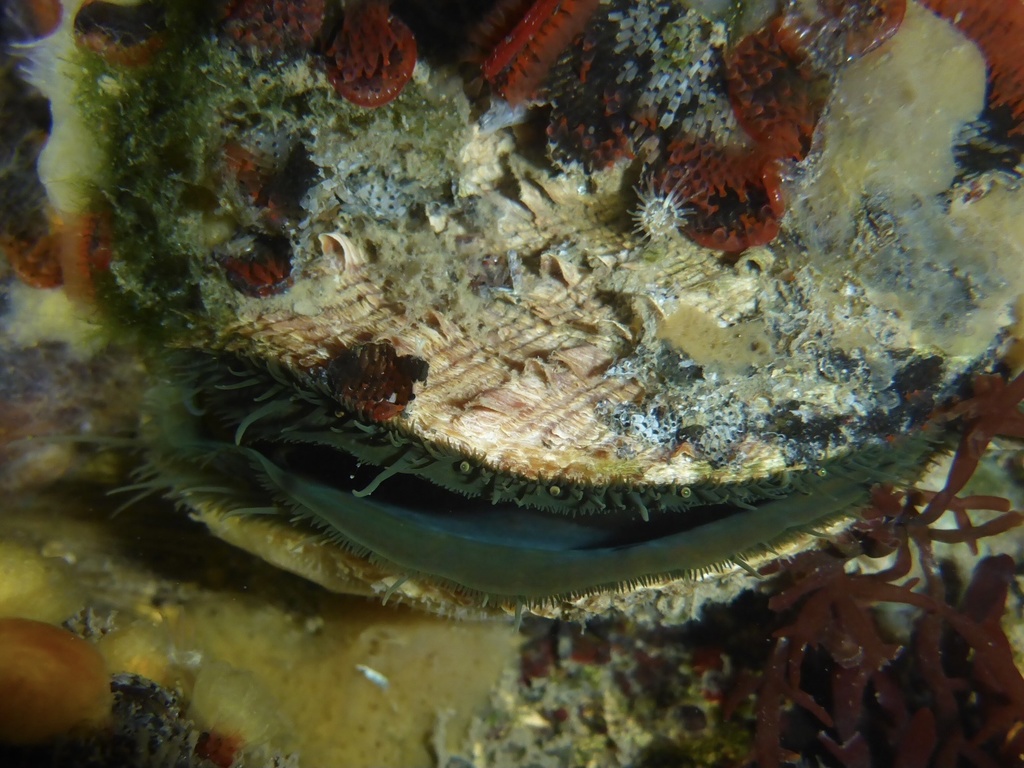 giant rock-scallop
Crassadoma gigantea
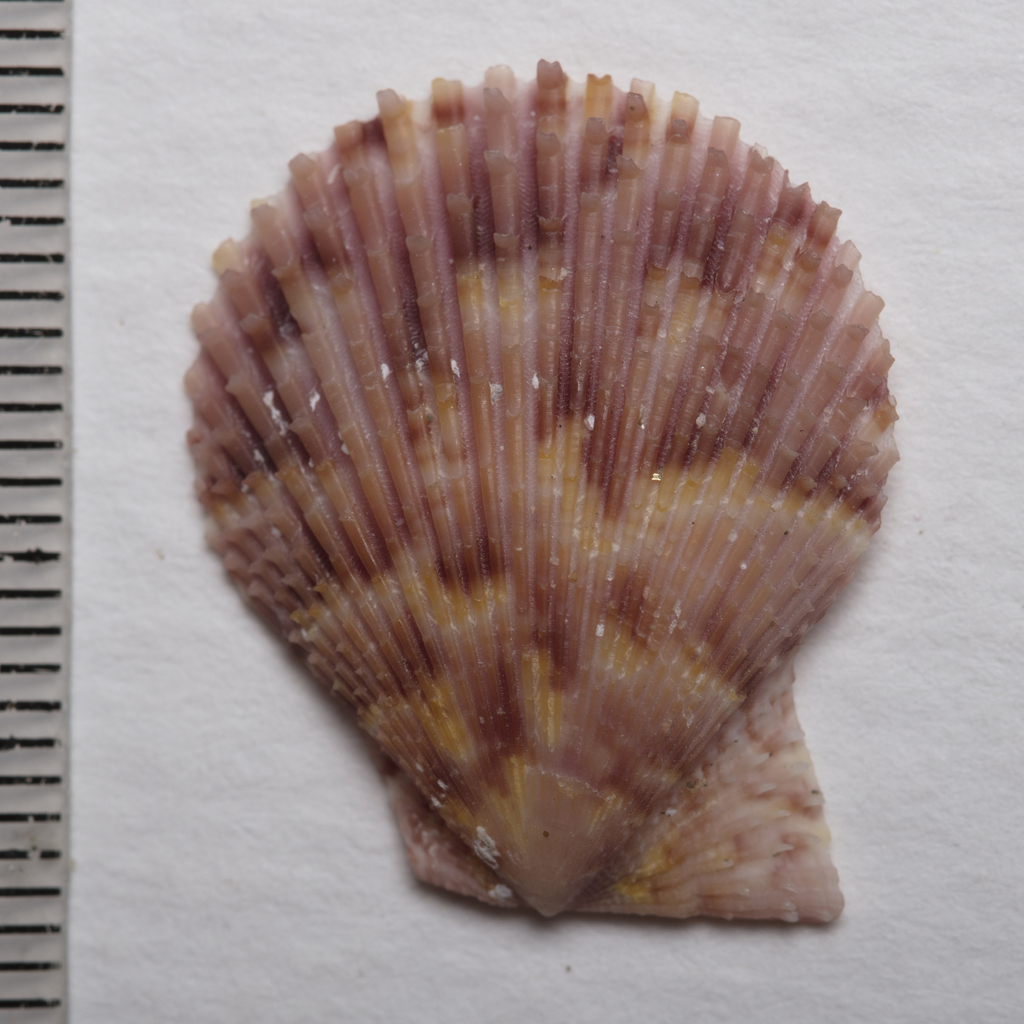 Variegated scallop
Mimachlamys varia
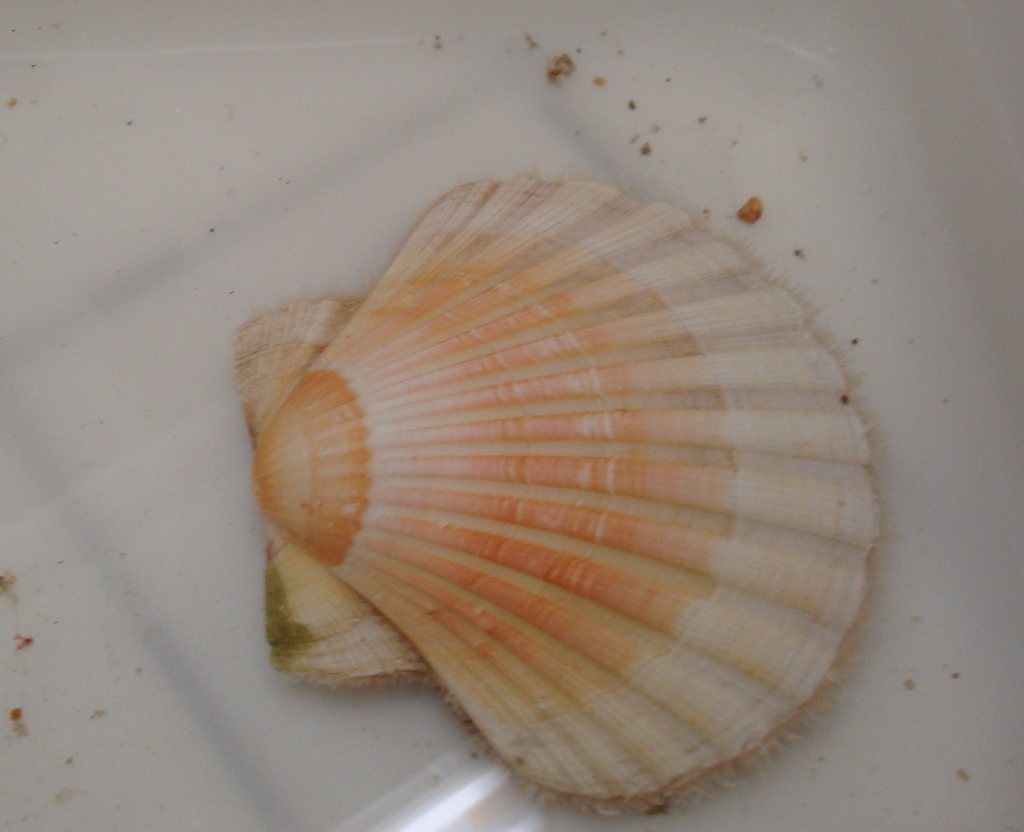 Common scallop
Pecten maximus
Sources and credits
Names and taxonomy: WoRMS (CC BY 4.0) and the GBIF Backbone (CC BY 4.0). Photos: iNaturalist observers, each under the licence shown (CC0, CC BY or CC BY-SA).
- Depth, temperature, months and maps: records from OBIS and GBIF under CC0 or CC BY.
- Descriptions: Wikipedia, licensed CC BY-SA, each linked to its article.
- Conservation status as published by GBIF (IUCN Red List).
- 1,193 open-data records from 1888 to 2024.
- Species data updated November 9, 2026.
Log what you see on your next dive
The free DiveHive diver app keeps your logbook with every sighting and shows what lives at the site you dive next.