
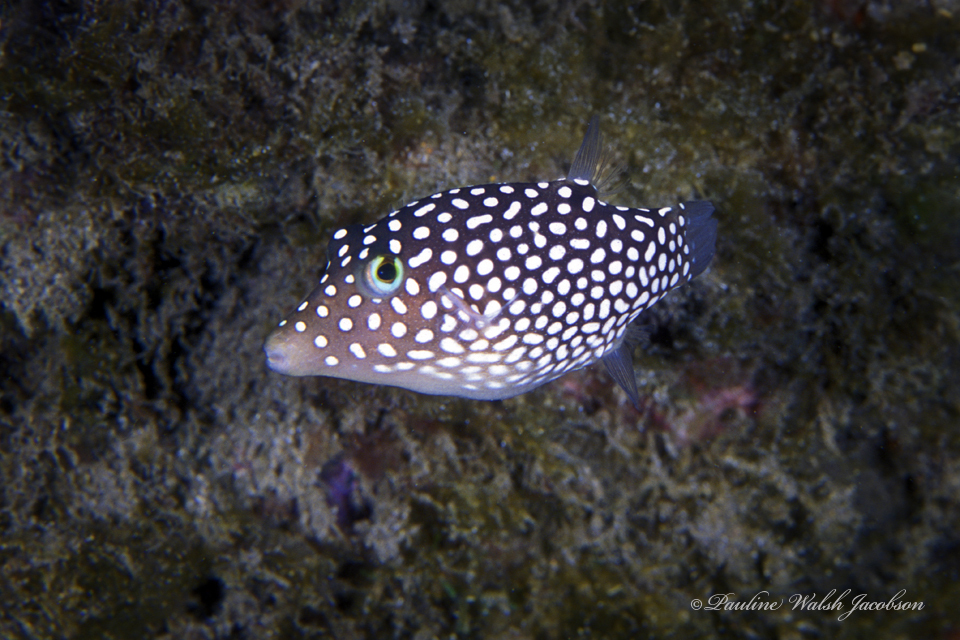
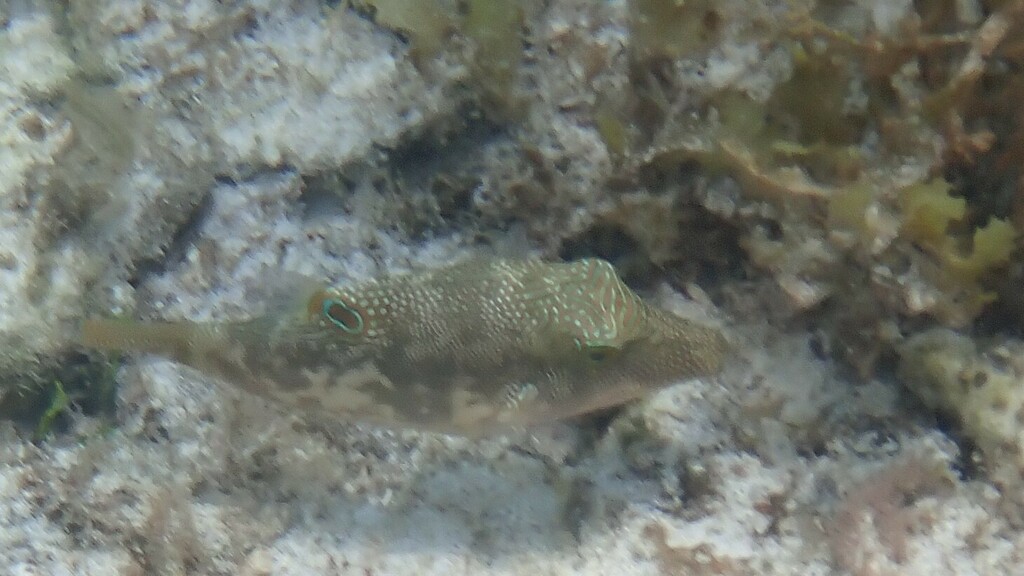
Hawaiian Spotted Toby
Canthigaster jactator
- Usual depth4–22 m
- Water temperature24–28 °C
- Best monthsAugust, September, and October
- How commonCommon
Photo credit: (c) Pauline Walsh Jacobson, some rights reserved (CC BY), uploaded by Pauline Walsh Jacobson · CC BY · iNaturalist
About this species
Canthigaster jactator, the Hawaiian whitespotted toby, is a member of the pufferfish family that is endemic to the Hawaiian Islands. It occasionally makes its way into the aquarium trade. It grows to a length of 9 cm (3.5 in).
Text from the Wikipedia article “Canthigaster jactator”, licensed CC BY-SA 4.0. Read the article
Where and when
Where it has been recorded
Worldwide
Best months
Worldwide (open data)
- January: 225 records
- February: 187 records
- March: 211 records
- April: 258 records
- May: 248 records
- June: 494 records
- July: 994 records
- August: 1,560 records
- September: 1,860 records
- October: 1,383 records
- November: 459 records
- December: 222 records
Depth and water temperature
Depth
Mostly recorded at 4–22 m · Deepest record: 132 m
Water temperature
Recorded in surface water of 24–28 °C
Photos
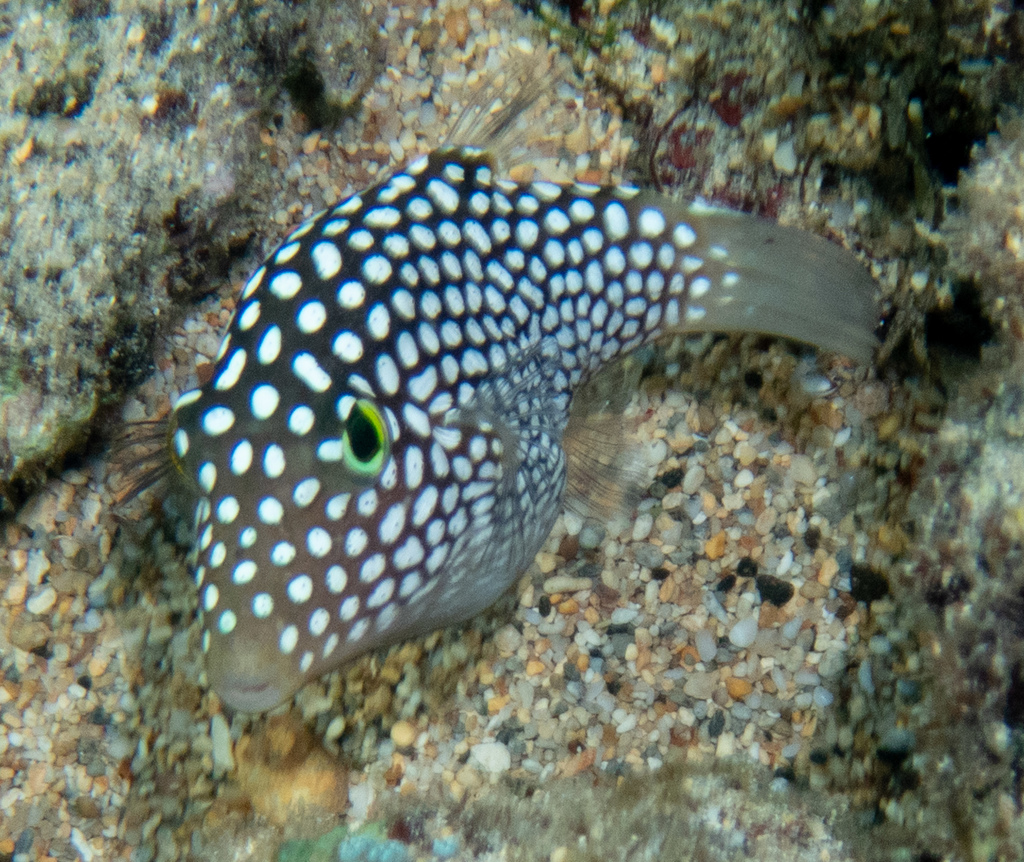
(c) Don Loarie, some rights reserved (CC BY) · CC BY · iNaturalist 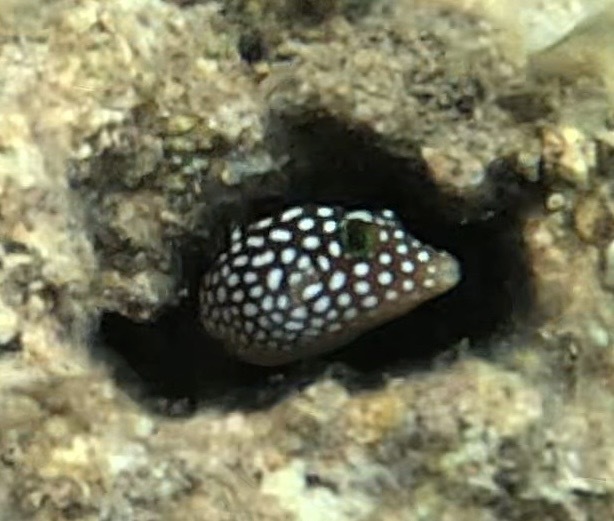
(c) Lexi Amico, some rights reserved (CC BY) · CC BY · iNaturalist 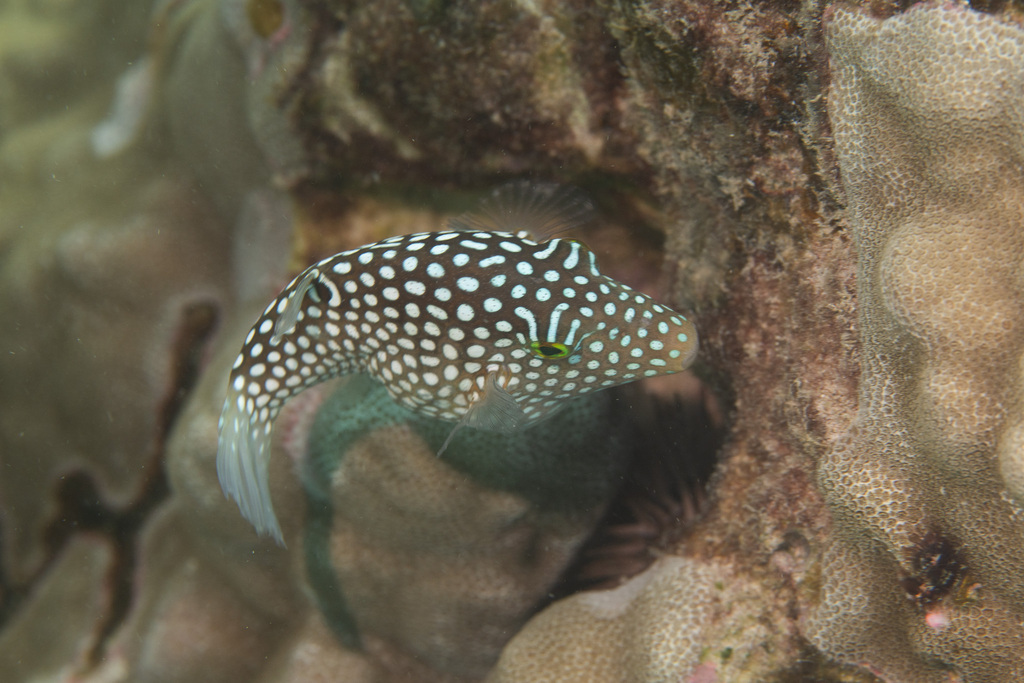
(c) cello caruso-turiello, some rights reserved (CC BY) · CC BY · iNaturalist 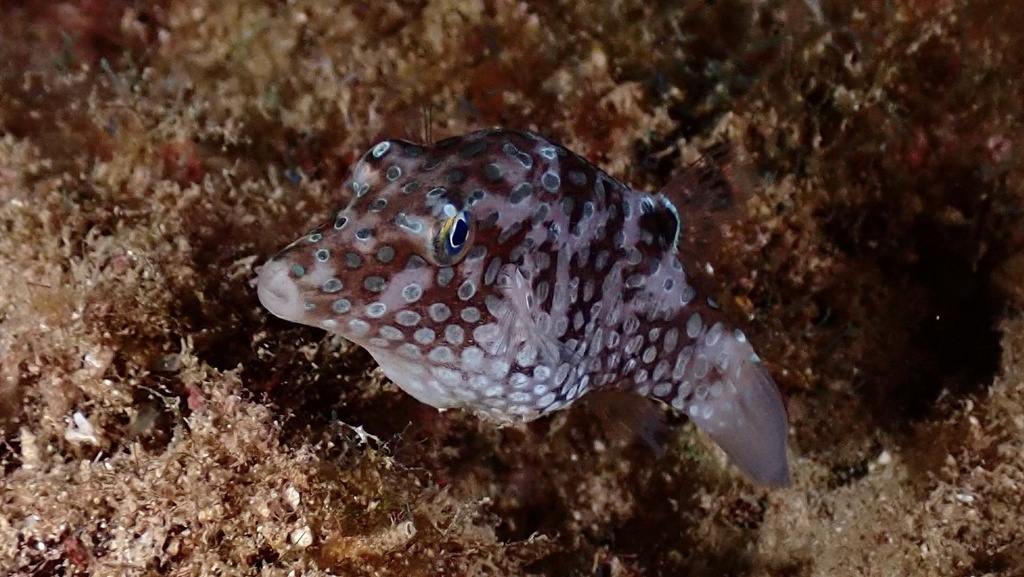
(c) Robin White, some rights reserved (CC BY) · CC BY · iNaturalist 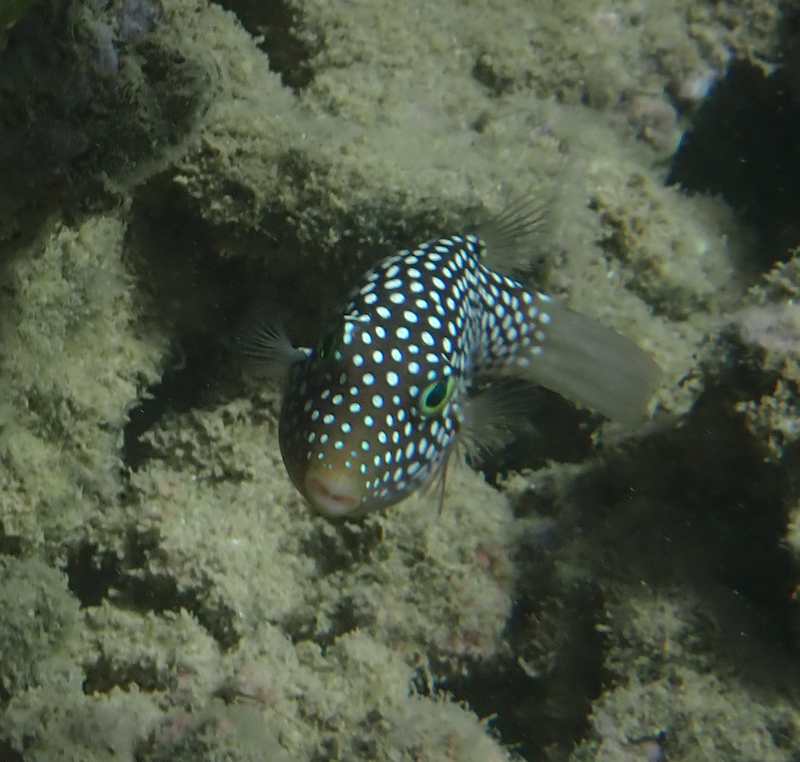
no rights reserved · CC0 1.0 · iNaturalist 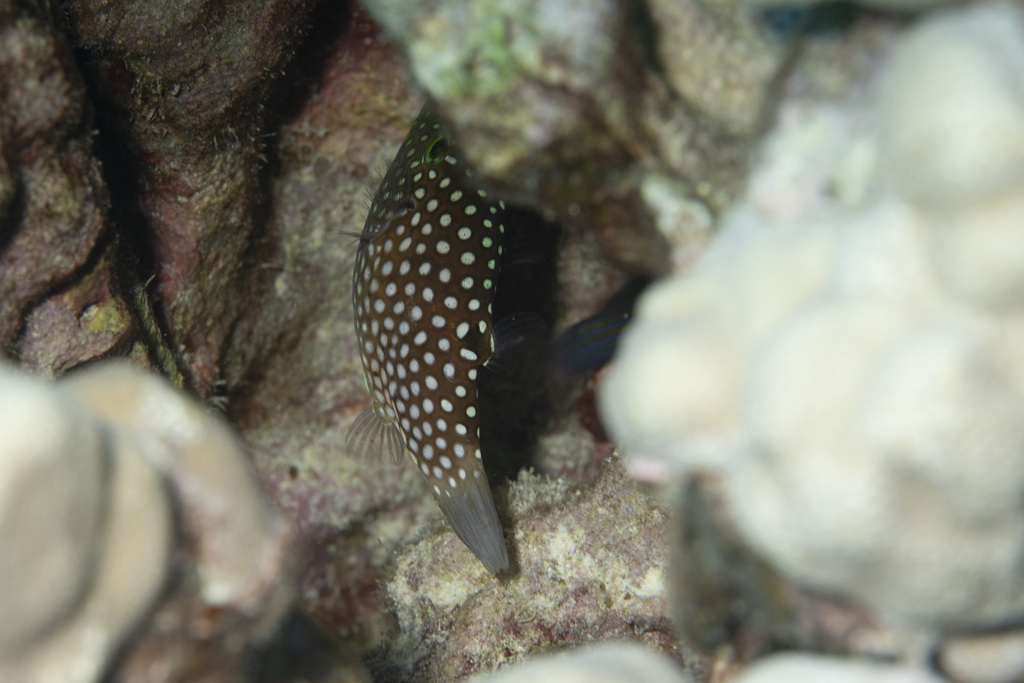
(c) cello caruso-turiello, some rights reserved (CC BY) · CC BY · iNaturalist 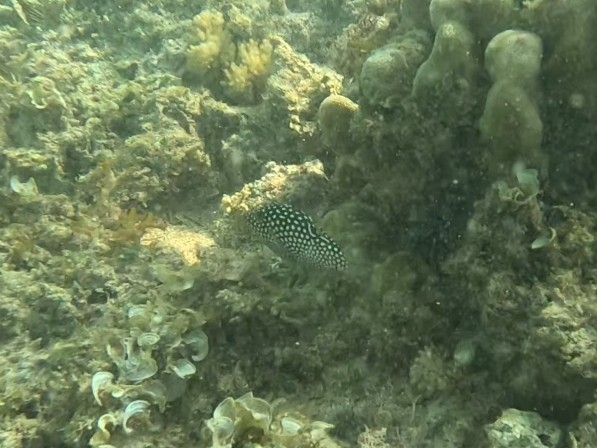
no rights reserved · CC0 1.0 · iNaturalist
Names and classification
- English
- Hawaiian Spotted Toby, Hawaiian Whitespotted Toby, White-spotted Puffer, whitespotted toby
Names in 2 more languages
- German
- Hawaii-Spitzkopfkugelfisch
- Spanish
- Tamborín punteado Hawaiano
Other scientific names: Tropidichthys jactator
Similar species
 Sharpnose puffer
Canthigaster rostrata
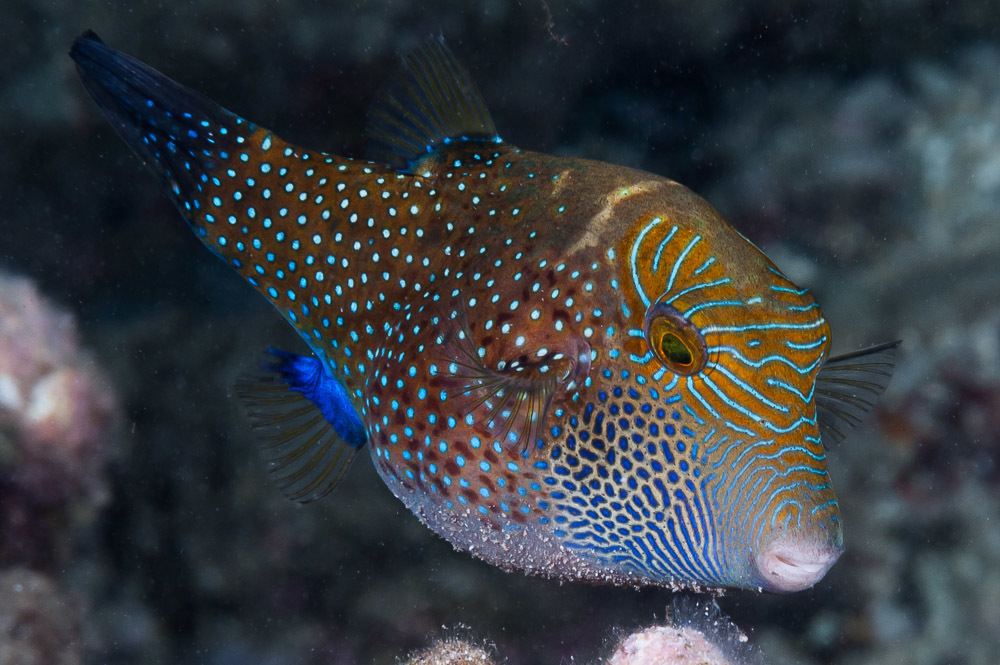 Spider-eye puffer
Canthigaster amboinensis
 Bennett's sharpnose puffer
Canthigaster bennetti
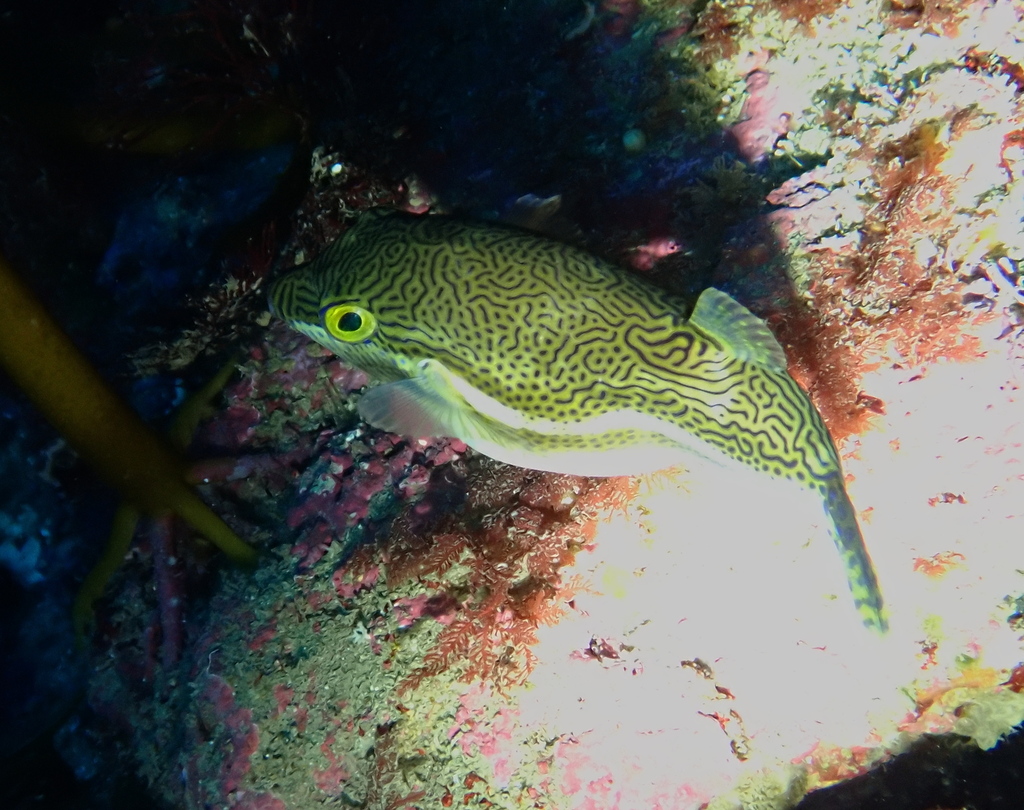 Clown Toado
Canthigaster callisterna
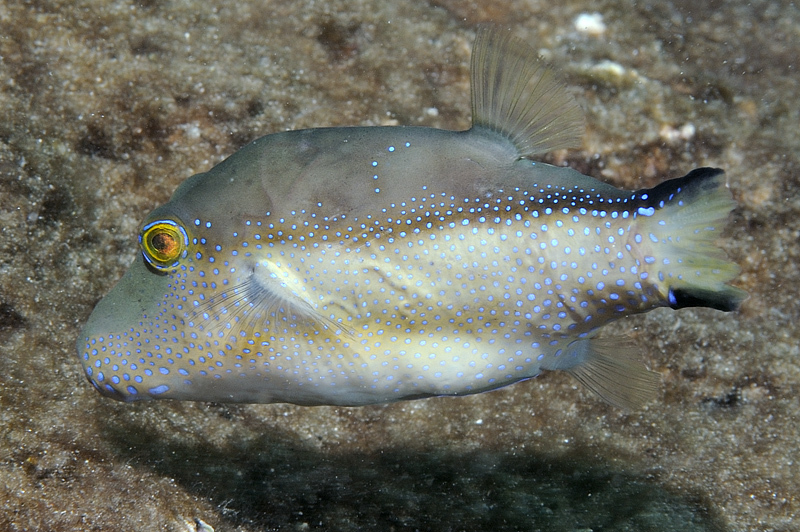 Macaronesian Sharpnosed Puffer
Canthigaster capistrata
 Compressed Toby
Canthigaster compressa
Sources and credits
Names and taxonomy: WoRMS (CC BY 4.0) and the GBIF Backbone (CC BY 4.0). Photos: iNaturalist observers, each under the licence shown (CC0, CC BY or CC BY-SA).
- Depth, temperature, months and maps: records from OBIS and GBIF under CC0 or CC BY.
- Descriptions: Wikipedia, licensed CC BY-SA, each linked to its article.
- Conservation status as published by GBIF (IUCN Red List).
- 6,437 open-data records from 1889 to 2019.
- Species data updated November 1, 2026.
Log what you see on your next dive
The free DiveHive diver app keeps your logbook with every sighting and shows what lives at the site you dive next.