

rosy egg crab
Atergatis roseus
- Water temperature23–27 °C
- Best monthsJuly, August, and September
- How commonRare
Photo credit: (c) shahar chaikin, some rights reserved (CC BY) · CC BY · iNaturalist
About this species
Atergatis roseus, the pancake crab, is a species of reef crab from the family Xanthidae with a natural range extending from the Red Sea to Fiji. It has colonised the eastern Mediterranean by Lessepsian migration through the Suez Canal. The flesh of this crab, like many other species in the family Xanthidae, is toxic.
Text from the Wikipedia article “Atergatis roseus”, licensed CC BY-SA 4.0. Read the article
Where and when
Where it has been recorded
Worldwide
Best months
Worldwide (open data)
- January: 0 records
- February: 5 records
- March: 0 records
- April: 2 records
- May: 0 records
- June: 4 records
- July: 12 records
- August: 13 records
- September: 9 records
- October: 3 records
- November: 0 records
- December: 0 records
Depth and water temperature
Water temperature
Recorded in surface water of 23–27 °C
Photos
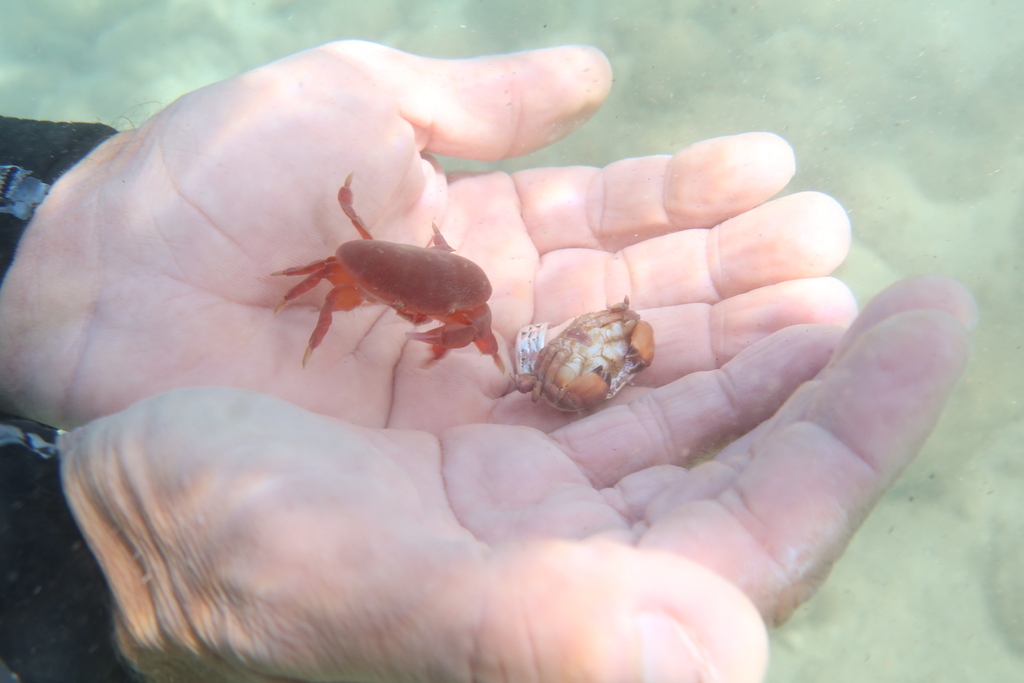
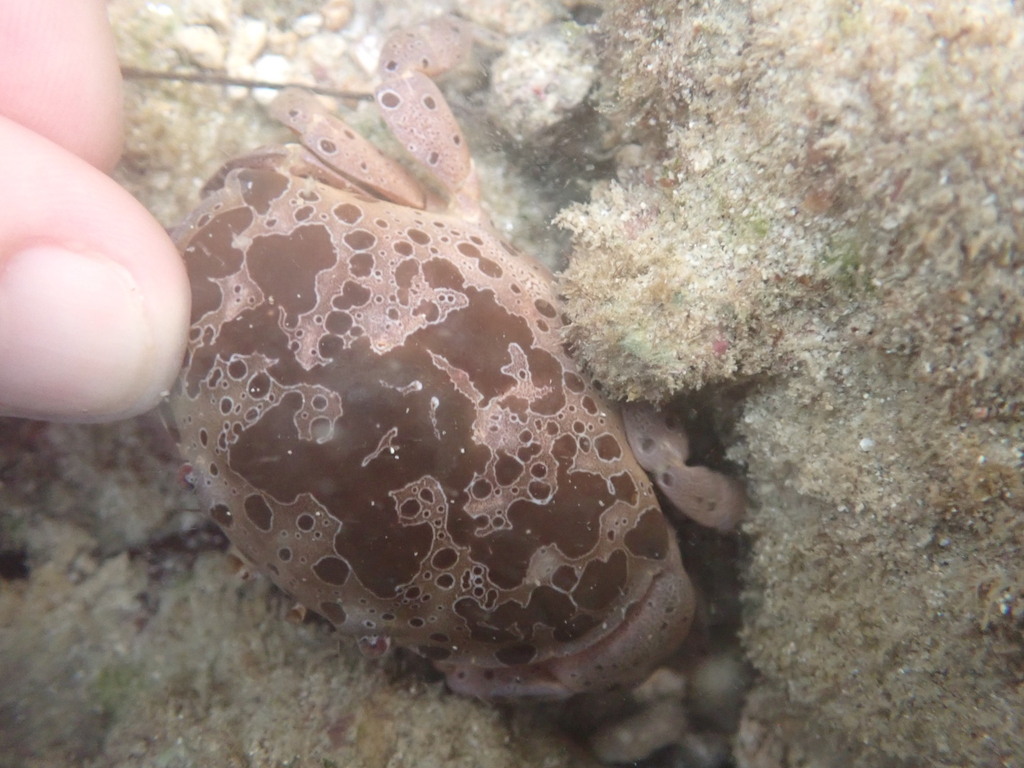
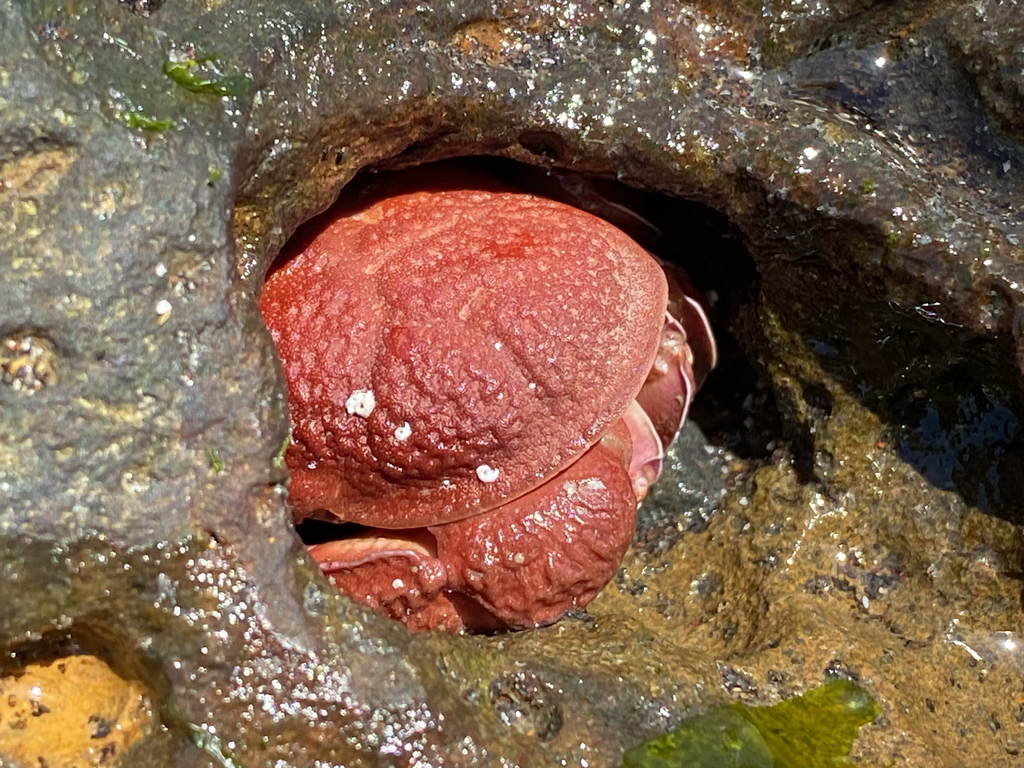
(c) Julien Renoult, some rights reserved (CC BY) · CC BY · iNaturalist 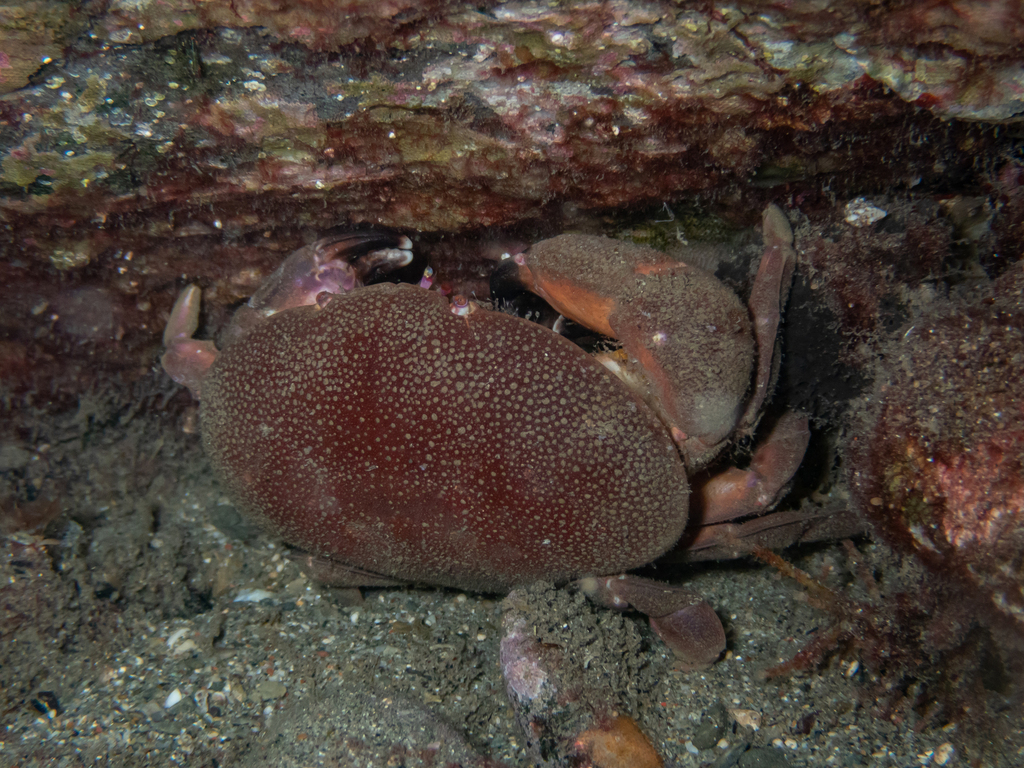
(c) Eleftherios Katsillis, some rights reserved (CC BY) · CC BY · iNaturalist
Names and classification
- English
- rosy egg crab
Other scientific names: Atergatis marginata, Atergatis marginatus, Atergatis scrobiculatus, Cancer marginatus, Cancer orientalis, Cancer roseus, Carpilius marginatus, Carpilius roseus
Similar species
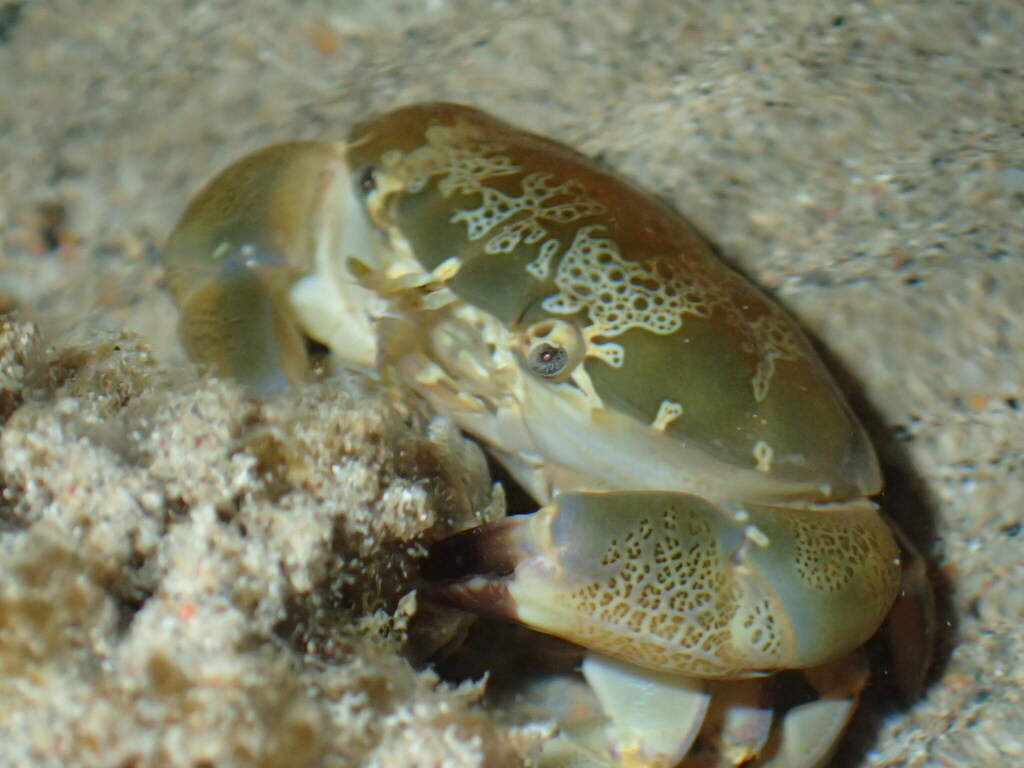 Floral Egg Crab
Atergatis floridus
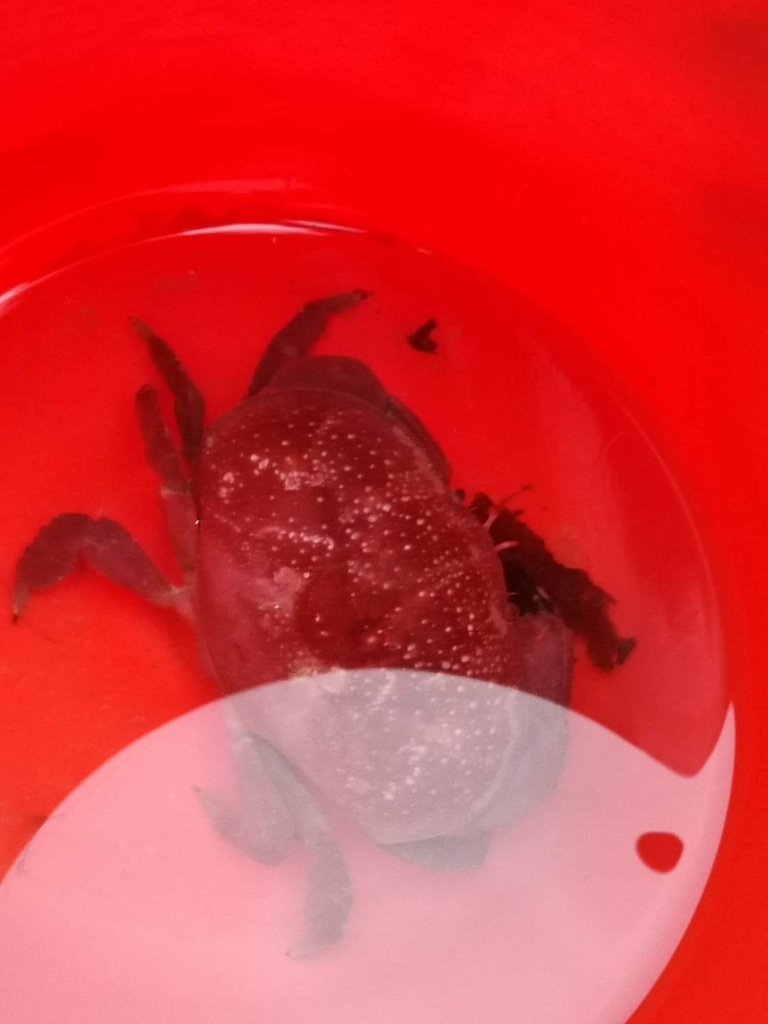 Red egg crab
Atergatis integerrimus
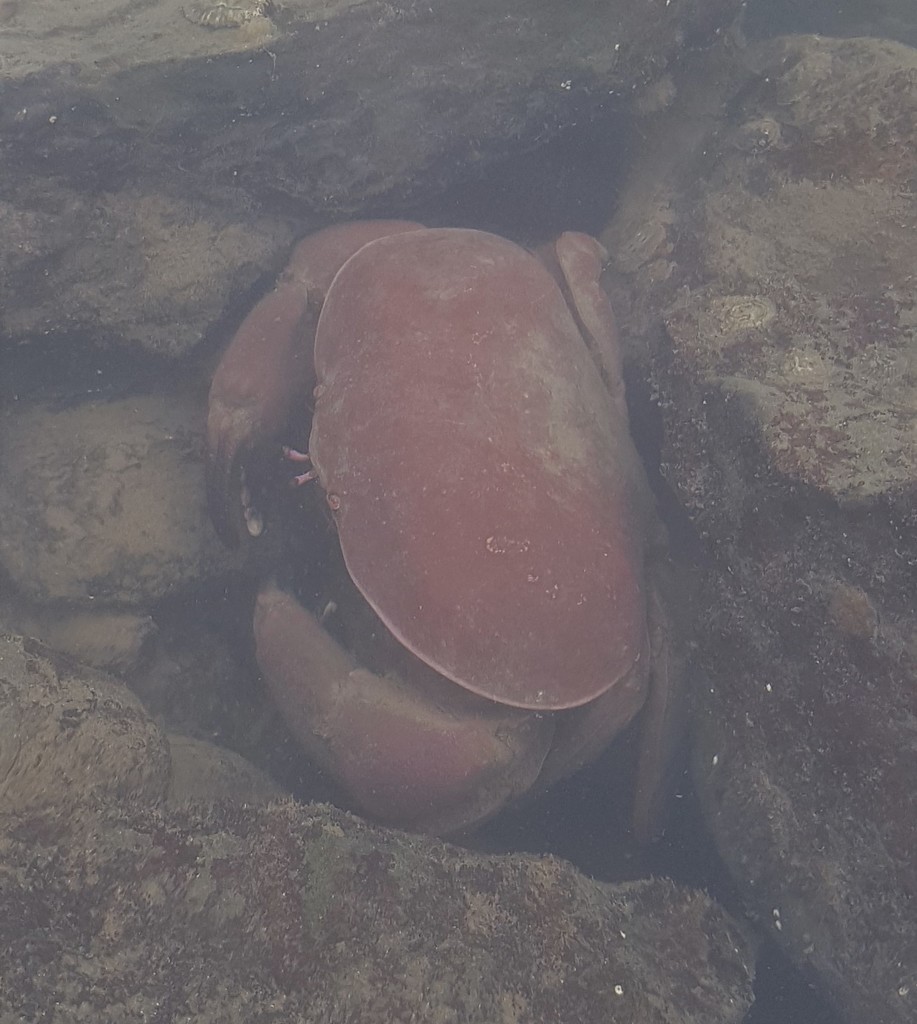 Flapjack Crab
Atergatis laevigatus
Sources and credits
Names and taxonomy: WoRMS (CC BY 4.0) and the GBIF Backbone (CC BY 4.0). Photos: iNaturalist observers, each under the licence shown (CC0, CC BY or CC BY-SA).
- Depth, temperature, months and maps: records from OBIS and GBIF under CC0 or CC BY.
- Descriptions: Wikipedia, licensed CC BY-SA, each linked to its article.
- Conservation status as published by GBIF (IUCN Red List).
- 17 open-data records from 1830 to 1930.
- Species data updated November 8, 2026.
Log what you see on your next dive
The free DiveHive diver app keeps your logbook with every sighting and shows what lives at the site you dive next.