
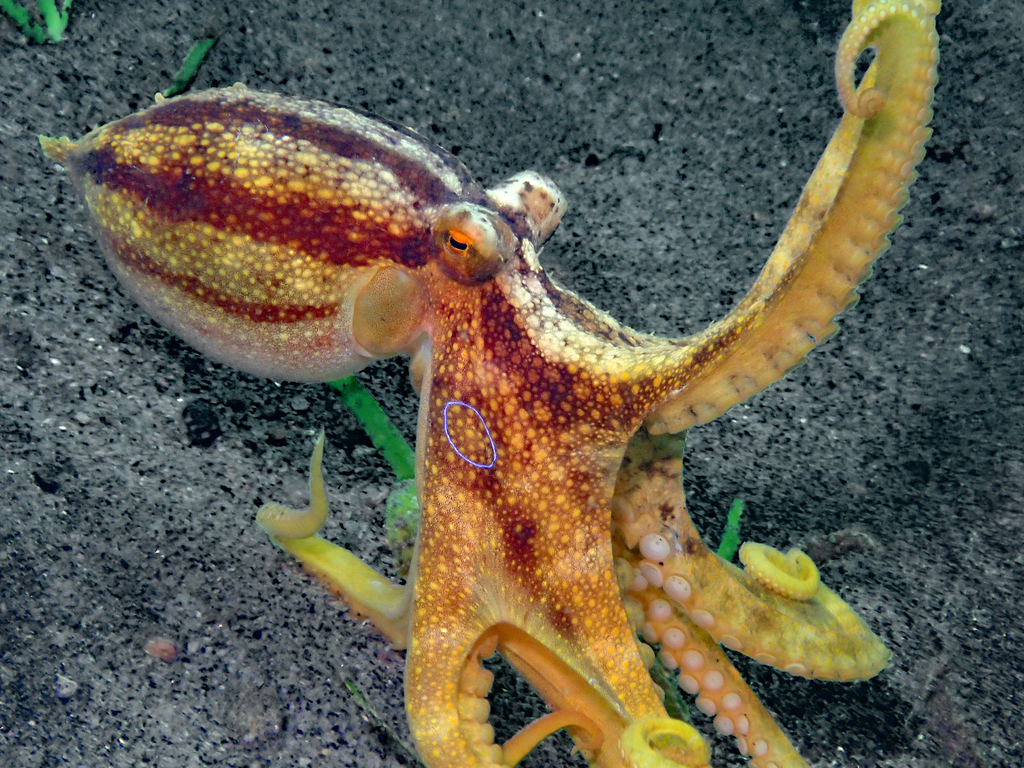
Mototi octopus
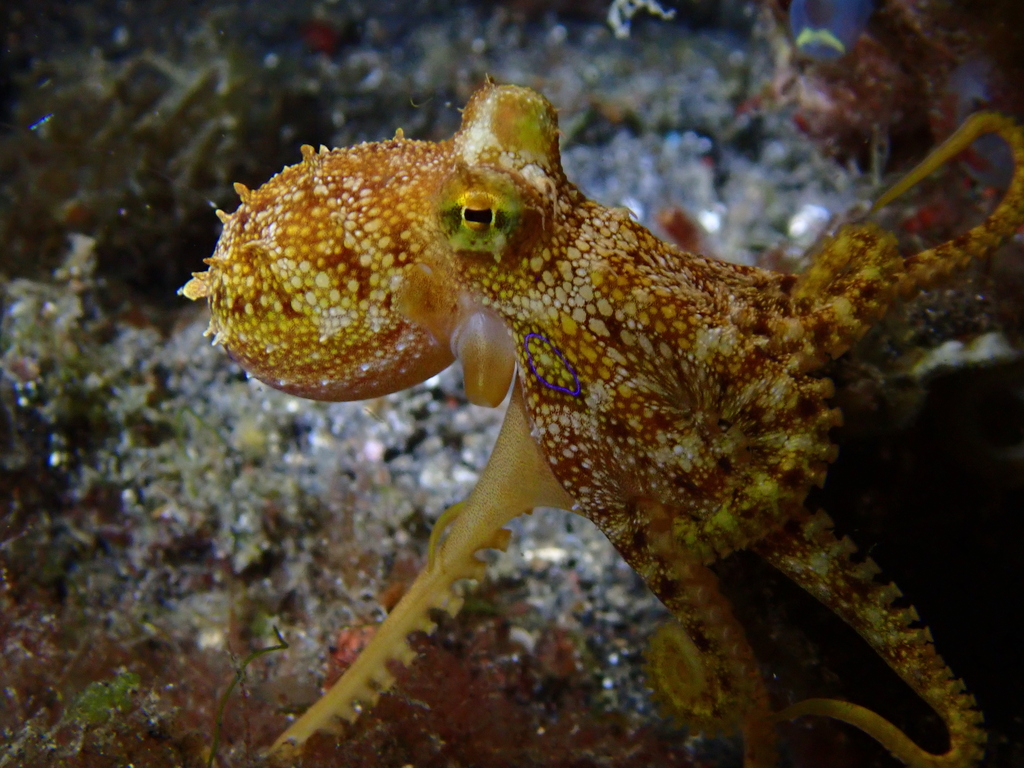
Amphioctopus mototi
- Water temperature23–25 °C
- Best monthsApril, May, and June
- How commonRare
Photo credit: (c) Gregor Bailar, some rights reserved (CC BY) · CC BY · iNaturalist
About this species
Amphioctopus mototi, commonly known as the poison ocellate octopus, is a species of octopus in the genus Amphioctopus. Amphioctpus mototi was first described in 1993, and is found in the Pacific Ocean off the eastern coast of Australia, Rapa Iti, and New Caledonia. A. mototi measures up to 32 cm (13 in) in length with its mantle reaching up to 10 cm (3.9 in), and can weigh up to 300 g (11 oz). The species is believed to be potentially venomous; it has bright warning colours and is unusually known to be aggressive towards objects such as nets.
Text from the Wikipedia article “Amphioctopus mototi”, licensed CC BY-SA 4.0. Read the article
Where and when
Where it has been recorded
Worldwide
Best months
Worldwide (open data)
- January: 3 records
- February: 0 records
- March: 4 records
- April: 9 records
- May: 8 records
- June: 6 records
- July: 6 records
- August: 4 records
- September: 5 records
- October: 6 records
- November: 1 record
- December: 6 records
Depth and water temperature
Water temperature
Recorded in surface water of 23–25 °C
Photos
no rights reserved · CC0 1.0 · iNaturalist
Names and classification
- English
- Mototi octopus, Poison Ocellated Octopus, Poison Ocellate Octopus
Names in 3 more languages
- Spanish
- Pulpo venenoso ocelado
- French
- Poulpe venimeux ocellé
- Japanese
- ベニツケダコ
Other scientific names: Octopus mototi
Similar species
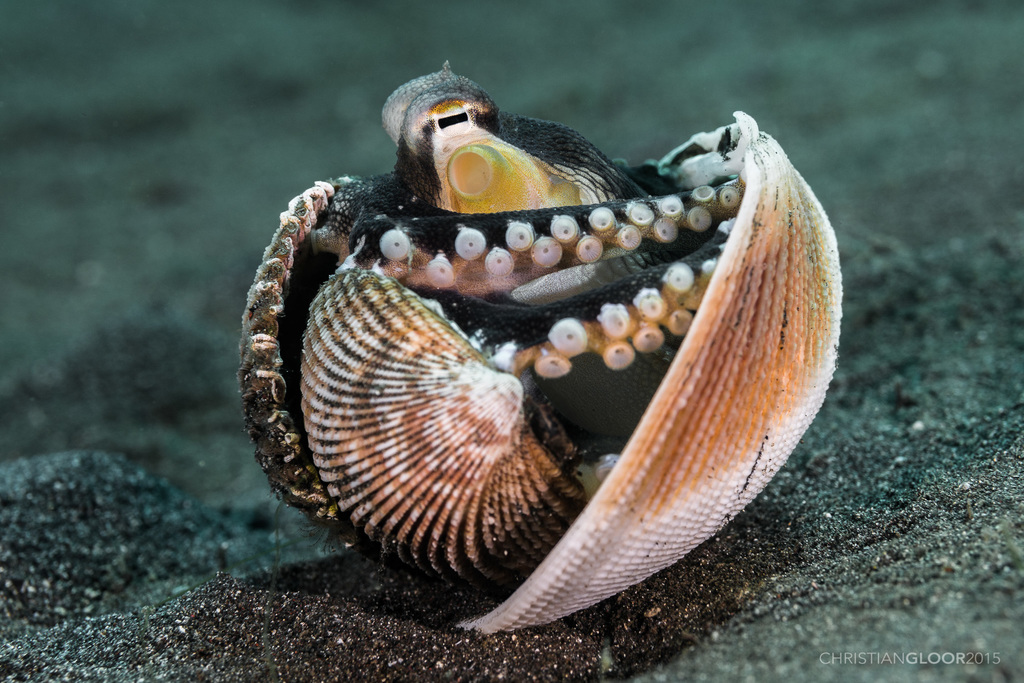 Coconut Octopus
Amphioctopus marginatus
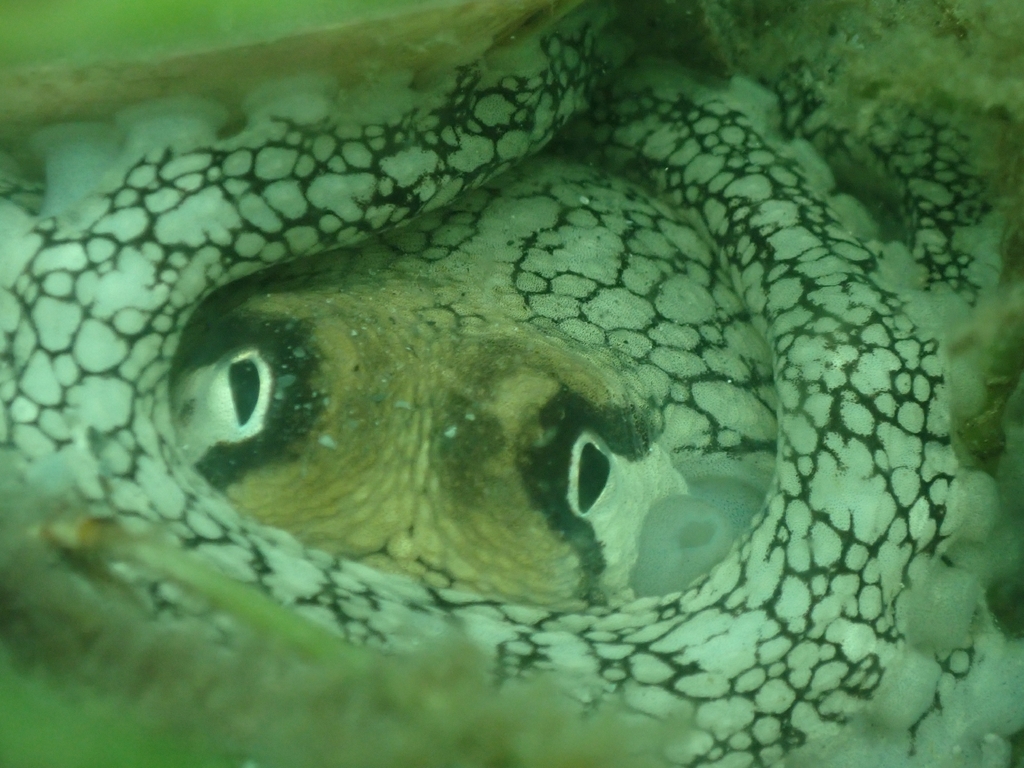 Dollfus's octopus
Amphioctopus aegina
 Brown-striped Octopus
Amphioctopus burryi
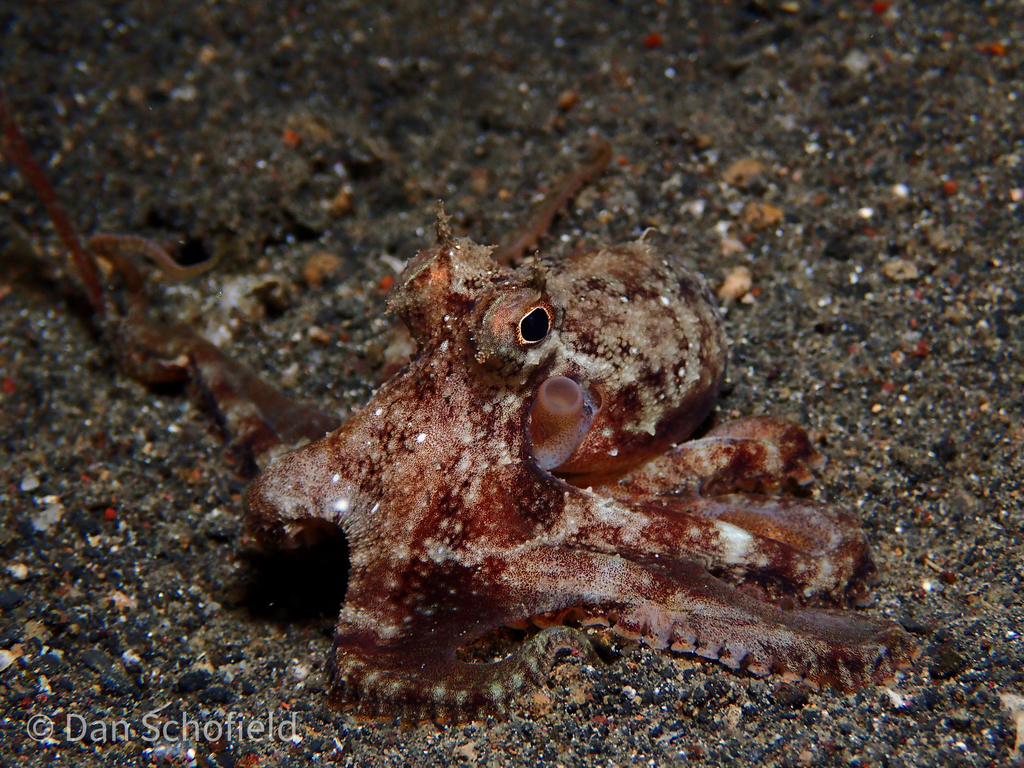 Plain-spot Ocellate Octopus
Amphioctopus exannulatus
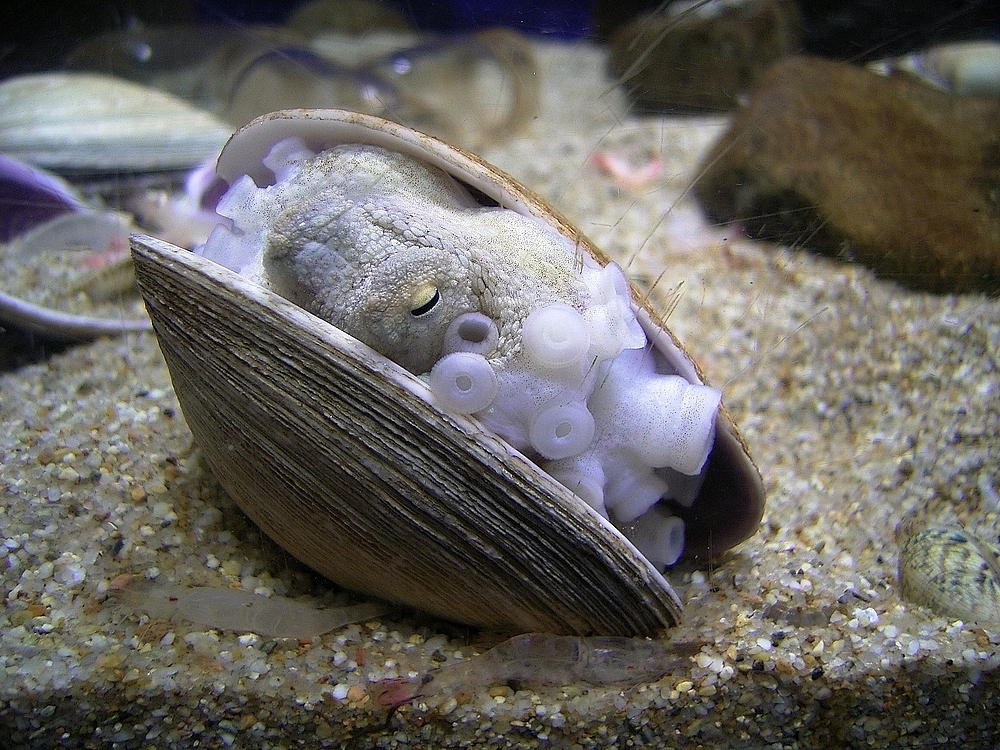 Gold-spot octopus
Amphioctopus fangsiao
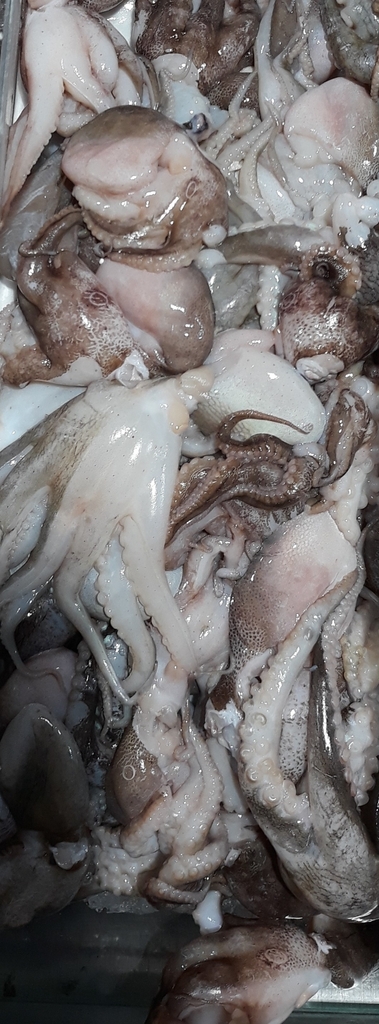 Webfoot Octopus
Amphioctopus membranaceus
Sources and credits
Names and taxonomy: WoRMS (CC BY 4.0) and the GBIF Backbone (CC BY 4.0). Photos: iNaturalist observers, each under the licence shown (CC0, CC BY or CC BY-SA).
- Depth, temperature, months and maps: records from OBIS and GBIF under CC0 or CC BY.
- Descriptions: Wikipedia, licensed CC BY-SA, each linked to its article.
- Conservation status as published by GBIF (IUCN Red List).
- 9 open-data records from 1980 to 1991.
- Species data updated October 31, 2026.
Log what you see on your next dive
The free DiveHive diver app keeps your logbook with every sighting and shows what lives at the site you dive next.