
DiveHive

Photo: Marine Conservation Philippines

HomeConservationPartnersMarine Conservation Philippines

Marine Conservation Philippines

Train as a scientific diver and help survey the reefs of Negros Oriental, just across the water from Apo Island.

The relationship

Conservation partner. Pays a share.

DiveHive does not earn anything from the links on this page. A donation goes straight to MCP, with no cut and no fees. DiveHive pays 1% of its net revenue every year to the conservation partners on the platform, split by programme activity, with a public yearly report.

A non-profit that surveys the reefs of southern Negros.

Marine Conservation Philippines (MCP) is a non-profit organisation based in Zamboanguita, at the southern tip of Negros, just across the water from Apo Island. Since 2015 we have surveyed, protected and restored the reefs, mangroves and beaches of Negros Oriental. Today we work in 14 municipalities, hold a permanent seat on the Protected Area Management Board for Apo Island, and are partnered with ENRD, DENR and the local governments of southern Negros Oriental.

Most of our work happens underwater, and most of it is done by people who came to dive with us. Volunteers train as scientific divers and join our survey teams, and together with our staff they log around 20,000 dives a year. No local budget exists for reef monitoring on this scale, so volunteer fees pay for the surveys and for the salaries of our local team. When you book a stay with us, you fund the work directly.

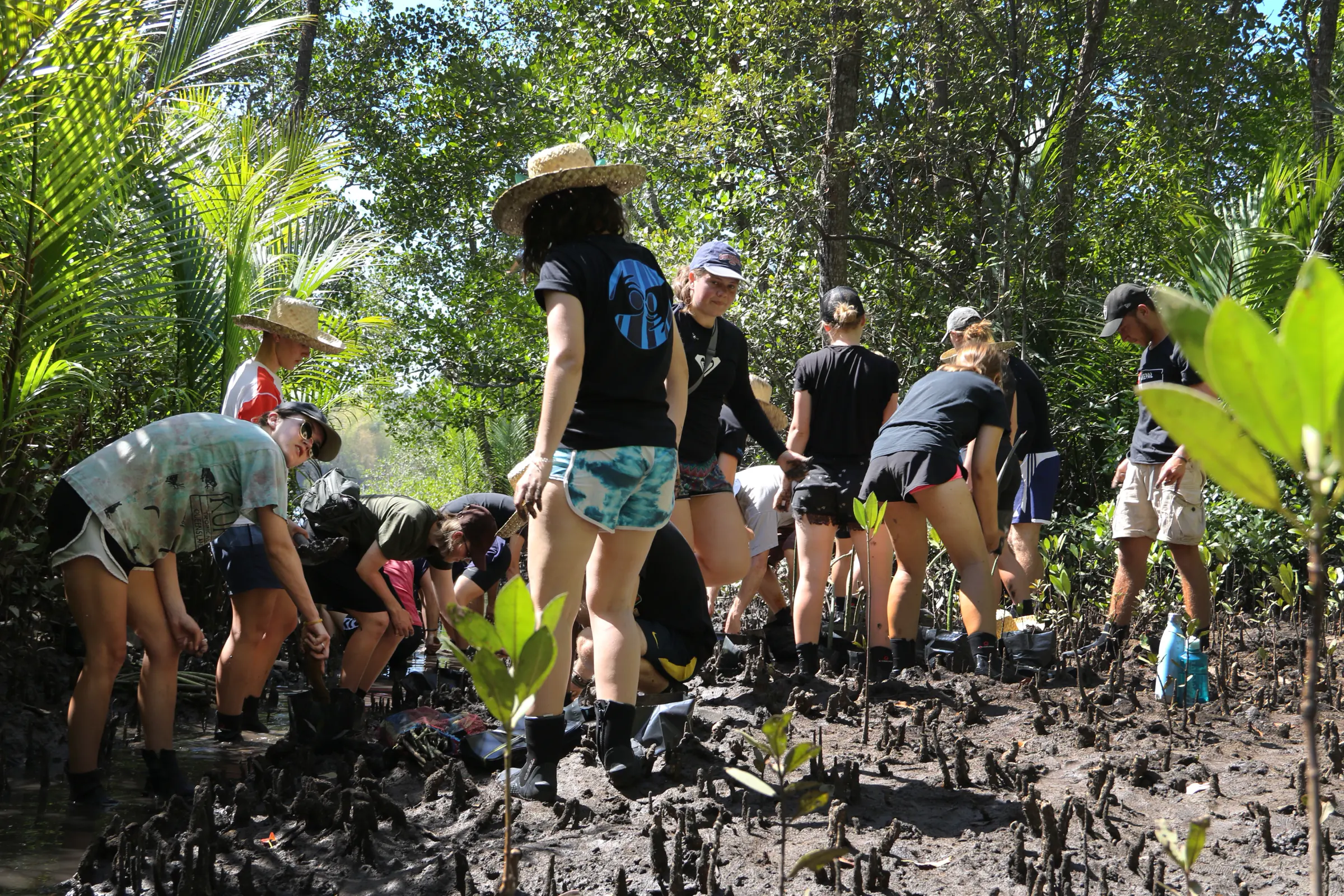
Above the surface, we have planted 31,000 mangroves, trained more than 120 government divers so municipalities can monitor their own marine protected areas, and our teachers bring environmental lessons to thousands of local schoolchildren every year. Many of our staff live in or grew up in the communities where we work. More than 1,000 people have trained as scientific divers with us, and we have over 130 independent reviews.

Volunteers planting mangrove seedlings in the mud
Photo: Marine Conservation Philippines
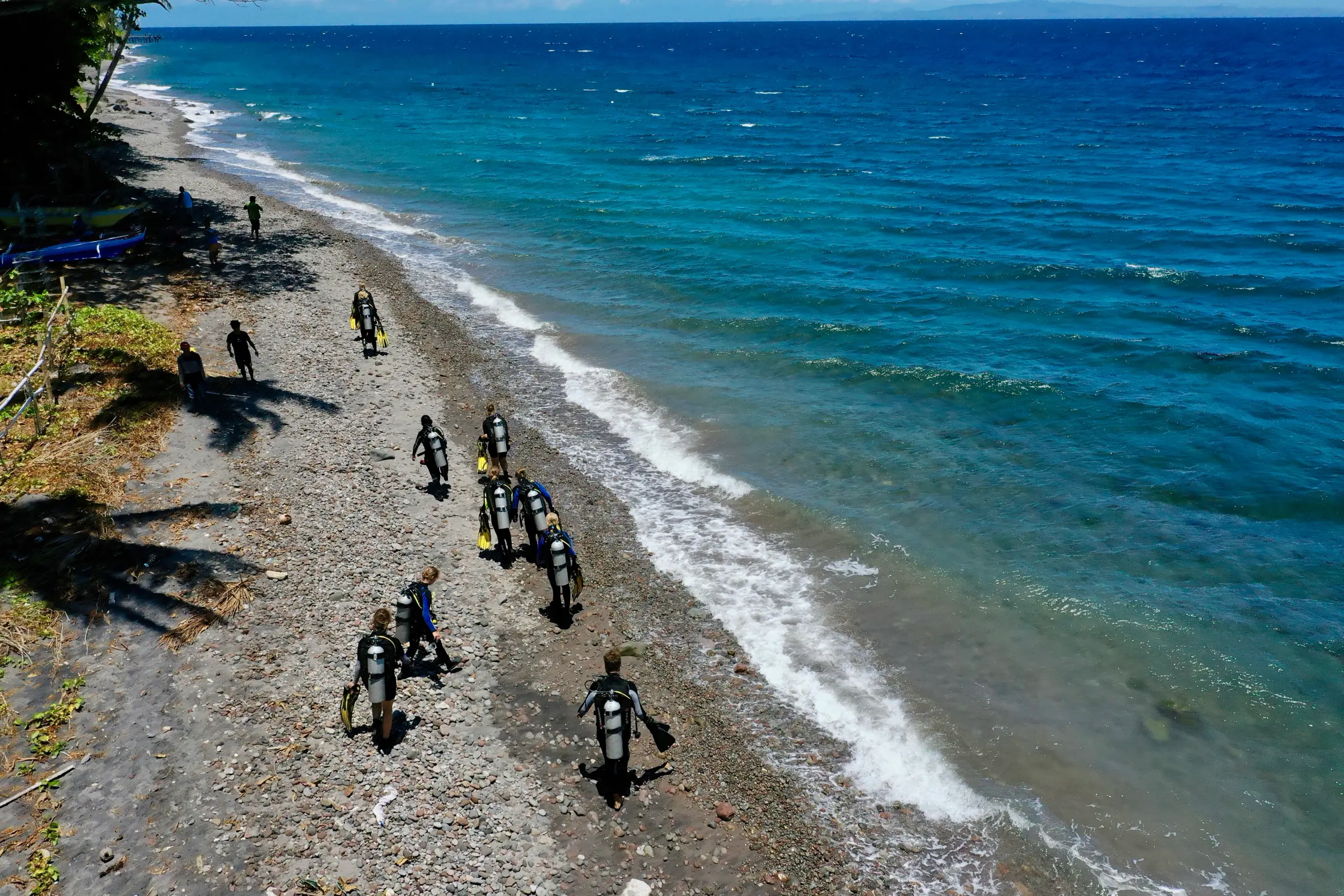
Aerial view of divers in single file walking down a pebble beach to the sea
Photo: Marine Conservation Philippines
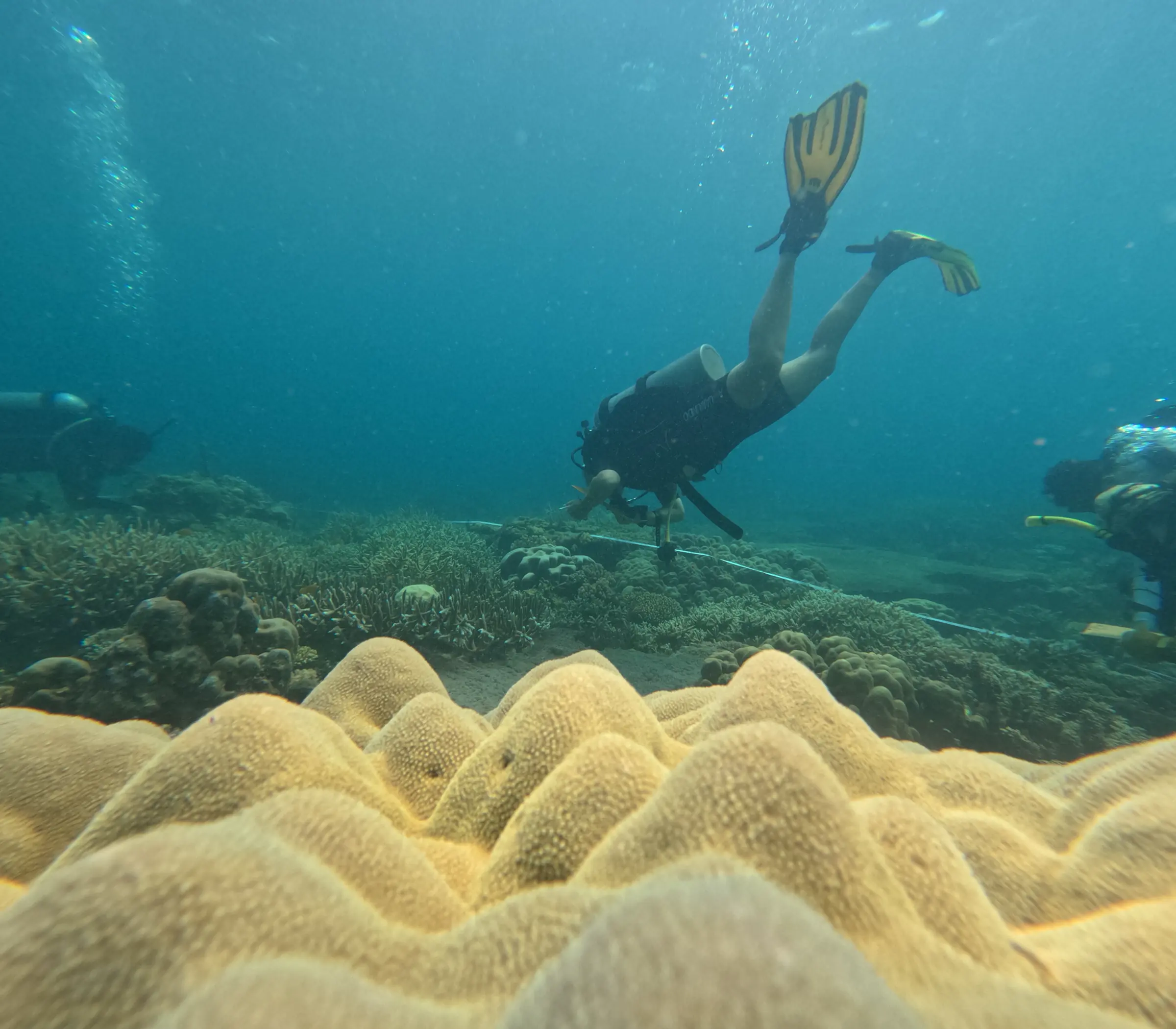
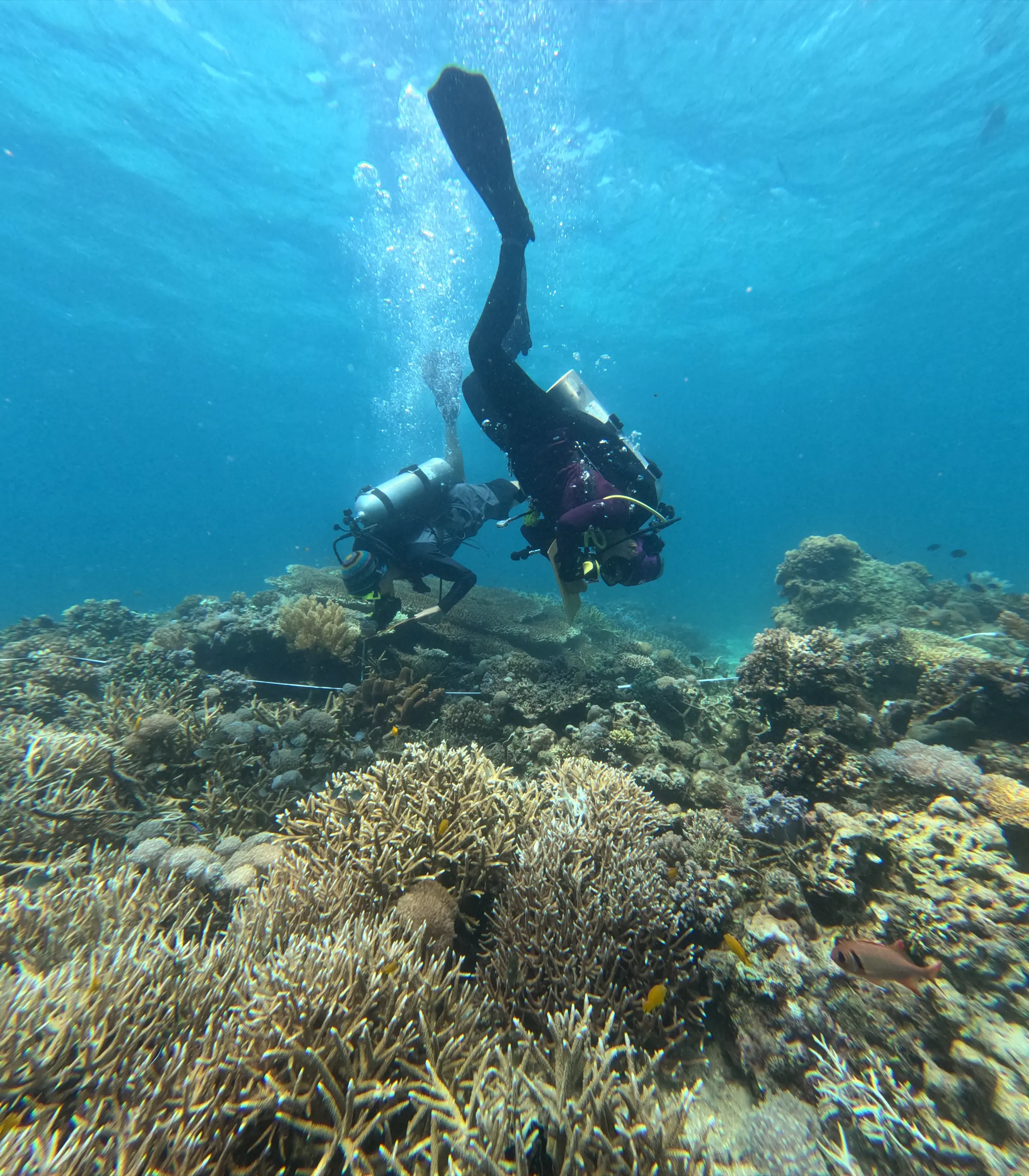
Two divers over a branching-coral reef, one head-down near the bottom
Photo: Marine Conservation Philippines

Citizen science: your dives become data.

Every week, our volunteer divers survey the reefs along 70 km of coastline, from Dumaguete to Santa Catalina. We dive both inside marine protected areas and at unprotected sites, so we can see what protection actually changes. Survey teams count the fish and invertebrates that local people catch and eat, and record the corals and other life that hold the reef together.

Our monitoring follows a fixed protocol that local governments have adopted, so every volunteer is trained and tested before their data counts. You don't need to be a marine biologist, but you do need to get it right:

  1. Introduction week Refresher dives for buoyancy and trim, plus an introduction to how we survey.
  2. Specialty training You learn one survey type in depth, fish, invertebrates or substrate, through presentations, identification dives and quizzes.
  3. Tests An identification test on land and one underwater, both with strict pass marks, then a mock survey with a staff member.
  4. Survey ready You join the survey teams along the coast, and from then on every dive has a mission.

Specialty training usually takes two to three weeks after the introduction week. The results are public: anyone can explore the reef data, going back to 2017.

Explore the reef data portal (opens in a new tab)

What a stay with MCP is like.

You land at Dumaguete airport, and one of our team is there to drive you to base. The first week is for settling in: briefings, getting to know the base and the people, having your certifications checked and being fitted for the dive kit you'll use for the rest of your stay.

After that, the reef becomes your workplace. We dive six days a week, usually twice a day, around 12 to 13 dives a week. Most sites are reached by truck and entered from the shore, so there's no long boat ride between you and the water. About once a month, the team heads to Apo Island for a day of fun diving at one of the best-known marine sanctuaries in the Philippines, as our thank-you.

Home is a working field base, not a resort, and that's a big part of its charm. You share a dorm with three to five others, with private rooms available at cost, and eat home-cooked, mostly vegetarian meals from our kitchen team. There are usually 30 to 35 volunteers from all over the world, alongside around 45 staff. Sundays are always off.

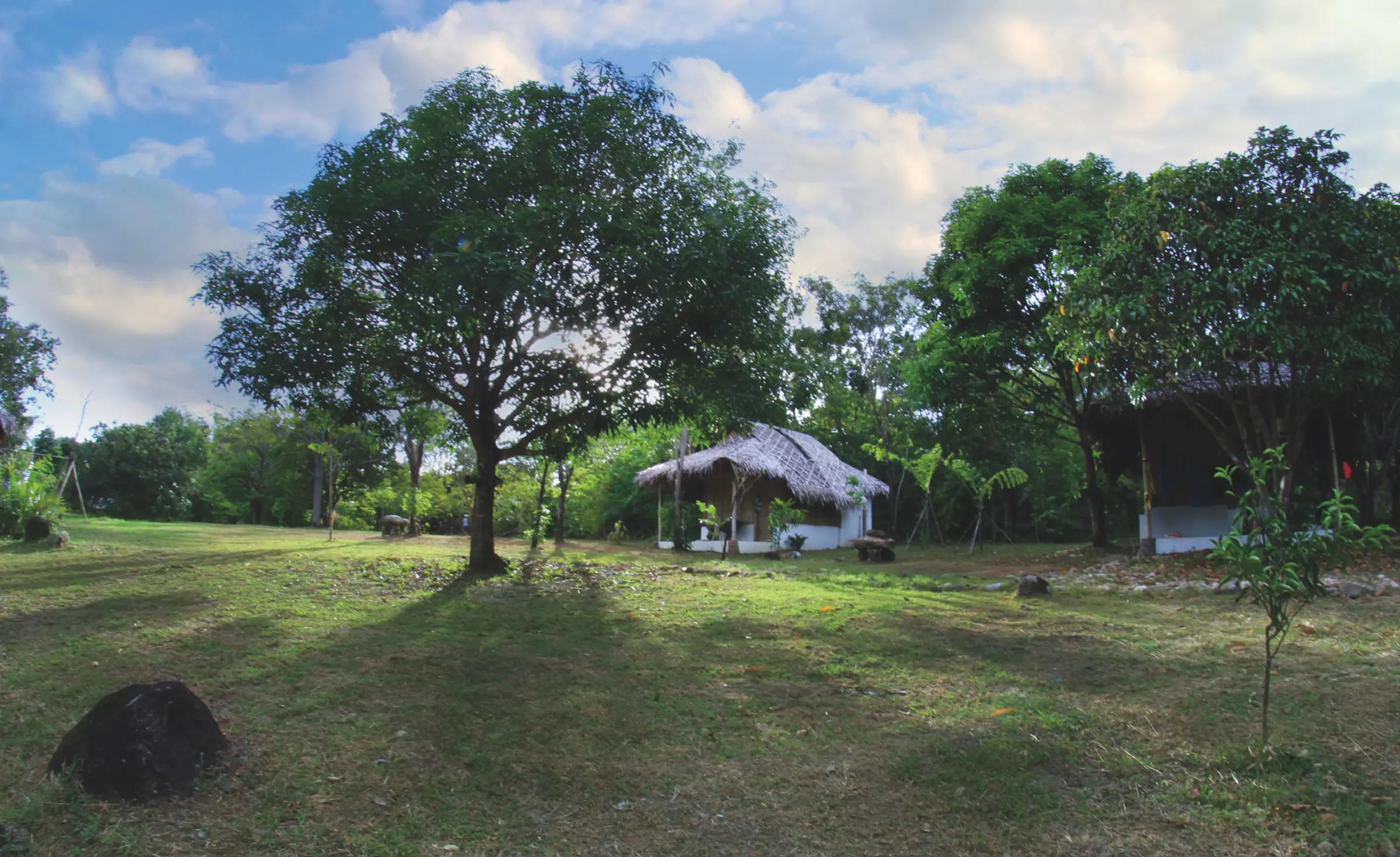
A large tree and a thatched hut on the green lawn of the MCP base
Photo: Marine Conservation Philippines
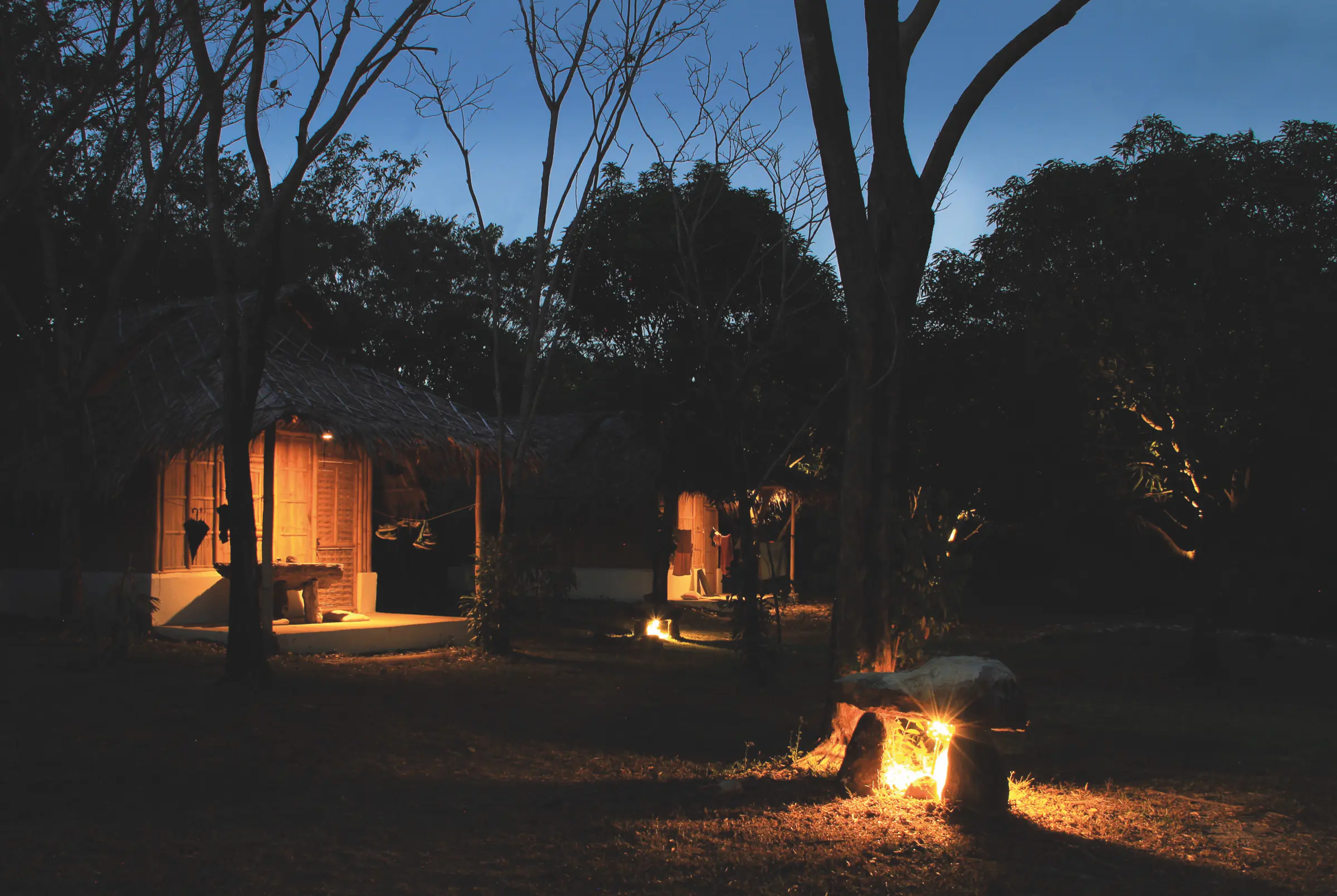
Thatched cabins and a lit fire pit at dusk on the MCP base
Photo: Marine Conservation Philippines

Ways to join in.

Conservation and science volunteer

Train as a scientific diver and join our reef survey teams. No diving experience needed.

Who it's for
Divers and non-divers, aged 18 to 60
Length
6 to 24 weeks, in steps of two weeks
Start dates
Every other Monday
Price
550 USD a week, all-inclusive, with lower weekly rates from week 13 onwards (6 weeks: 3,300 USD)
Included
Meals, shared accommodation, all scuba gear, PADI courses (you only pay for the manual and certification, usually 65 or 85 USD per course), survey training, airport pick-up and marine park fees
Long-stay bonus
Free PADI Tec 40, 45 and 50 courses at 16, 20 and 24 weeks
Apply to volunteer (opens in a new tab) Prices are MCP's, in US dollars, as stated by MCP. We usually reply within 24 hours.
PADI Divemaster internship

Become a PADI professional with mentoring from very experienced instructors, in a group of no more than four candidates.

Who it's for
Certified divers, or newcomers happy to start from Open Water with us
Length
8 weeks minimum, or 12 if you're not yet a certified diver
Start dates
A new course every four weeks, on a Monday
Price
The same weekly price and discounts as volunteering, plus manuals and PADI's own application fee

Beach clean-up, free

Our team runs beach clean-ups every day except Sunday, and anyone is welcome to join for free. Get in touch before you come, and we'll tell you where and when to meet.

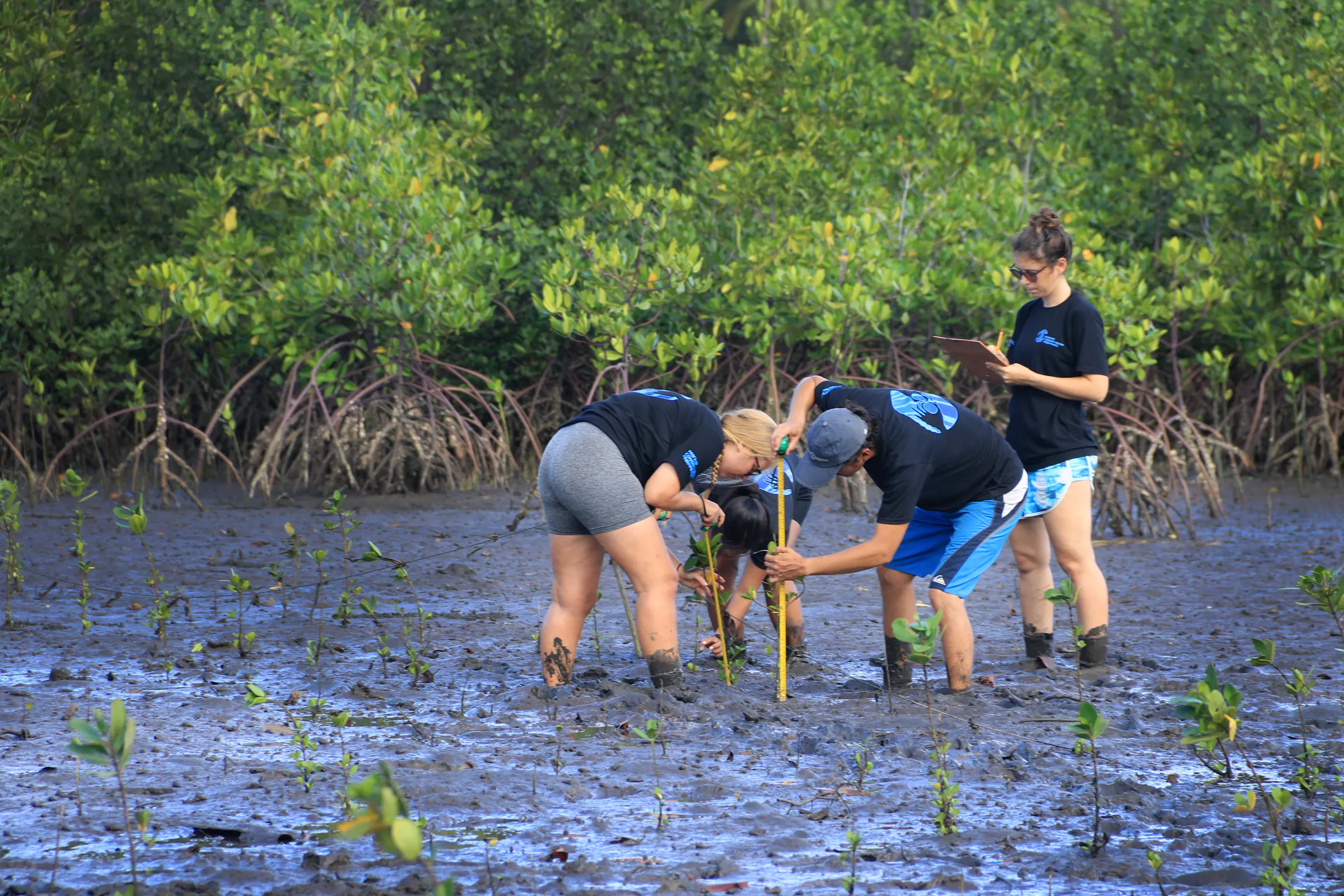
Four volunteers planting mangrove seedlings in mud, one holding a clipboard
Photo: Marine Conservation Philippines
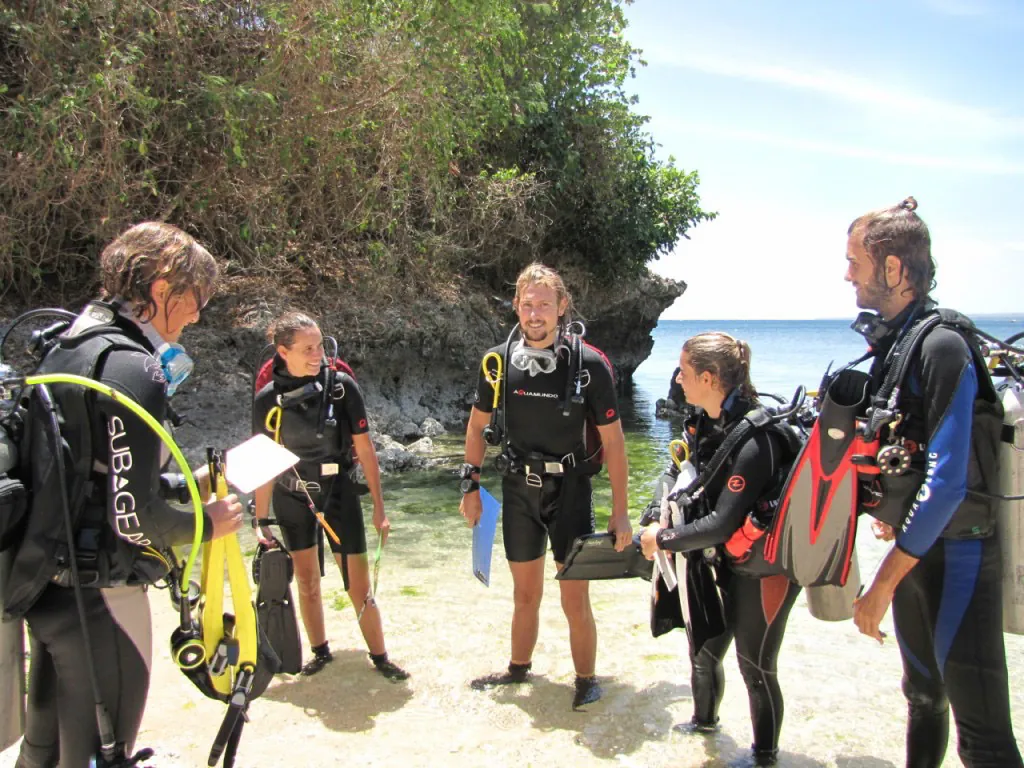
Five divers in wetsuits on a beach, one holding a clipboard
Photo: Marine Conservation Philippines
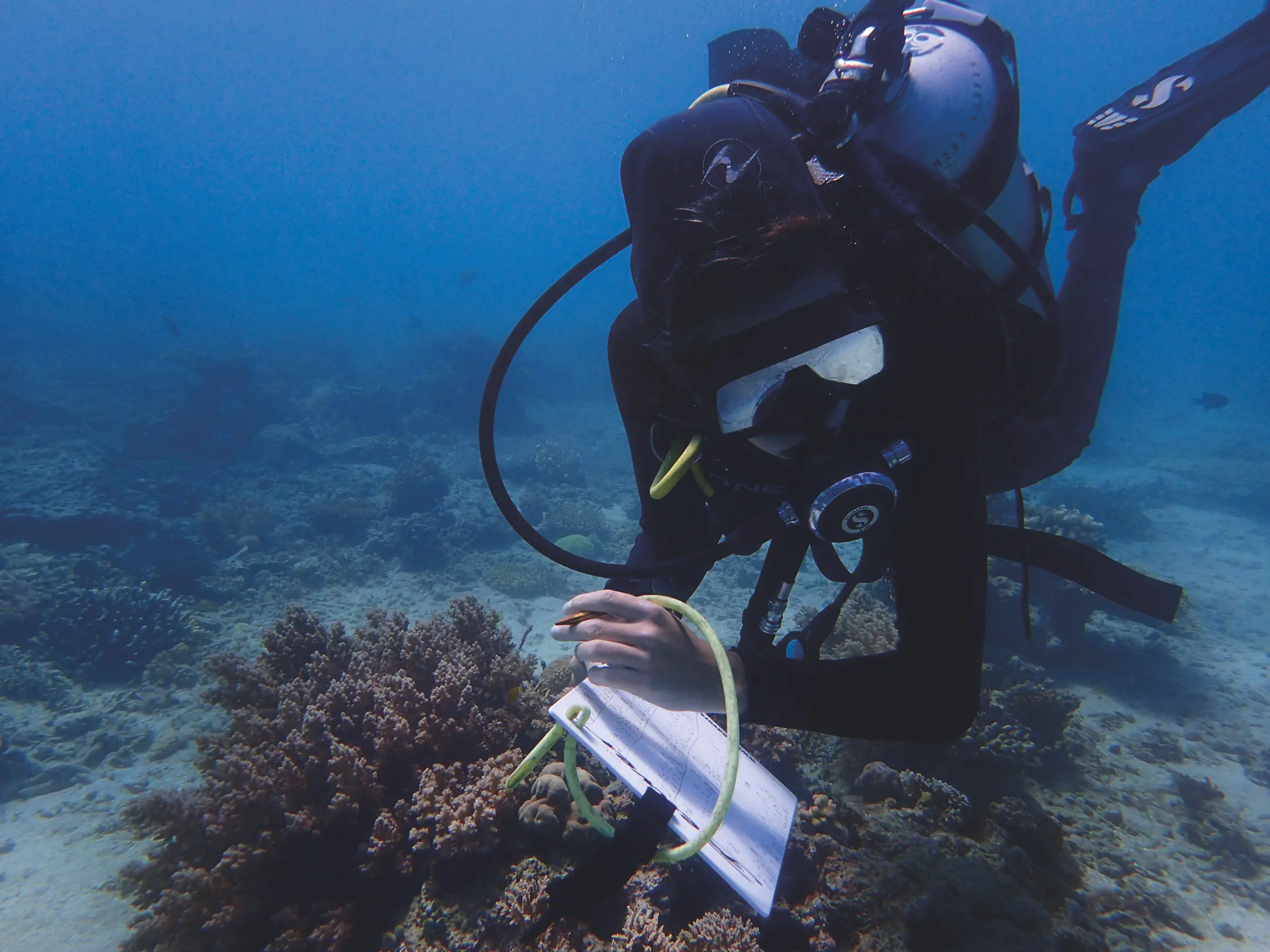
A diver writing on a slate beside a coral patch
Photo: Marine Conservation Philippines
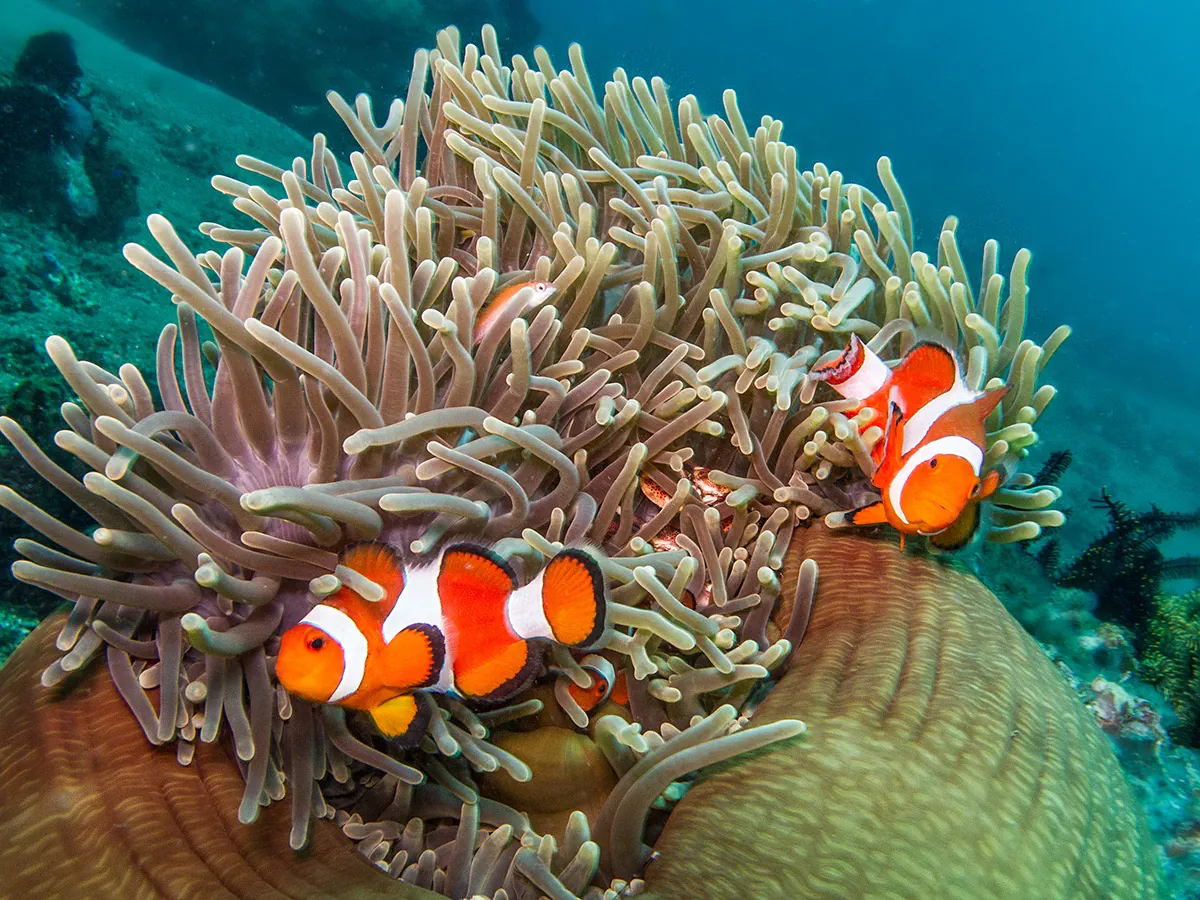
Orange and white clownfish in an anemone
Photo: Marine Conservation Philippines

Before you dive: leave the reef as you found it.

The Philippines lies in the Coral Triangle, the richest marine region on Earth. Reefs here feed coastal families, shelter beaches from waves and draw divers from all over the world. They are also more fragile than they look: one careless fin kick can break off coral that took decades to grow. These habits follow the Green Fins code of conduct, which MCP uses for all its diving.

  • Master your buoyancy. Most diver damage to reefs comes from fins, knees and dangling gear. Get your weighting right, keep your gauges and alternate air source tucked in close, and leave a little extra space between you and the reef. If you haven't dived for a while, ask for a refresher dive first. Nobody minds.
  • Look, don't touch. Don't touch, kneel on or hold on to coral or rocks, which are often covered in life. If you need to stop, hover.
  • Give animals space. Don't chase, ride, corner or feed marine life. Turtles need to reach the surface to breathe, so never block their way up.
  • Take photos, not souvenirs. Never move an animal for a better shot, and keep an eye on your fins while you focus. Leave shells and coral where they are, and don't buy them as souvenirs either.
  • Cover up. A long-sleeved rash guard or full-length wetsuit means you need far less sunscreen, and less sunscreen in the water is better for the reef.
  • Leave nothing behind. Keep wrappers and bottles stowed, and if you see litter underwater that nothing is living in, bring it up if you can do so easily.
  • Respect marine protected areas. Follow the local rules, and pay marine park fees gladly: they help protect the very sites you're diving.
  • Tell your guide what you see. Spotted a lost fishing net or an animal in trouble? Tell your dive guide, who can pass it on to the right people.

About a 3-minute read. Written by MCP.

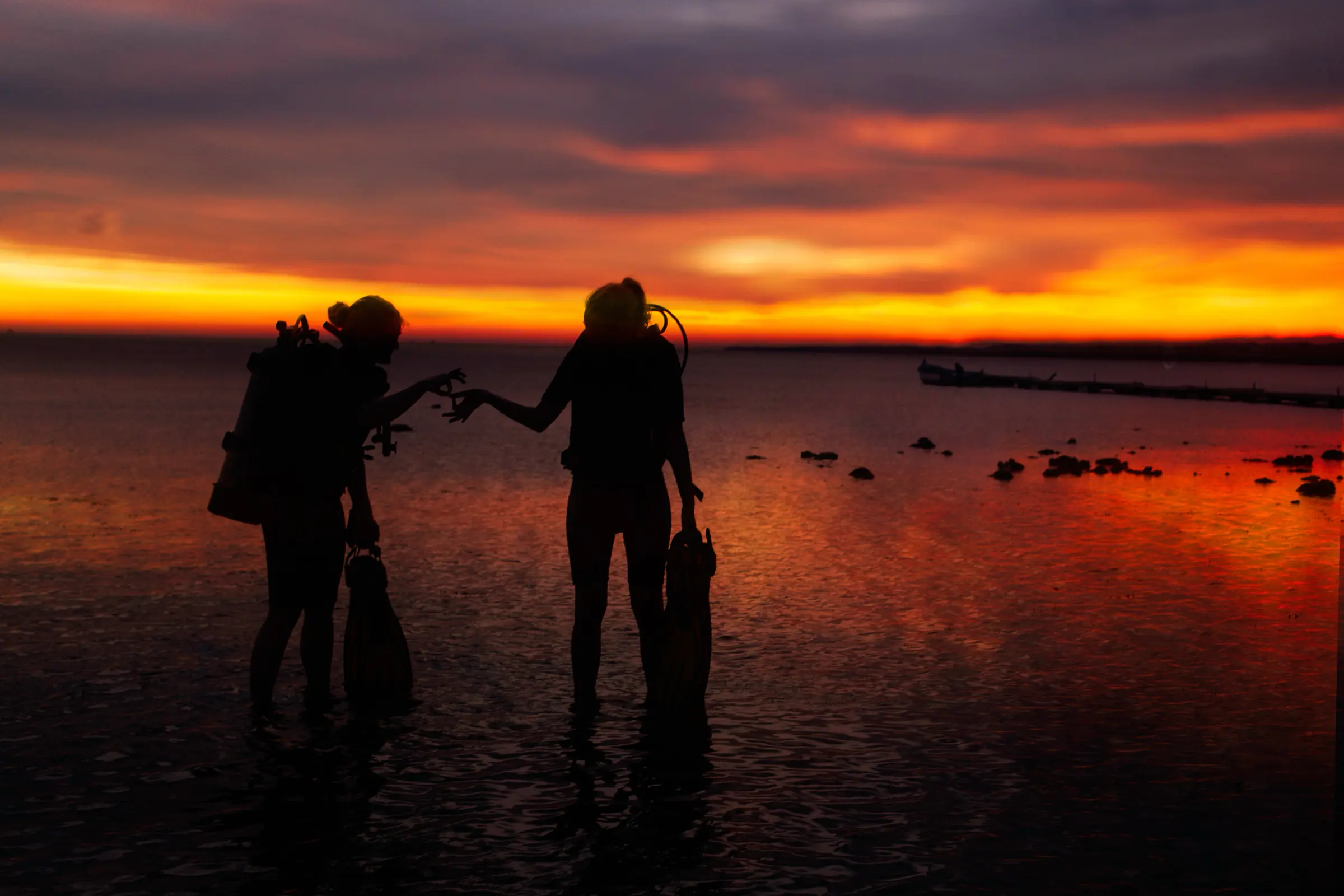
Two divers silhouetted in shallow water at sunset
Photo: Marine Conservation Philippines
Marine Conservation Philippines logo

When you book a stay, you fund the work directly.

Volunteer fees pay for the reef surveys and for the salaries of MCP's local team. Donations go straight to MCP.

Text, photos and logo by Marine Conservation Philippines, used here with its permission to present MCP. Last reviewed · Approved by Søren Knudsen, Founder

Back to all partners

DiveHive uses necessary cookies to work. With your permission we also use analytics to see which pages help. Analytics is off until you say yes, and we never record what you type.

Privacy policy